(Still doing some European logistics so here’s some more Morocco)
We were hankering to get off-road again, deeper into this wild place. But first, to another desert Kasbah – a beautiful fake – built by a French investor, just a twenty minute drive along a rough track off the main road. I missed it completely the first time mansplaining to P that the turning simply didn’t exist, there were crash barriers along the entire length of the highway and the directions must be wrong. The turning was exactly where she thought it was, in a gap between the crash barriers. So through the gap and air down for the rough road ahead in the warmth of the late afternoon light.
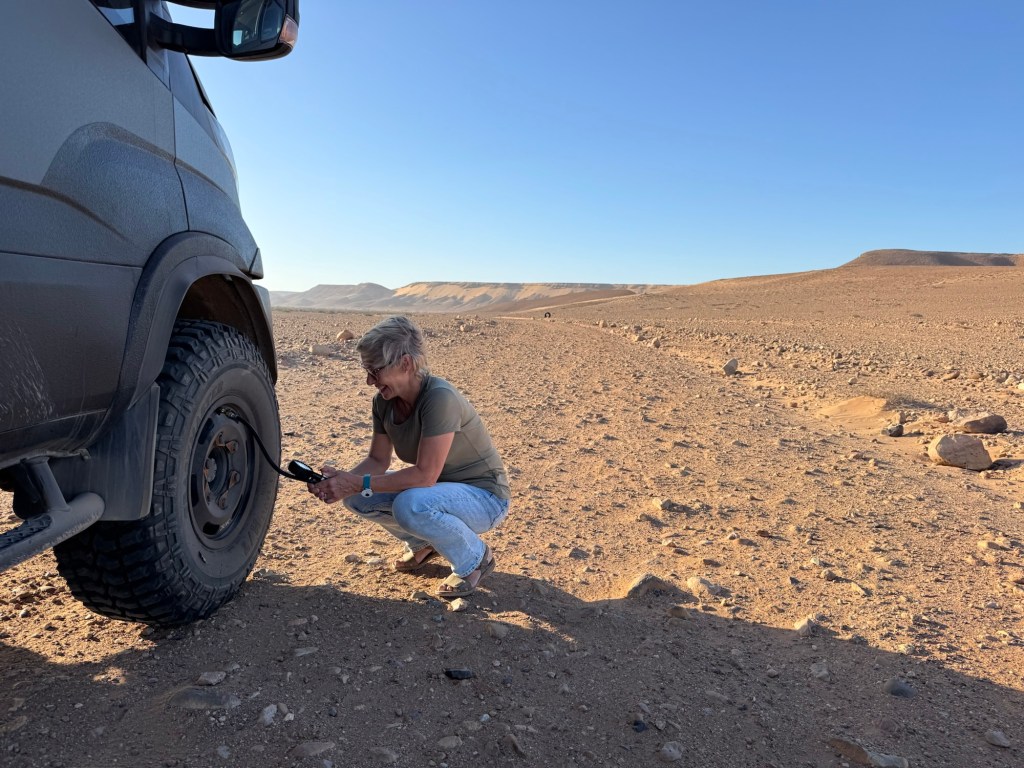
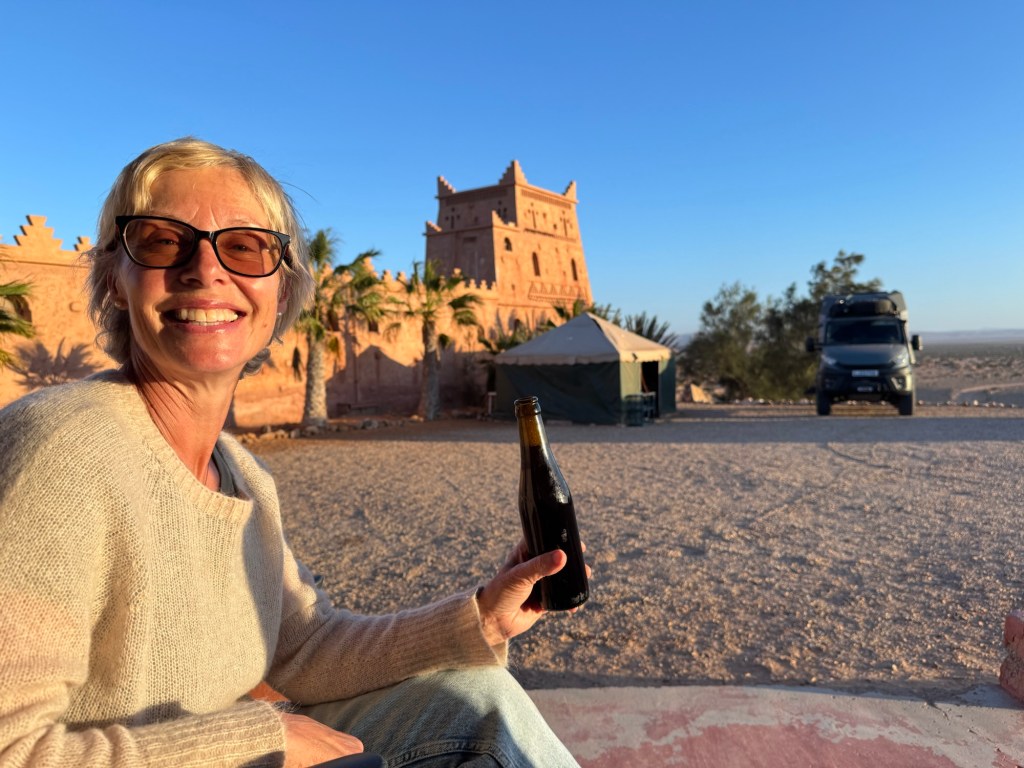
The track was fun and the kasbah, quite magnificent. It also sold beer.
On the next hilltop was a genuine kasbah, now empty and semi-derelict.
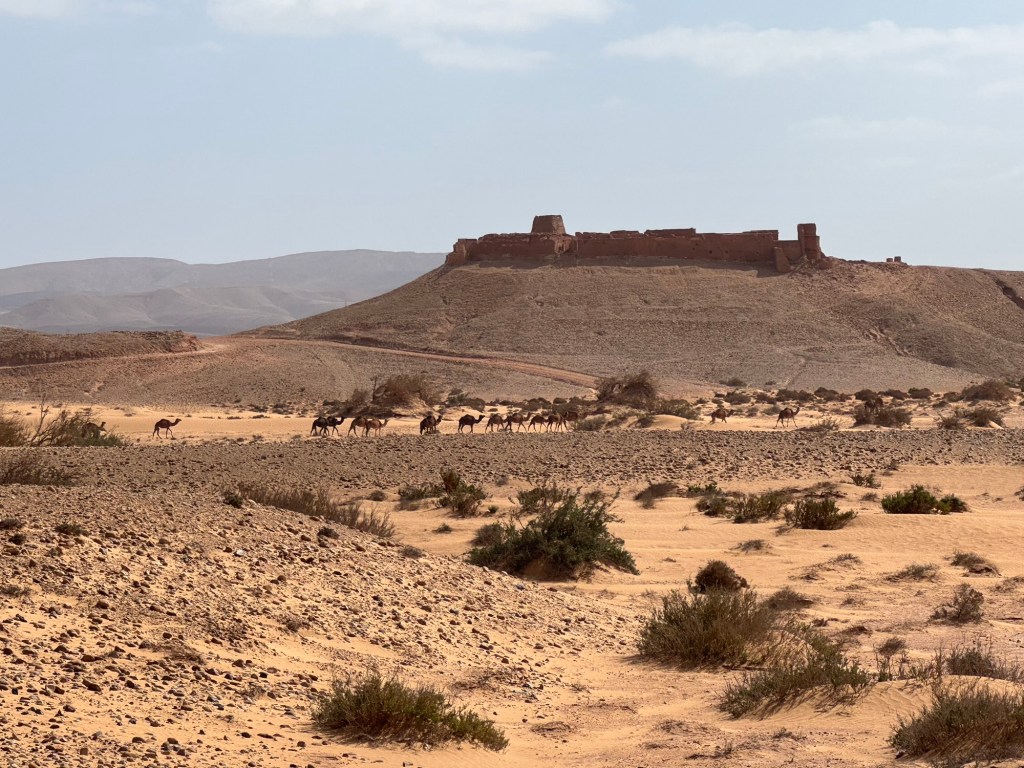
We walked to it through a herd of camels who watched us without much interest. At the foot of the hilltop was a marshy area with salty water and plants like samphire. I bit off some and it tasted the same – and very salty.
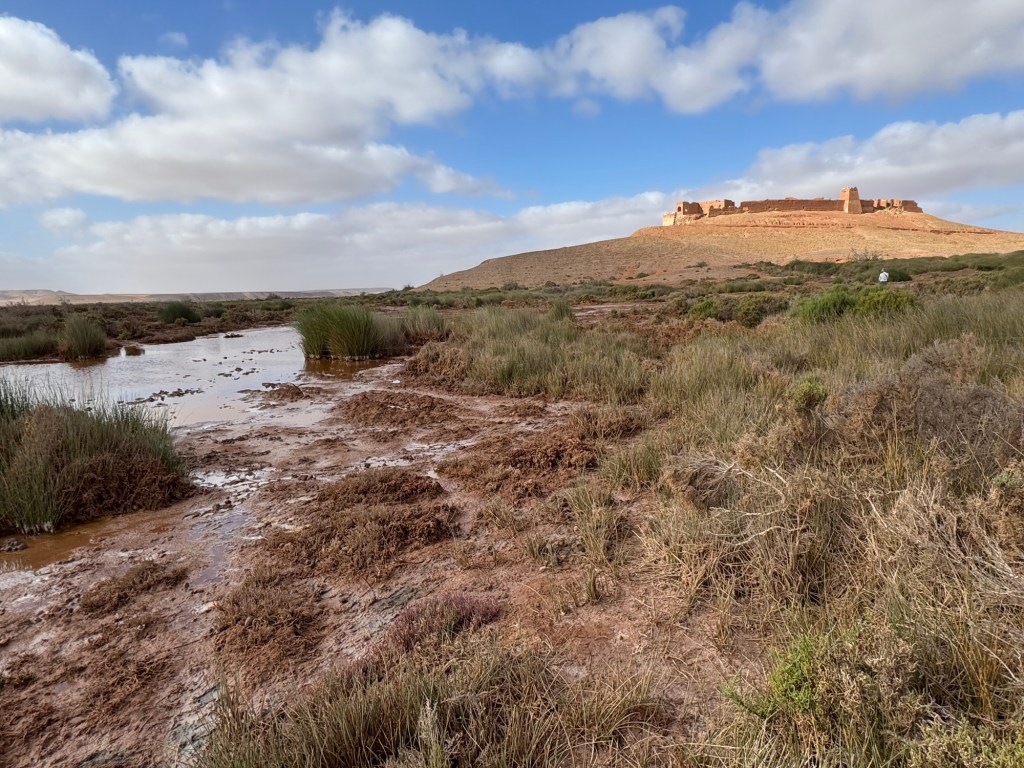
The old kasbah was a substantial thing and it seemed various groups had taken bits of it over from time to time, including an artist’s collective.
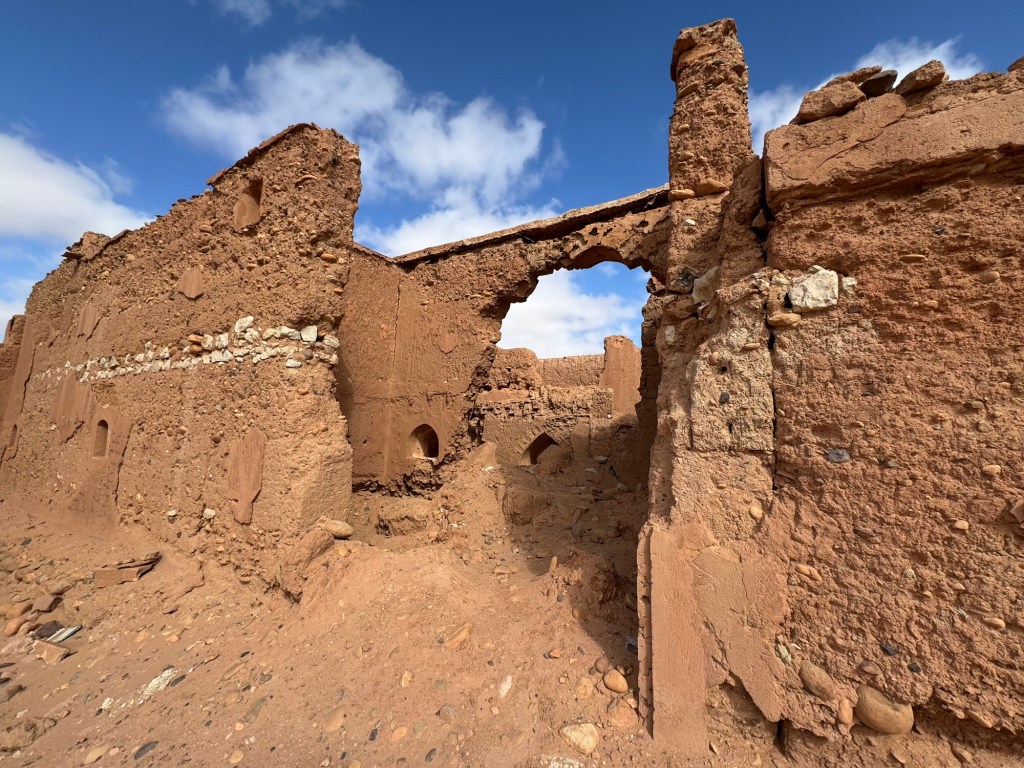
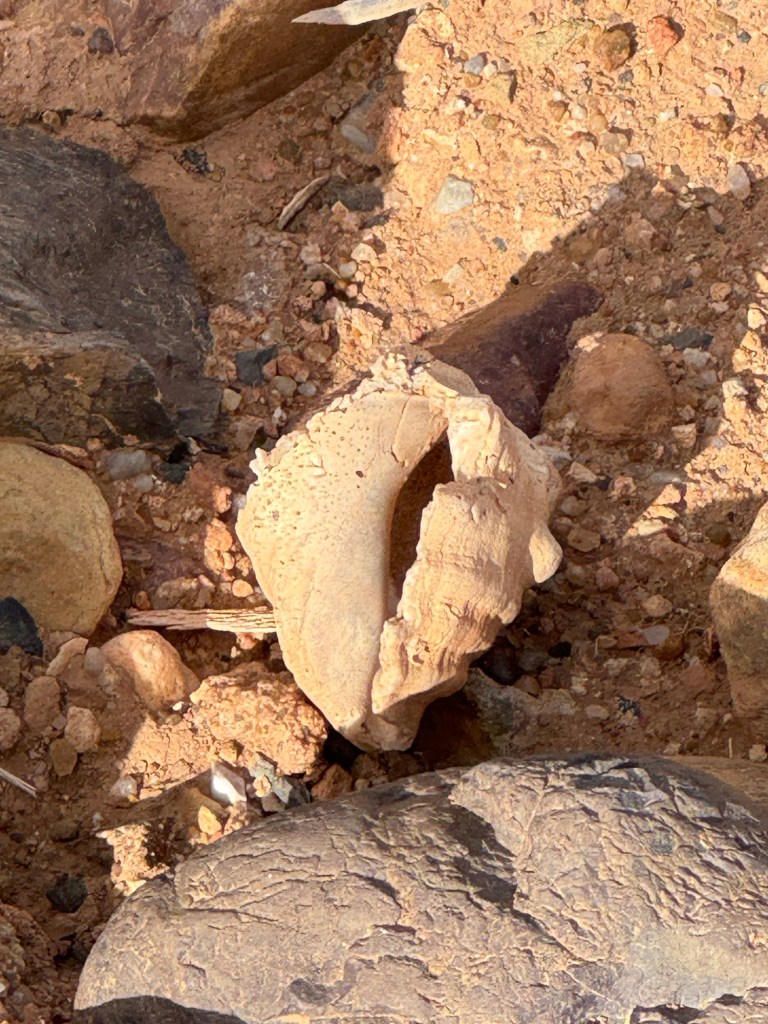
Its only life now was a guardian, sleeping in one of the rooms. Curiously, the surrounding land was littered with seashells. Whether originally traded, or discarded after their contents were eaten – or remnants from when this desert was under water, I don’t know.
Back at our French palace, the manager – a tall, genial Moroccan – said it was possible to drive to the fabled Plage Blanche coast along a mostly dry river. He showed us an old map with the route.
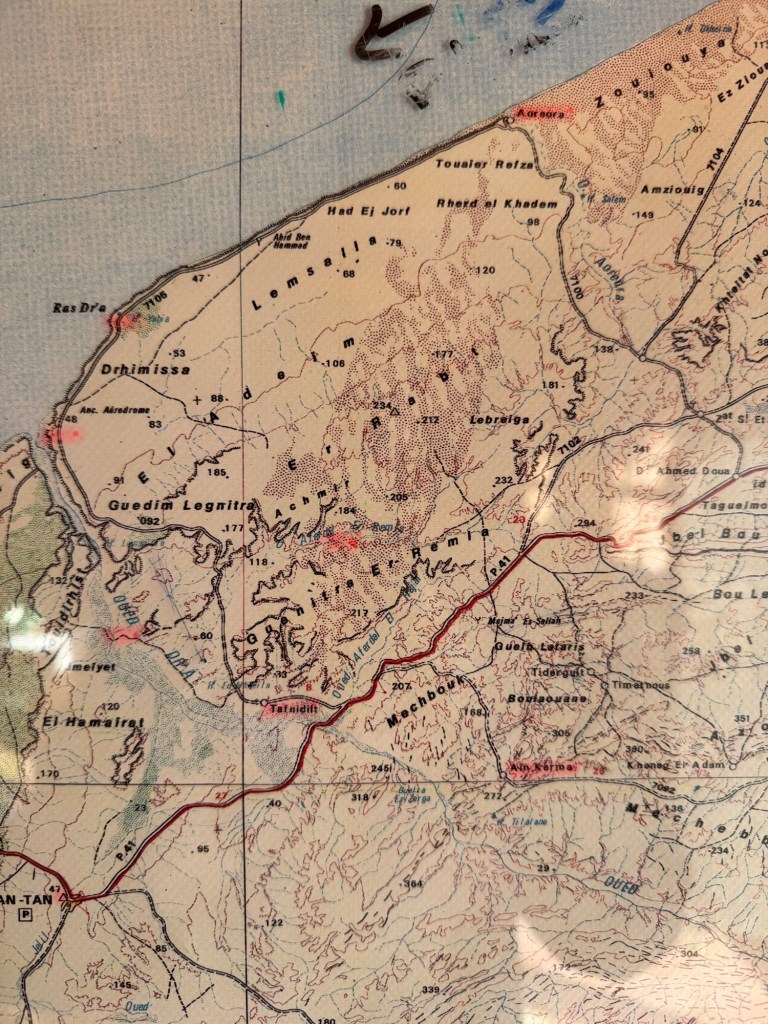
I’m a bit wary of old maps. For one thing, these desert tracks change quite a bit and for another, I’m a satnav moron now – so used to satnavs that trying to find my way without one can be a challenge. Still, I cross-referenced all the mappage we had, worked up a route and we struck out into the desert.
It was grand driving off into the unknown and unpopulated again. The track was clear and the river bed was easy enough to find and follow. There were still stretches of water in it in places, and we gingerly skirted some stretches while splashing through others.
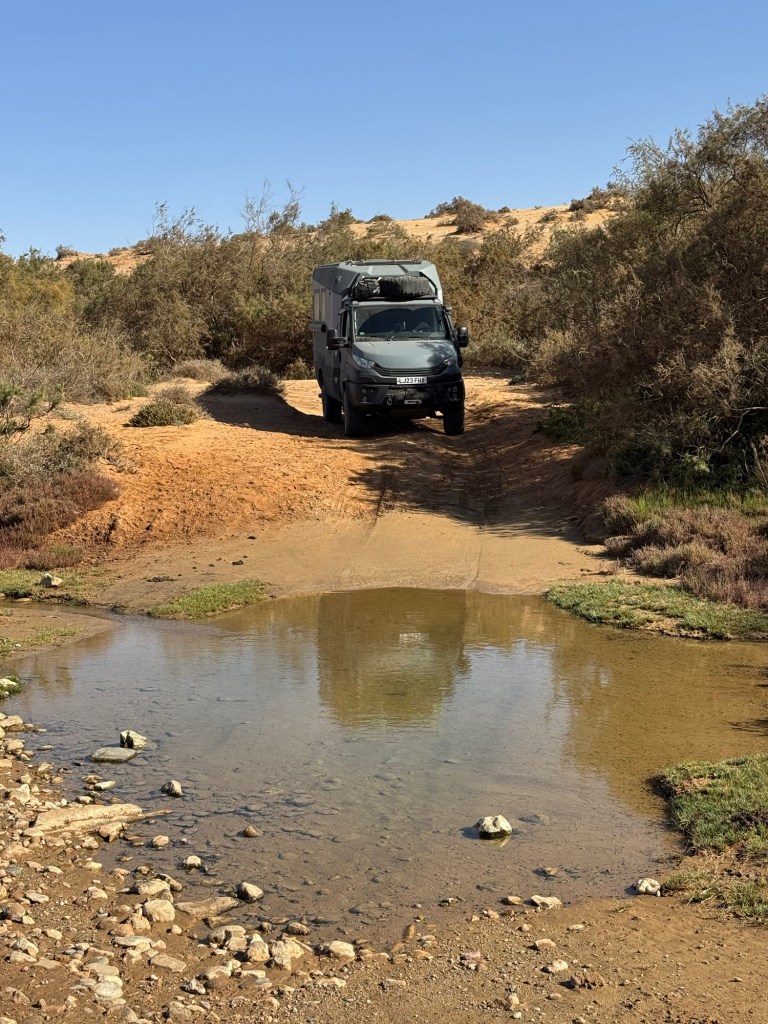
It was a lot of fun, and eventually we came to soft sandy ridges which gradually grew into dunes. We stopped Arnie and listened to the roar of the waves unseen over the surrounding walls of sand.
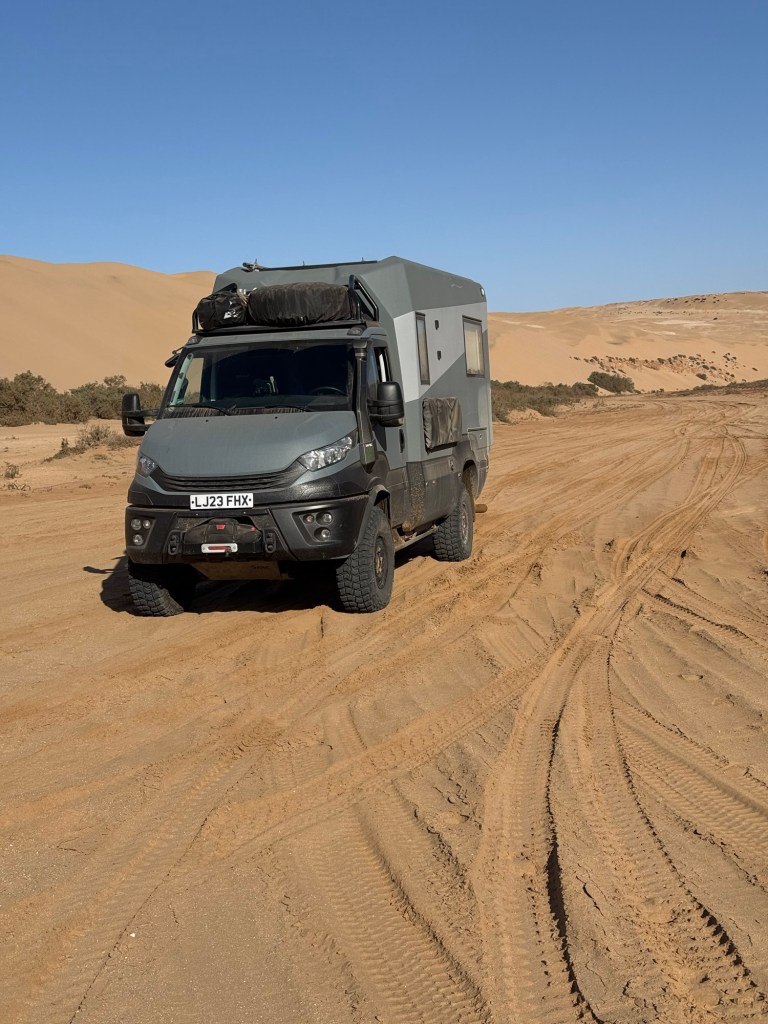
It turned out that we had to drive up one of these soft-sand dunes, or failing that, drive into the sea. The soft sand seemed marginally preferable but even with Arnie’s differentials locked and low range and soft tires it still took three goes; charging up the slope, feeling the wheels dig in and begin to get bogged, then backing down for another go. The reward was an empty coastline stretching off to the horizon; an old fort standing silent guard and a peaceful night tucked in the lee of a sand ridge.
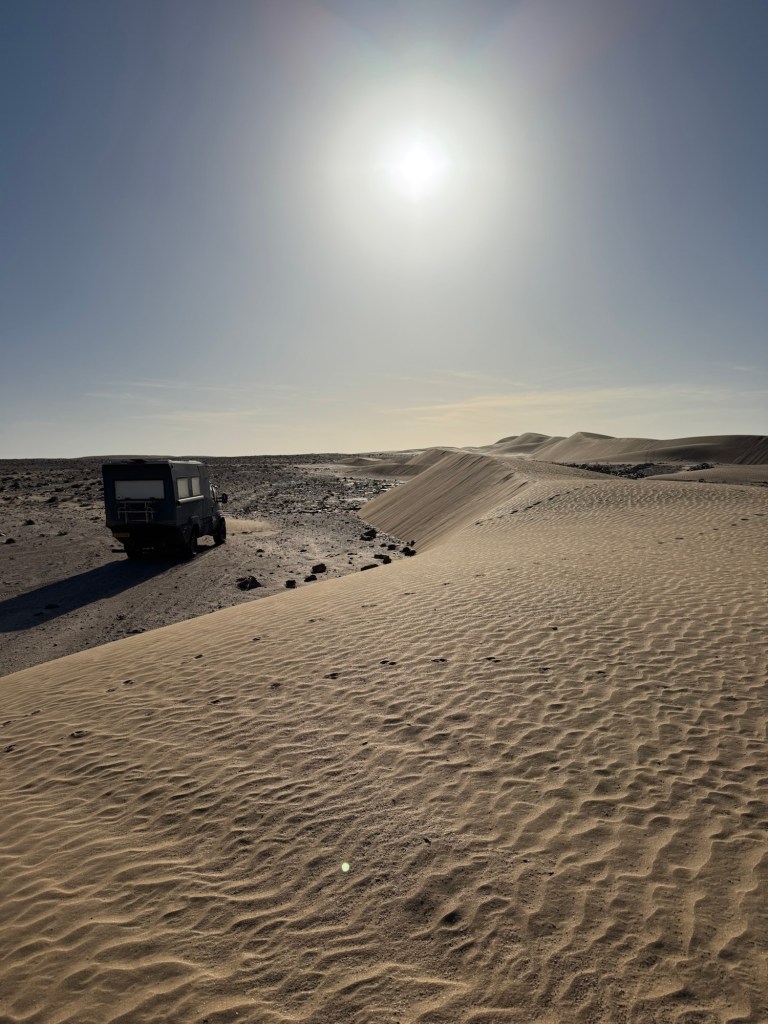
We had the beach to ourselves the next morning. Subconsciously I suppose I’ve always considered beaches as man-made things or at least harnessed by people. Tamed with deckchairs and kiosks and lifeguards and all those resort trappings. They are an amusement; safe, predictable. But then you go somewhere with huge stretches of untouched beach, beaches that few people see, beaches that would kill you without anyone noticing if you weren’t careful enough. Finding your way onto these beaches sends a little charge of electricity along the spine, because you are on your own. You’d better be sure of the path you’ve made down the cliff to get there and that the tide isn’t going to cut you off and maybe you think twice about paddling too close to where the big waves are breaking. This is unmistakeably where ocean meets land, neither side is giving up without a fight and if you get in the way you may just be swept aside.
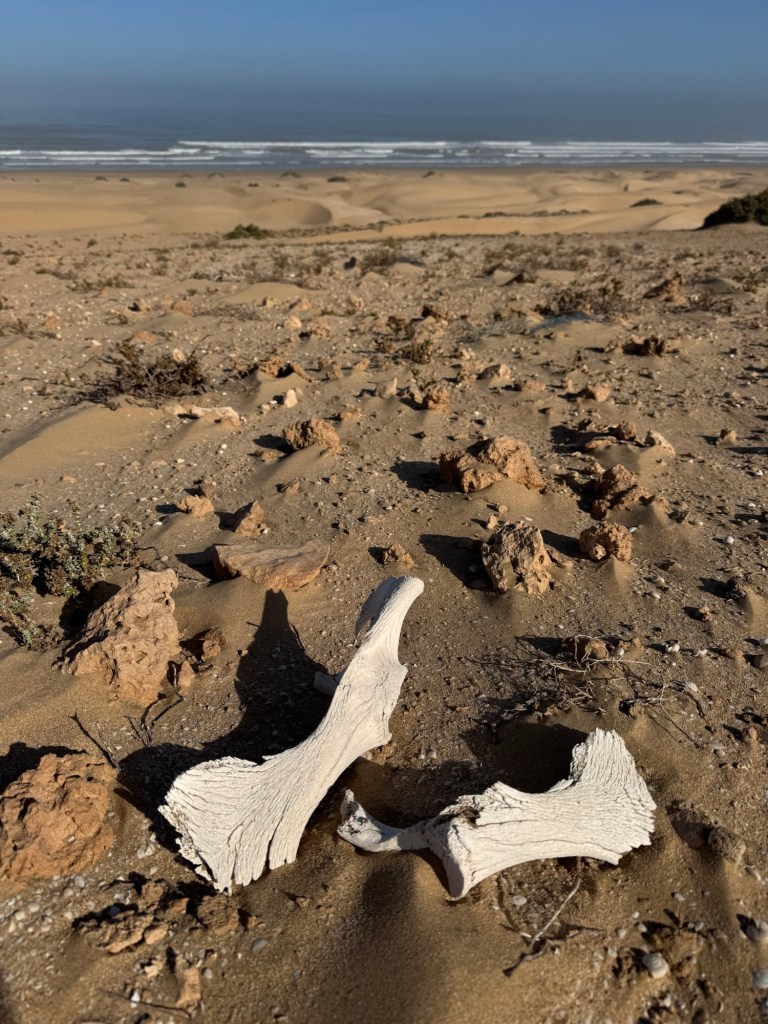
We rattled on down the track along the cliffs, surf crashing below us. Every few kilometers we passed an army lookout post – about the size of a double garage – with a lone inhabitant, a drum of water and a line of flapping washing. Sometimes the sentry would be outside the door having a cigarette and we’d each wave, cordially. The track, as they do, became increasingly difficult to follow and in the late afternoon it ran straight into a soft dune, that Arnie couldn’t climb.
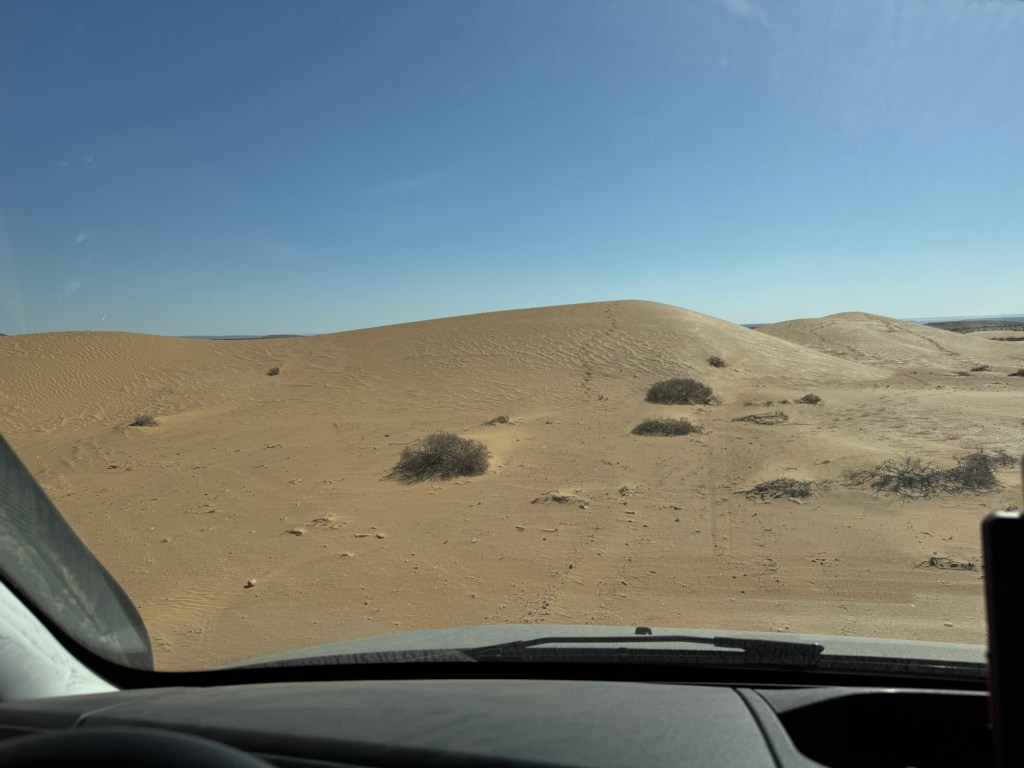
We walked up the nearest hill to see if we could spot a route around but there was nothing. We knew the direction we needed to go but not how to get there.
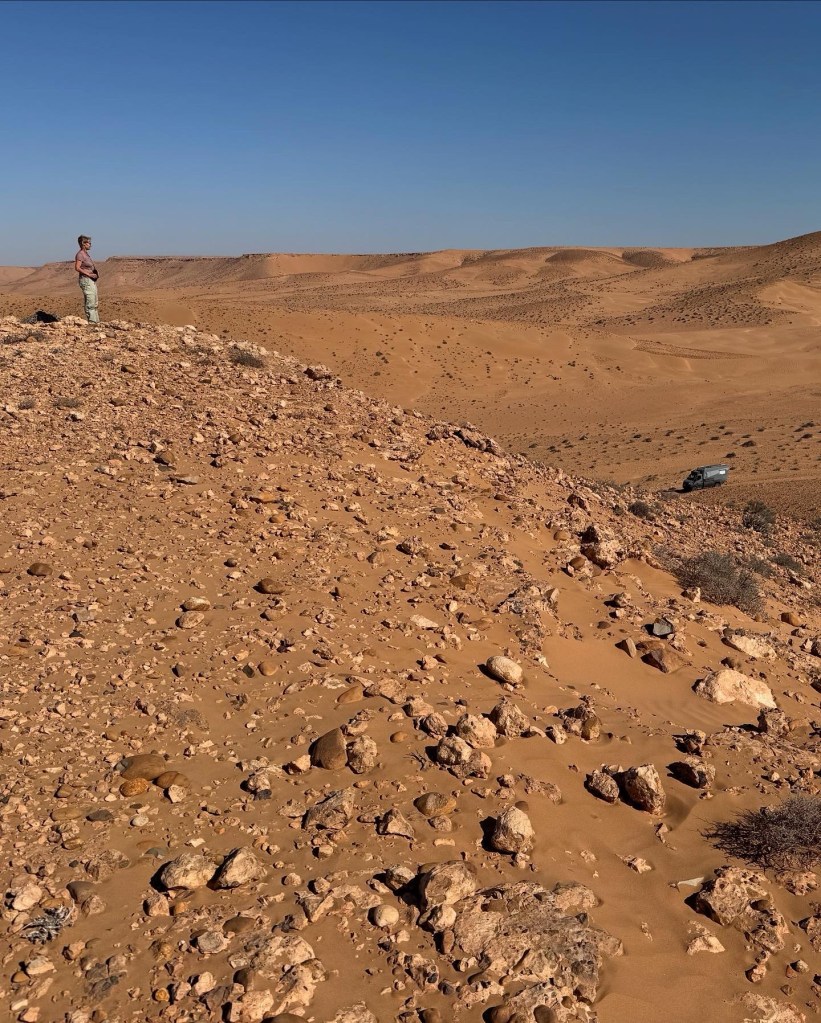
After scratching our heads for a bit, we heard an engine and saw a smaller 4×4 coming from precisely the direction we needed to go. I ran and flagged it down. A Polish family had been doing our route from the other direction and had the same problem with this section but found a way through. They were the only people we saw in three days, and they appeared exactly when we needed them.
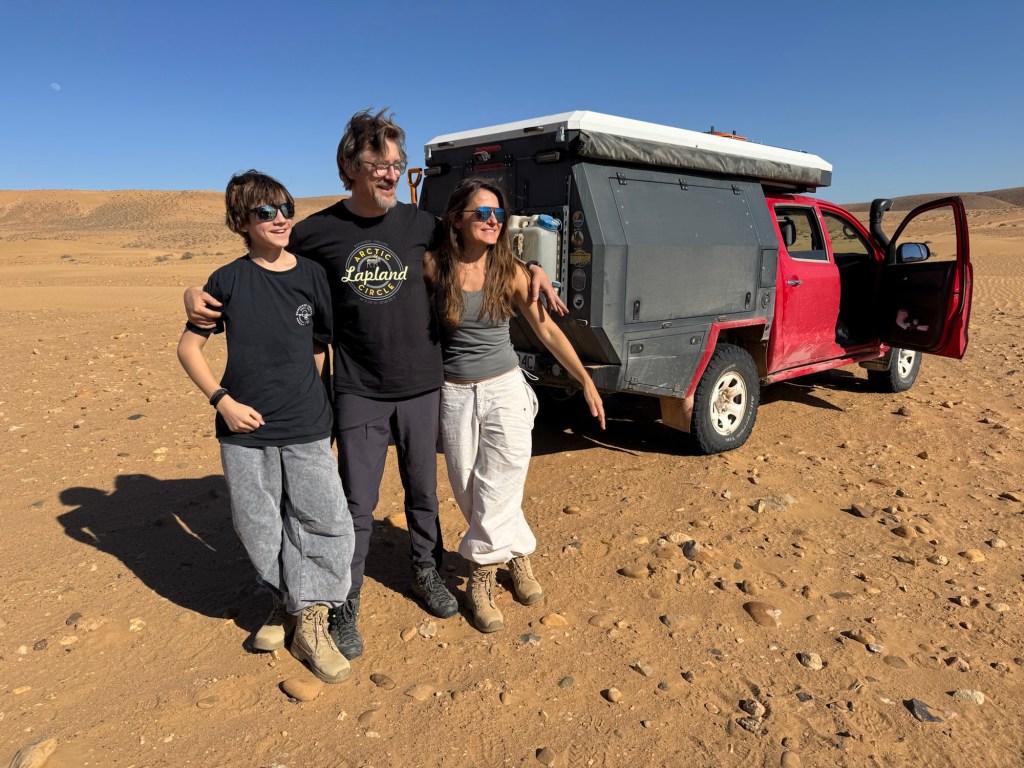
They led us back to where they’d crossed the sand and we set off flat-out in their tire tracks, our wheels spinning in the deep sand and hoping not to sufer the indignity of getting bogged down while they watched. We didn’t! But we stopped for the night where we were.
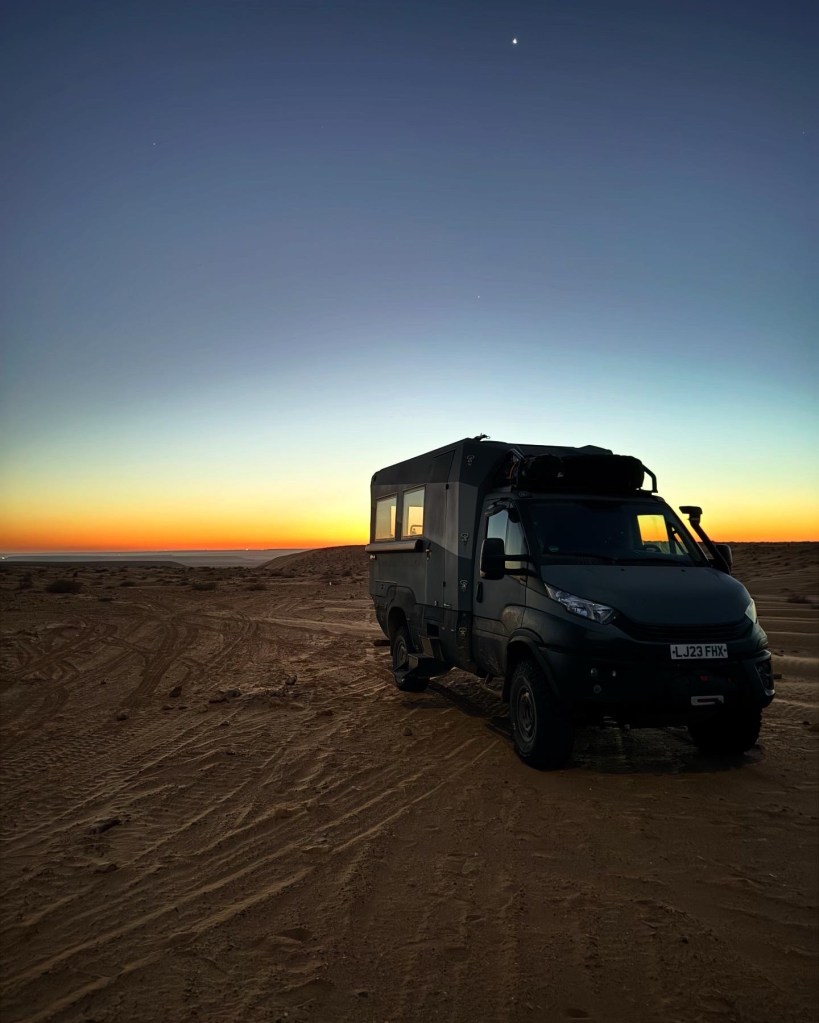
The return leg, heading inland along the Draa river was a jolty old ride and in places we had to do some minor rebuilding work to the piste but it was drama-free.
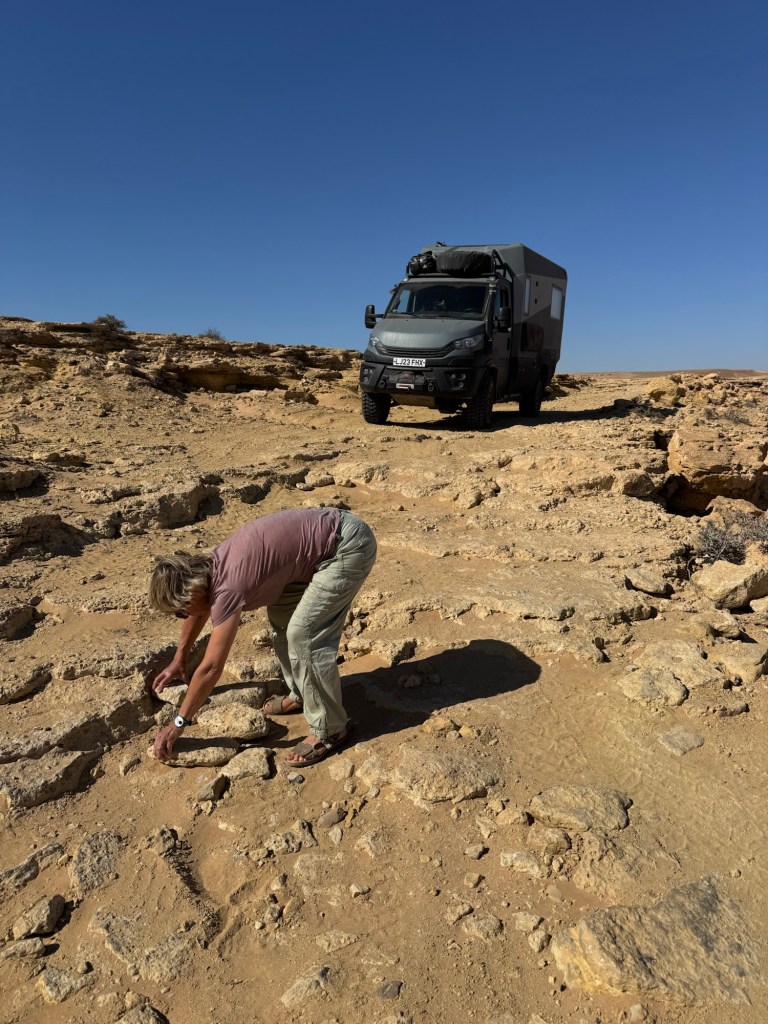
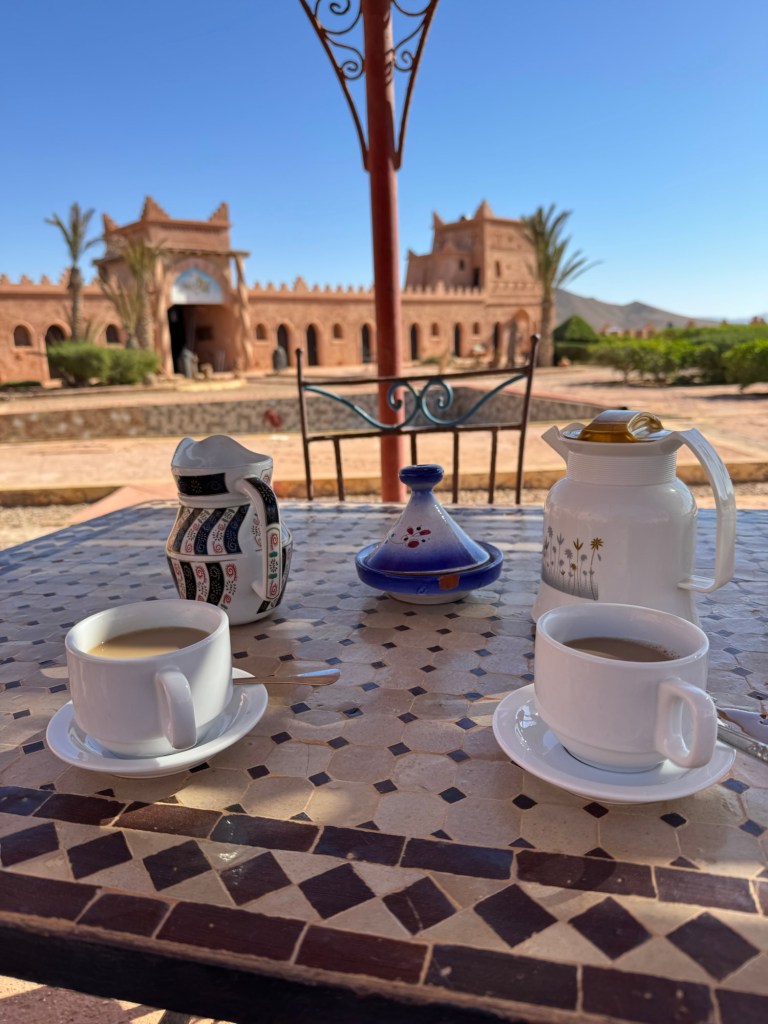
Eventually our French Kasbah sidled up to us again and we had a mint tea there for old time’s sake. It had been three whole days after all.
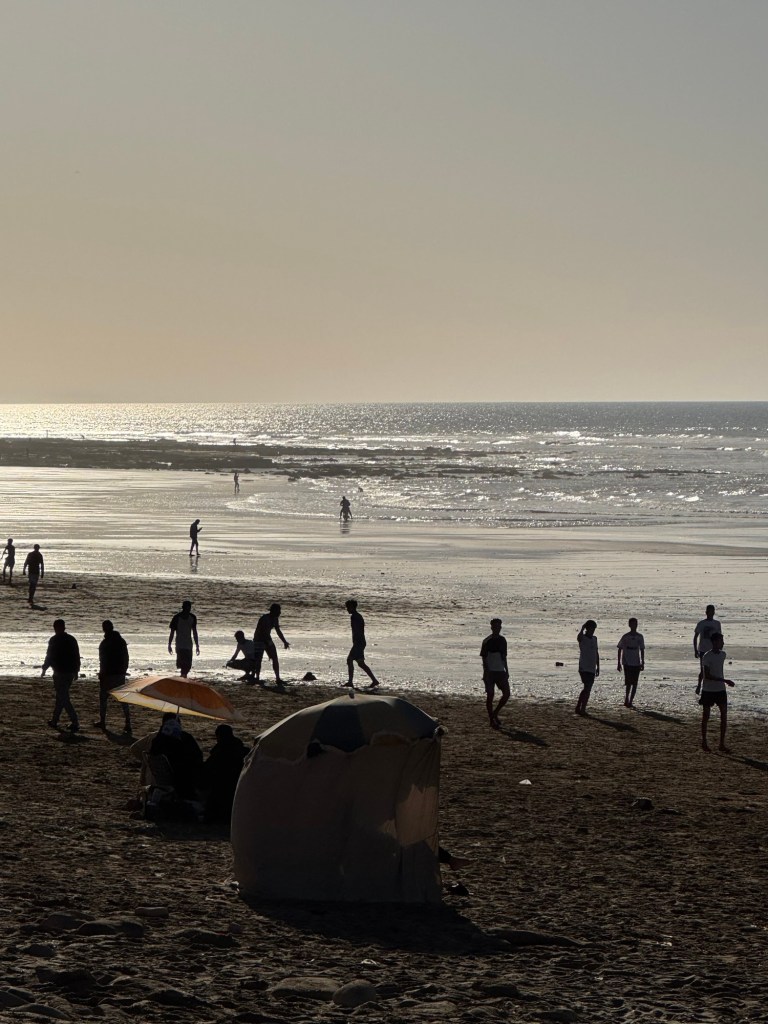
Now it was time to head south properly and get some miles under our belt. We aired up at the roadside and delighted in the smooth tarmack under our wheels. At Tan-Tan plage we saw Moroccans enjoying beach life en-masse for the first time, with tents set up as wind-breaks and a lively game of soccer under way.
We’d heard that Khenifiss National Park allowed people to stay overnight in the car park. It is an area of wetland where the park authorities clearly have a somewhat uneasy relationship with the local fishing community.
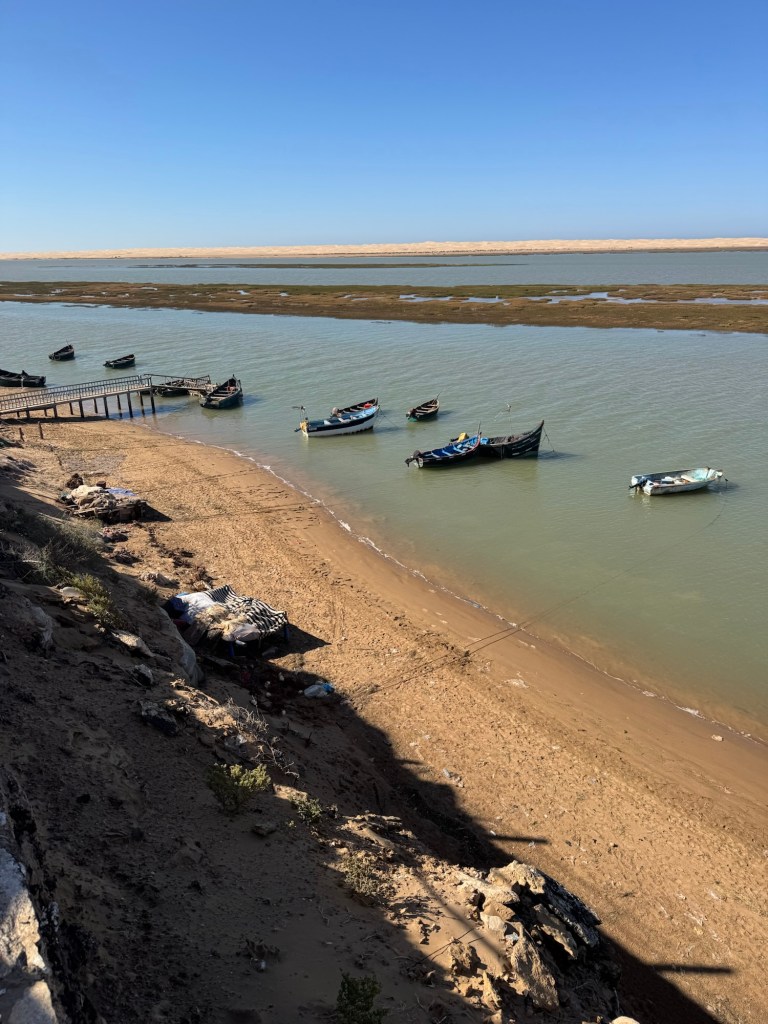
Amidst the boats on the shoreline was a filthy tide-line of detritus – mostly fishing related; nets, floats, rotting waste and the bloated corpse of a dolphin. Further up the beach there seemed to be the remnants of a large inflateable boat.
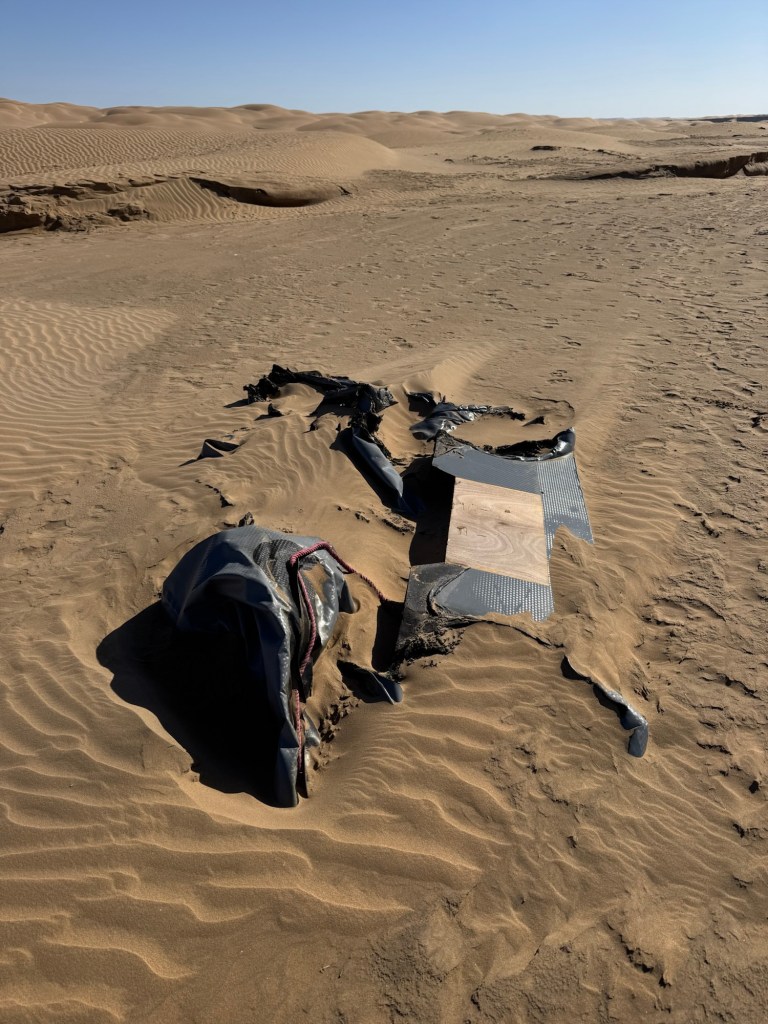
This lonely shore attracts migrants from the south fleeing to the Canary Islands, less than 100km away. They are one of the reasons the Moroccan military is so active in this area.
We walked up the beach to the point at which a golden duvet of dunes plunged into the ocean.
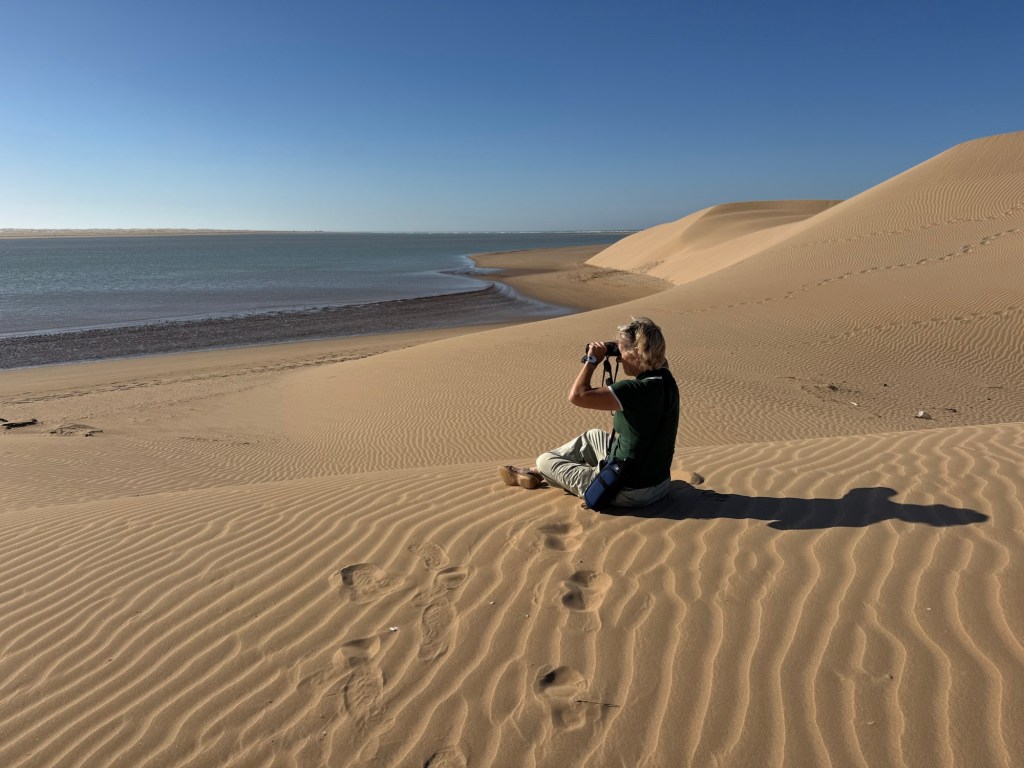
The lowering sun cast a mellow vanilla light across the sand. Tiny birds chased the edge of the waves below us on invisible legs. We were the only people in sight.


Leave a Reply