It was only when the man next to us was arrested that Western Sahara began to take on a slightly more sinister air. It was a place I’d long been interested in because of the ends-of-the-earth quality summoned by the name. And it really does feel like the ends of the earth; a large empty, ghostly expanse of sand pockmarked with wild-west settlements. First though, we had to get there.
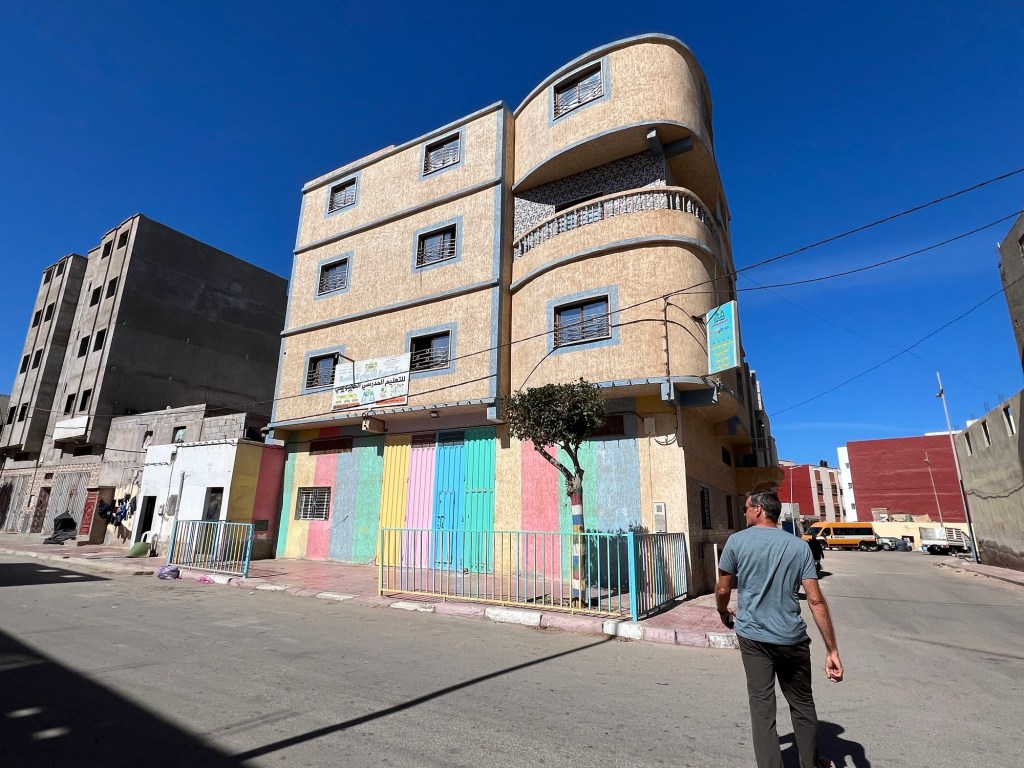
Tarfaya is the last town in Morocco proper (see below for more on that) before you cross into Western Sahara. Strikingly, for such a middle-of-nowhere sort of place it has a fantastic museum devoted to the life of Antoine de Saint-Exupéry who I knew only as the author of The Little Prince.
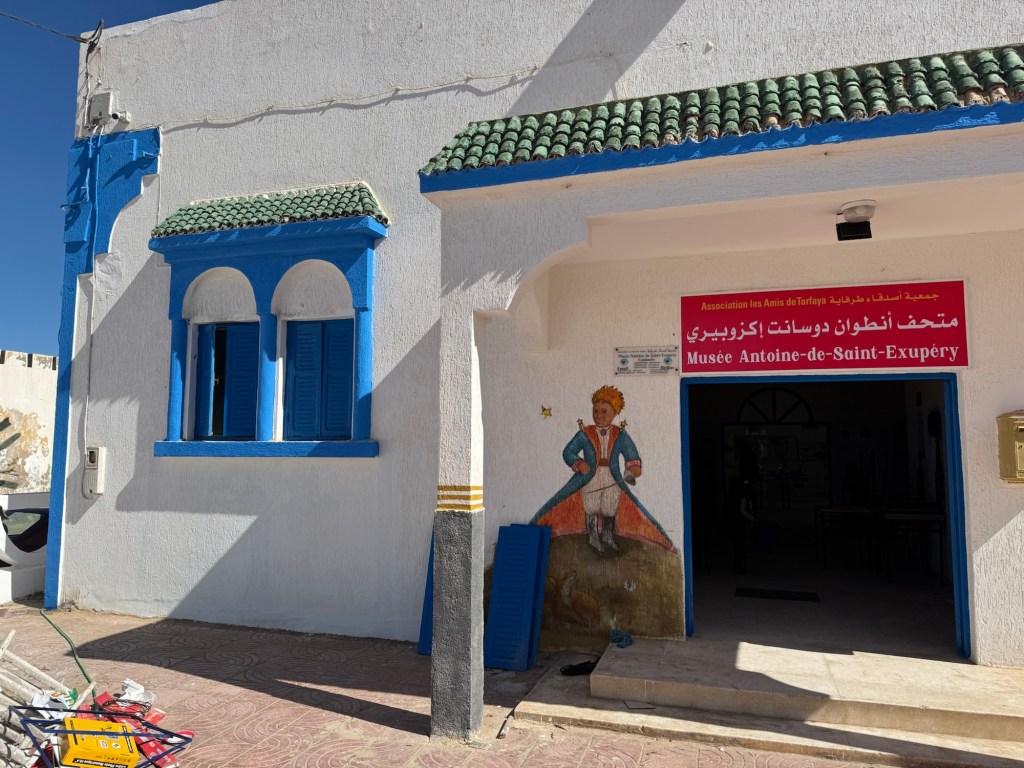
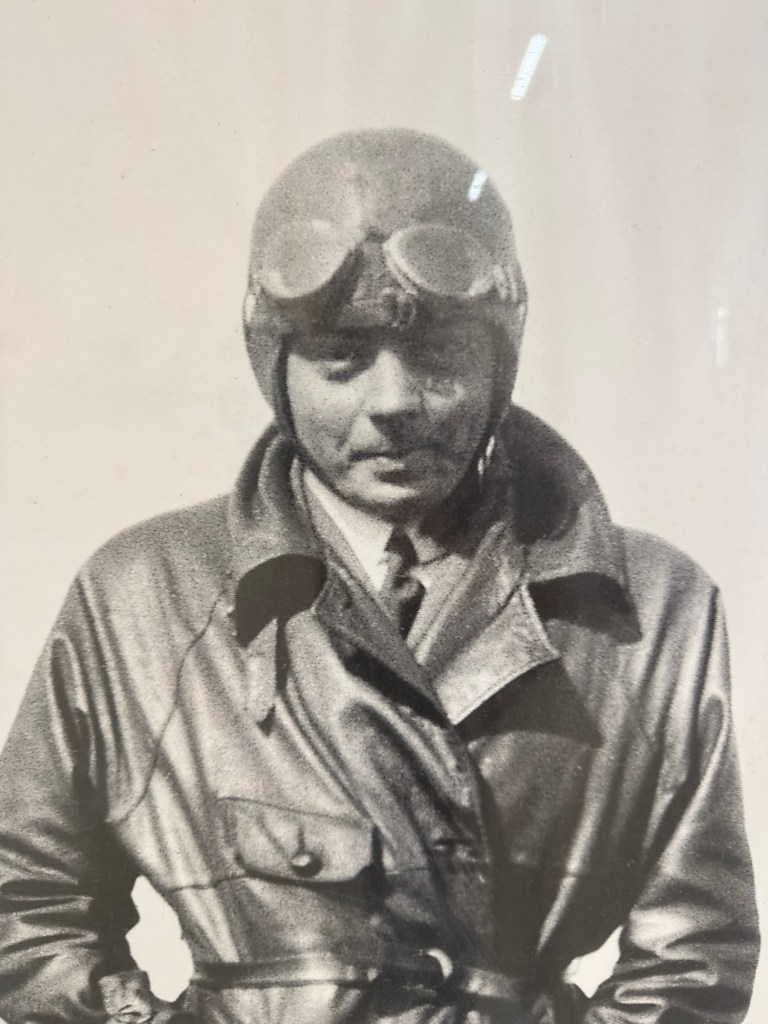
His life as a pioneering pilot, journalist, novelist, adventurer and supporter of the Free French in WW2 was fully deserving of a museum, even if P and I seemed to be about the only visitors.
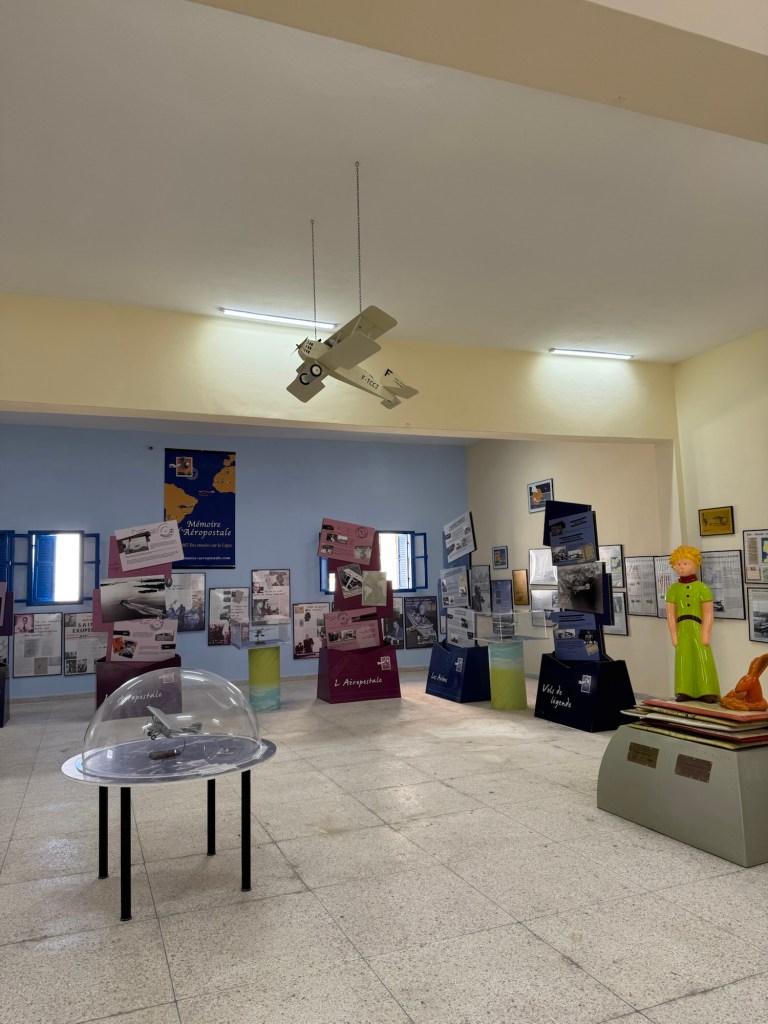
Tarfaya is next to what was the Cape Juby airfield where he was based as an airmail pilot in the 1920s flying between Toulouse and Dakar. He often flew deep into the desert to negotiate the release of crashed pilots taken hostage by Bedouin; work which eventually earned him the Légion d’honneur. His was a life of derring-do and with archive photos, maps, newspaper clippings and little bits of memorabilia, the museum told his story.
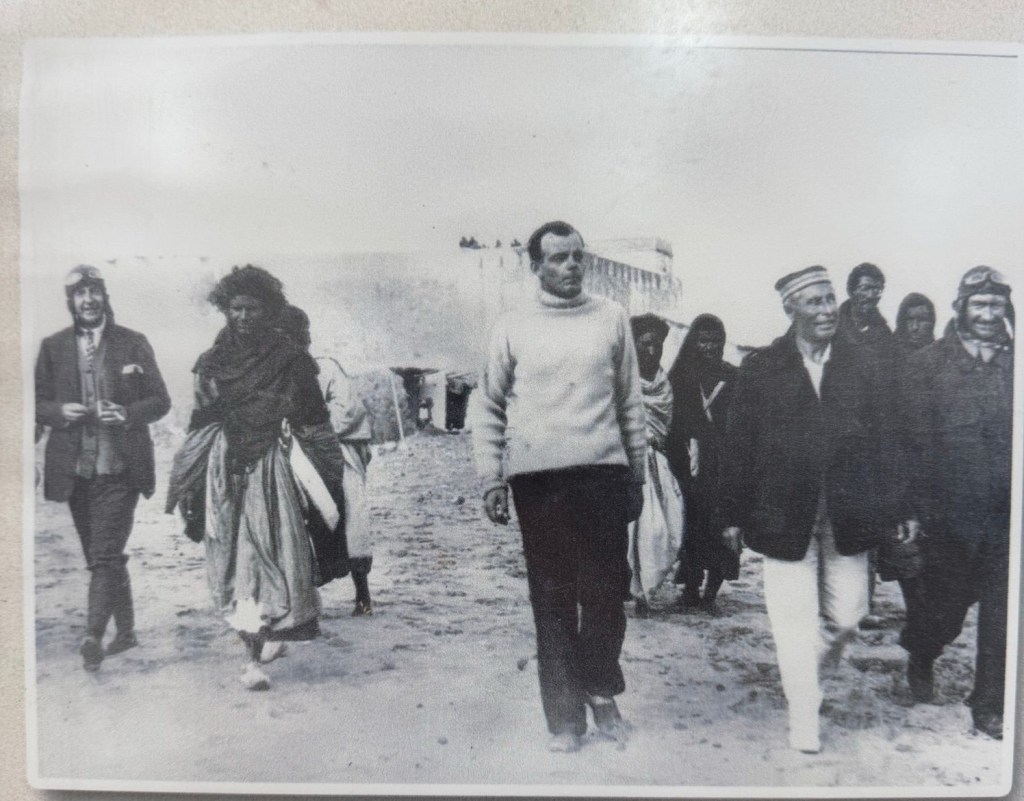
Over the years he had many crashes, leaving him with long-term injuries. The Little Prince was said to have been based in part on his experience after crashing in the Libyan Desert with his navigator. They were stranded for four days before a Bedouin tribesman who saved their lives. He later helped establish air routes in South America, and lobbied the US government to join WW2. He died after taking off from Corsica on a reconnaisance mission in July 1944. His body was never found.
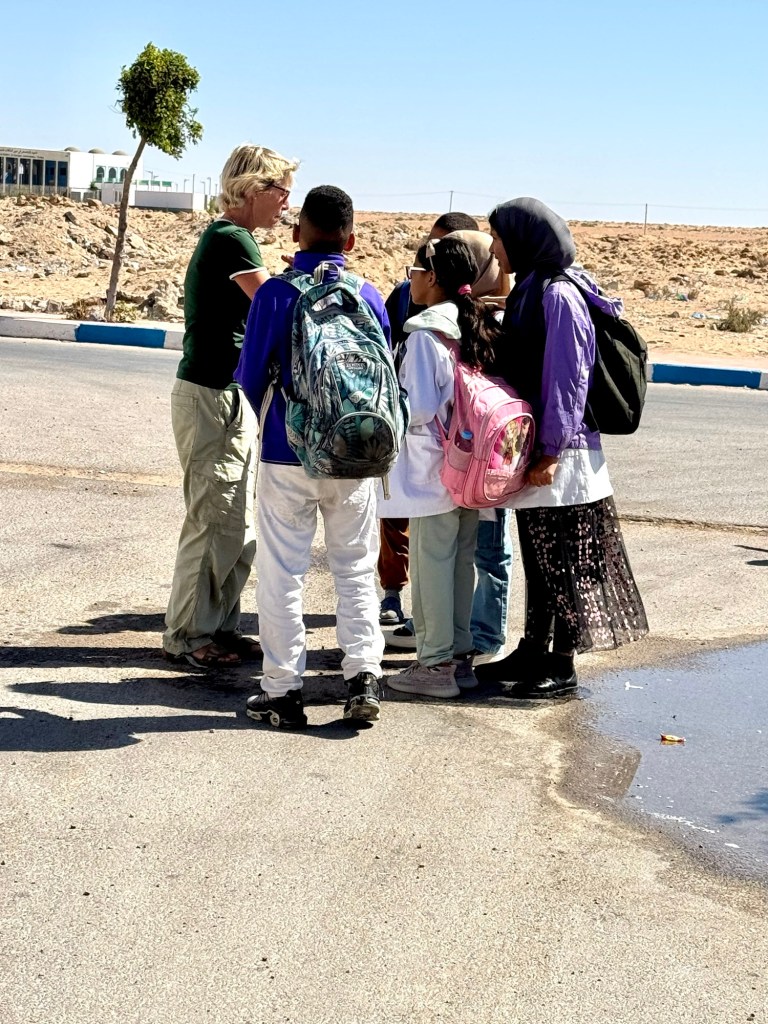
We left the little museum to find some food, heat shimmering from the pavements of Tarfaya. Philippa quickly drew a crowd of children wanting to test their English.
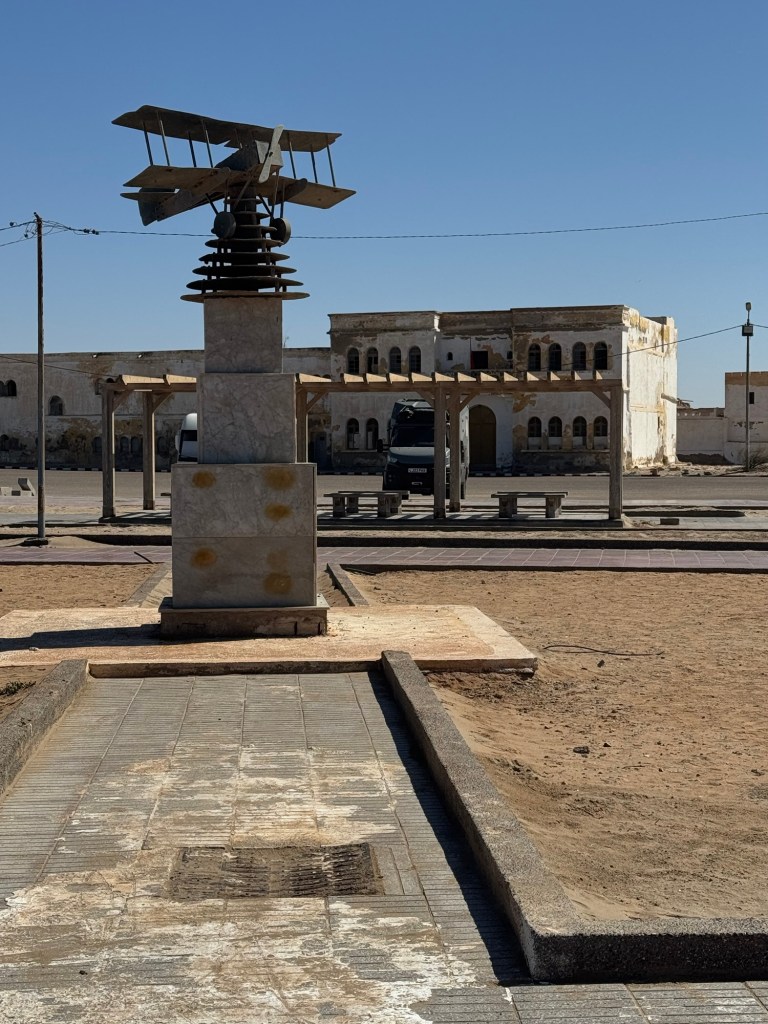
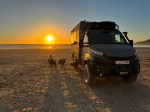
Eventually we returned to Arnie parked under a sculpture depicting Saint-Exupéry’s plane taking off for another adventure.
Suitably inspired we turned towards Western Sahara. The border passes just south of the tiny settlement of Tah which surrounds a monument celebrating the visit of Sultan Hassan 1st in 1886. What brought the Sultan to such a remote outpost isn’t clear, but the proximity to the unmarked border with Western Sahara may not have been entirely coincidental.
And this is where it gets complicated. We met travellers who had maps confiscated by the Moroccan authorities because they showed the borders of Western Sahara. No such place, says the Moroccan government. It is all Morocco. So, a potted modern history then. The region was occupied by Spain for almost a century until 1975 when the Spanish handed control of what the UN regards as the “non-self-governing territory” of Western Sahara to Morocco and Mauritania. The Moroccan government quickly organised a “Green March” into the territory of around 350,000 people and 20,000 troops to stake its claim. The Polisario Front, fighting for independence for the Sahrawi People of Western Sahara then began a long campaign of guerilla warfare against the Moroccans. Mauritania signed a peace deal with the PF in 1979 but there was no cease-fire with Morocco until 1991 by which time 10-20,000 people had been killed, some as a result of air raids in which Moroccan forces used phosphorus bombs and napalm. More than 170,000 Sahrawis now live in refugee camps in Algeria. Morocco controls about 70% of the territory and the PF controls the rest, mostly east of a vast sand “berm” which splits the territory north to south. But tensions persist as the Sahrawis are becoming impatient for the referendum they were promised as part of the ceasefire and in recent years there have been sporadic clashes along the line of the control. The Moroccan authorities are deeply sensitive about the region. Three MEP’s on an official visit were forcibly denied entry in February 2025. So it remains a live issue.
The Sahara, Western or otherwise, appeared immune to labelling. It slid by, largely flat, mostly beige, sometimes stony, sometimes smooth as an iced wedding cake.
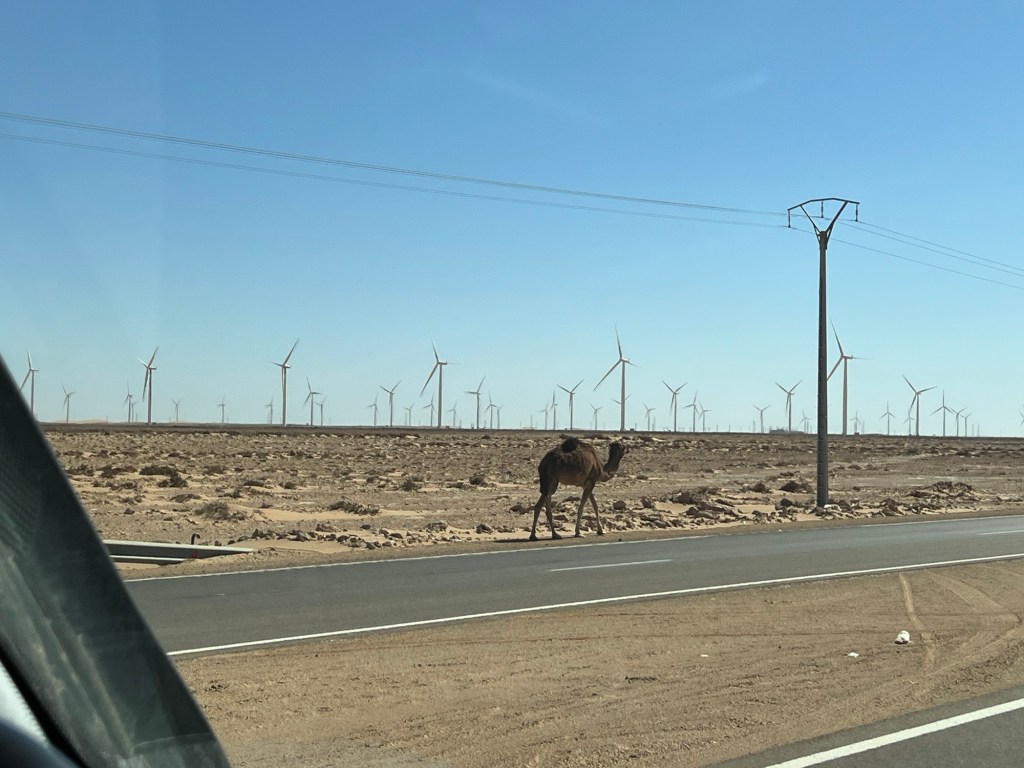
The road is a recent Moroccan investment, sleek and black, shadowing the old track that used to take days to drive. It is as desolate a route as you can imagine.
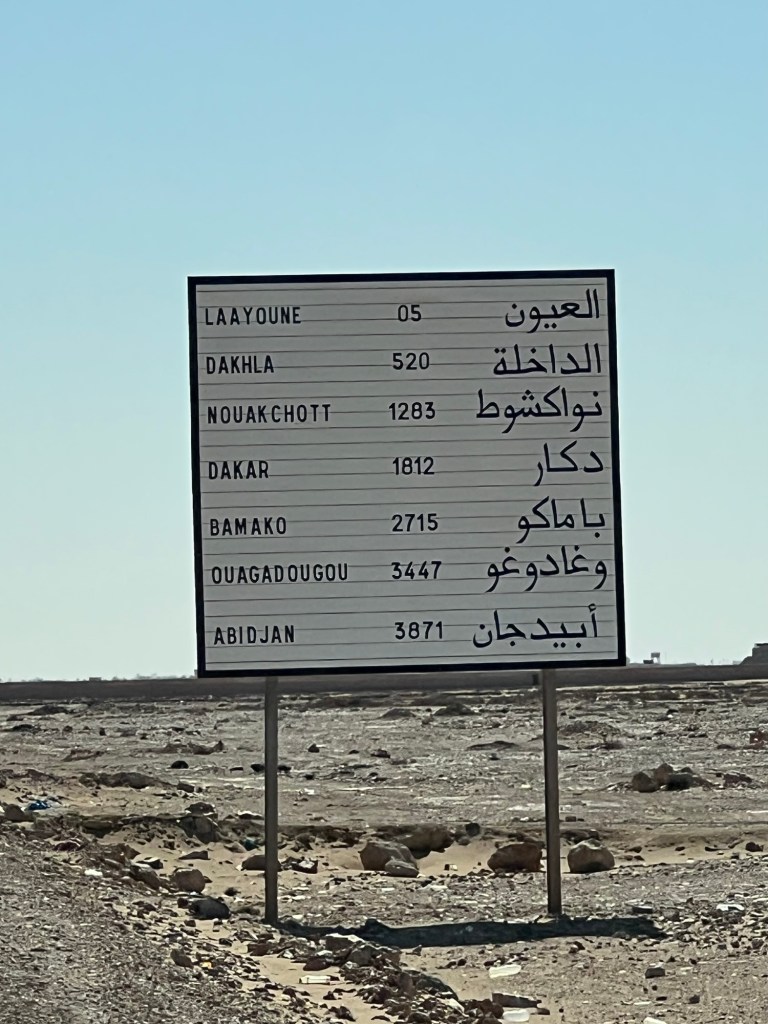
After hours of this bleak and seemingly unlimited expanse it was a relief to see Laayoune – Western Sahara’s former capital – looming up out of the desert ahead. But first, a checkpoint.
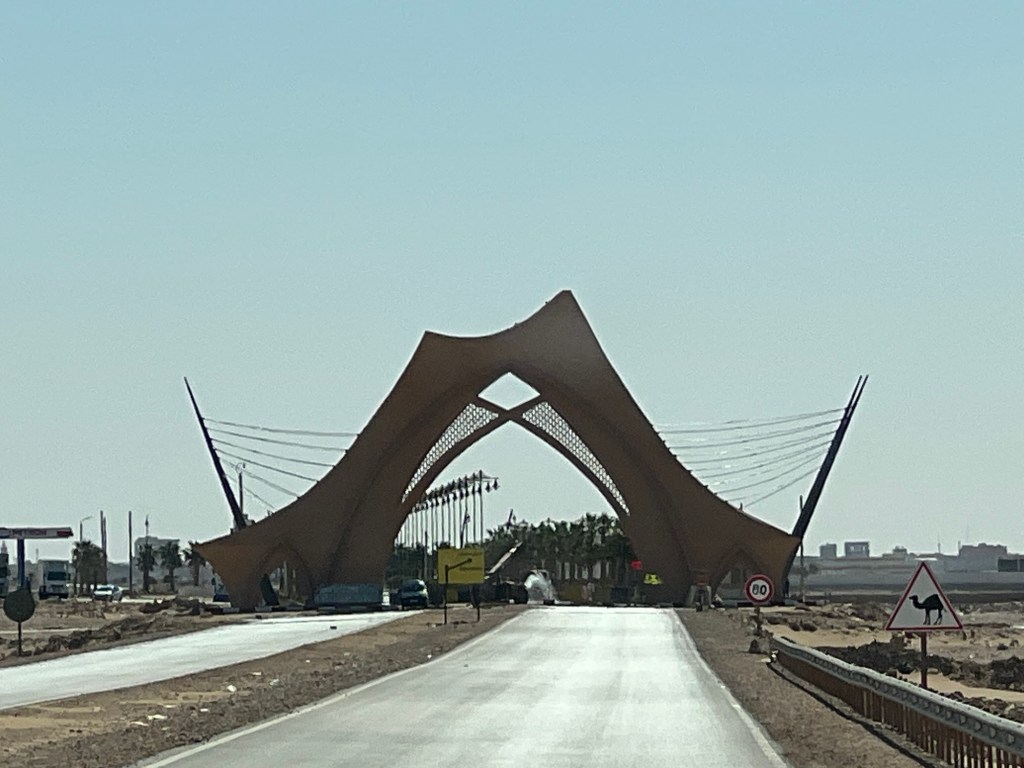
These are common enough in Morocco and we were used to being waved through with a smile. Here though, it was all business. A sober military type all in black asked for our passports. Where exactly were we going? How long would we be here? Which direction would we go after Laayoune? We answered his questions and he waved us off, watching as we pulled away.
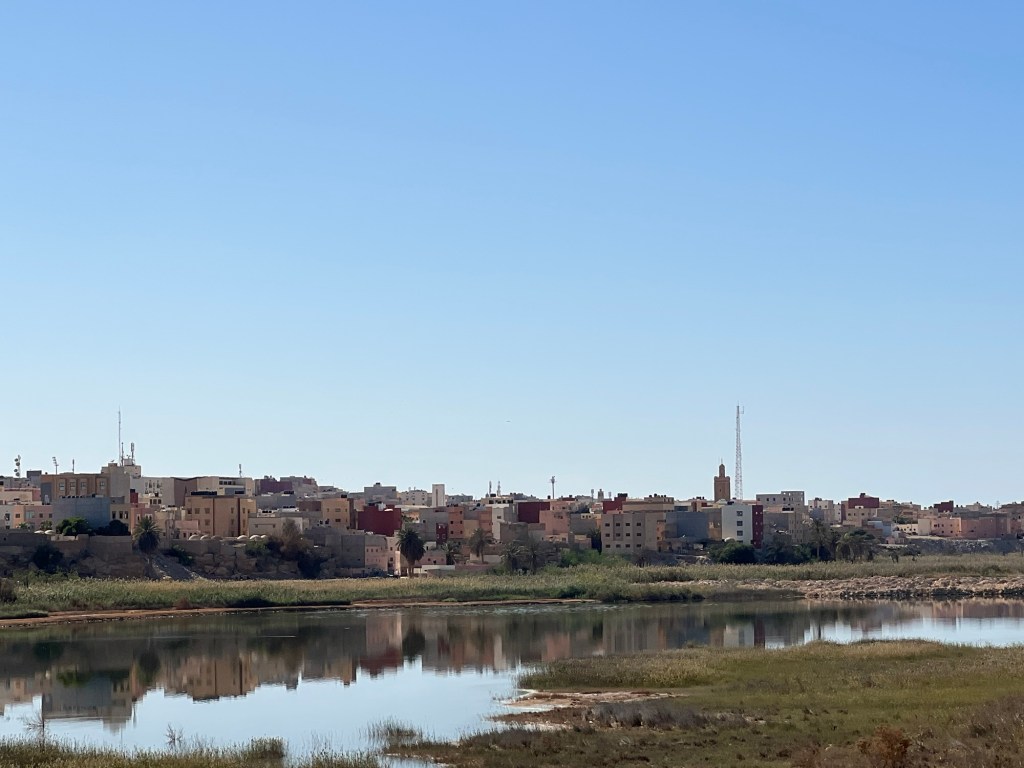
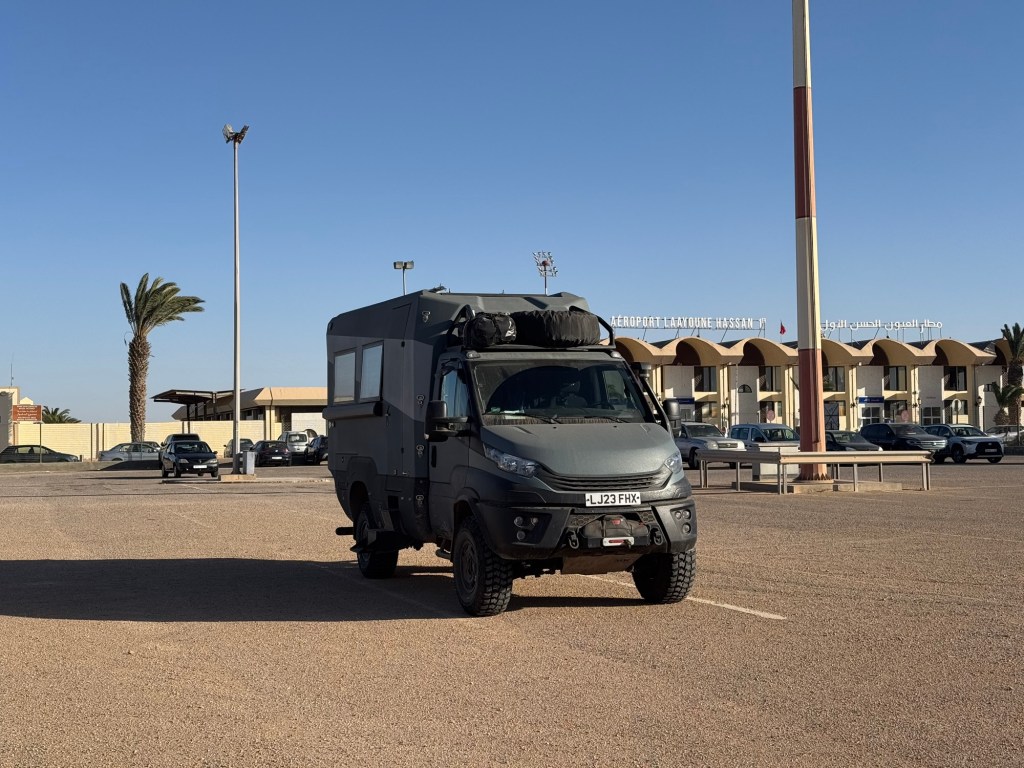
Laayyoune is a handsome place in a dusty sort of way. It climbs a hillside, separated from a wall of dunes by a wetland – something of a surprise in this arid place. Large civic buildings reflect its status as an important regional capital. We followed satnav directions to the wetlands which led us into an increasingly narrow series of backstreets, watched by bemused locals as we filled the alleyways. We parked and failed to find the view. It was too hot. We were tired and feeling somewhat adrift. After a long day we needed a place to stop for the night. For once, we didn’t much fancy driving off into the desert but the city seemed too full of buildings and people to offer us a quiet spot, so we made for the airport. Laayoune International is right on the edge of town and the car park is outside the terminal. It was almost completely empty and with only a handful of flights every day, it was quiet. Oh the glamour.
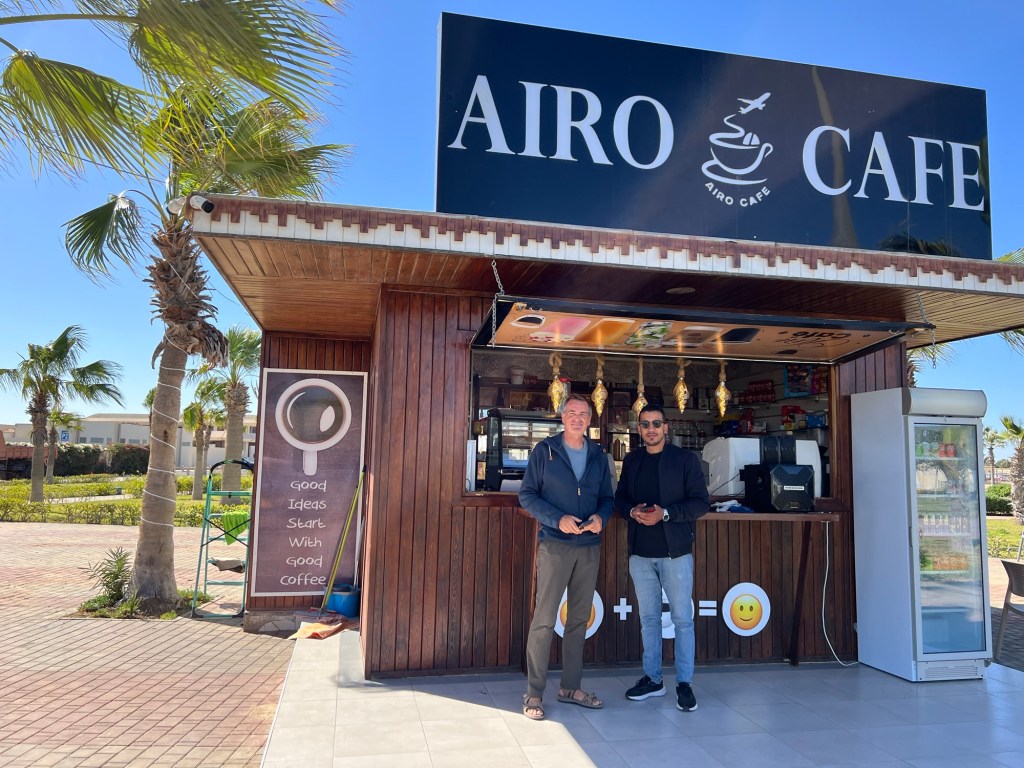
Next to the airport was a cafe run by an enthusiastic young entrepreneur who offered a modern menu. He was a delight. All these lives playing out in these lonely places. People with the same aspirations as everyone else and fewer opportunities but sticking it out.
South again and the road seemed even emptier than the expanses we’d crossed the day before. On one subtle ridge in the desert, a series of communication towers reared up above us.
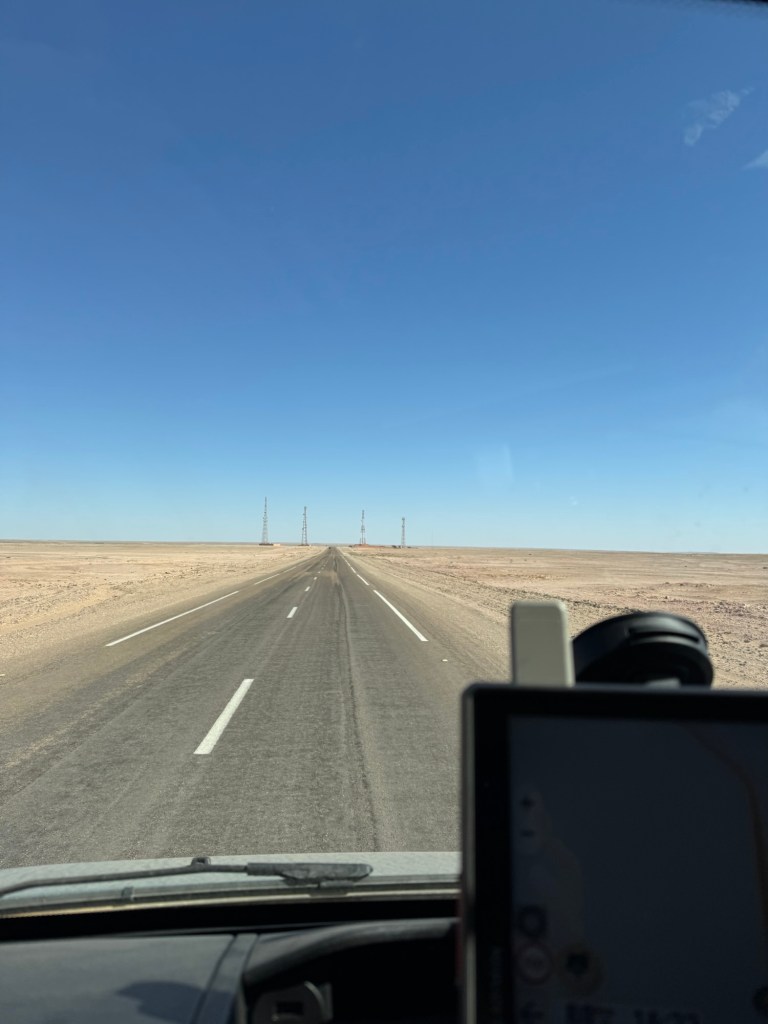
A man was standing on one of the lower sections, watching us pass. After a few hours we came to the town of Smara and another checkpoint. A black-clad man emerged from the police booth and looked us over with sharp eyes. He wanted our passports and asked the same questions, adding “Don’t go east from Smara”. East lay the berm and the Sahwaris refusing to buckle to Moroccan rule. We politely concluded our business and headed into town.
There was a different feel to Smara. Maybe we’d imbued it with some of the tensions of the region, but there was a curious sense of something bottled up. Cars travelling too fast, people scowling, or shouting, horns blasting and a desultry late afternoon heat. We stopped opposite what looked like the liveliest of the coffee shops on the main street and found a free table next to a young man with a sharp haircut and a black leather jacket, talking quietly on his phone. People noticed us and a wild, jocular man came to take our order, grinning. We ordered in Arabic and he shouted it back to the kitchen, before laughing crazily and jogging out of the cafe and across the street, much to the amusement of his friends, cackling at nearby tables. The real waitress came over – an unusual sight in itself as these coffee shops are usually all-male affairs. She had a leather money-bag around her waist and world-weary air about her. As she went off to get our tea we tried to give off vibes that we were more relaxed than we actually were, as the cafe watched us. There were more raucus people on the street and the whole vibe was tense in a way we couldn’t quite understand.
When I went to find the waitress at the back of the cafe, she was frowning and distracted. After I’d paid her I found out why. At the table next ours the young man with the sharp haircut was being arrested by half a dozen plain-clothed police. He was silent but cooperative, and they hustled him into an unmarked white van. People watched in silence and then turned back to their hookah pipes and coffee
It was time to go. We would have liked to dip into Mauretania which at this point was less than one hundred km south of us, but the only border crossing available to us was a further thousand kilometers through more unrelenting empty desert. Not this time.
Just fifteen minutes further north we found “Camping Touristique la Saguia” by the roadside. It was a large, gated compound and had outbuildings with handsome arches and stained glass windows and a restaurant area under a canopy. It appeared completely deserted, and possibly sliding towards dereliction. Someone had pumped some money into it once but now it felt like an abandoned film set. We’ve always felt that these are places that travellers like us should try to support, because if we don’t, there’s a danger that there will be nothing available in these tracts of desert for anyone. We parked Arnie in a raised area above the compound beyond the buildings and walked back to investigate. One of the two brothers who run the place, Mustafa, appeared from thin air and yes, we could stay and eat there too. “What would you like?” Its a question which implies that there may be more than one thing on the menu, but actually, it will be tagine.
As we waited for supper, a herd of camels appeared in the compound below us with a rowdy bunch of cameleers directing them into a pen.
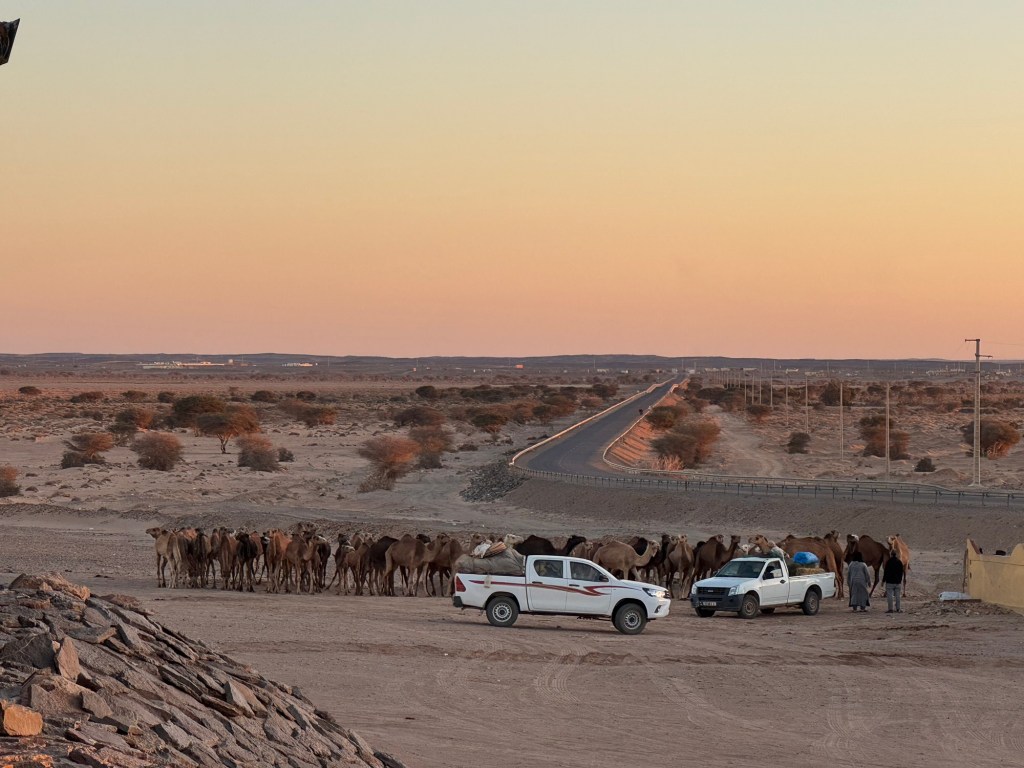
The camels grunted and spat, the young men around them shouted and joked, buzzing about on small motorbikes or on the back of pickups. Mustafa was clearly uneasy about them, casting a worried eye in their direction as he brought us our food.
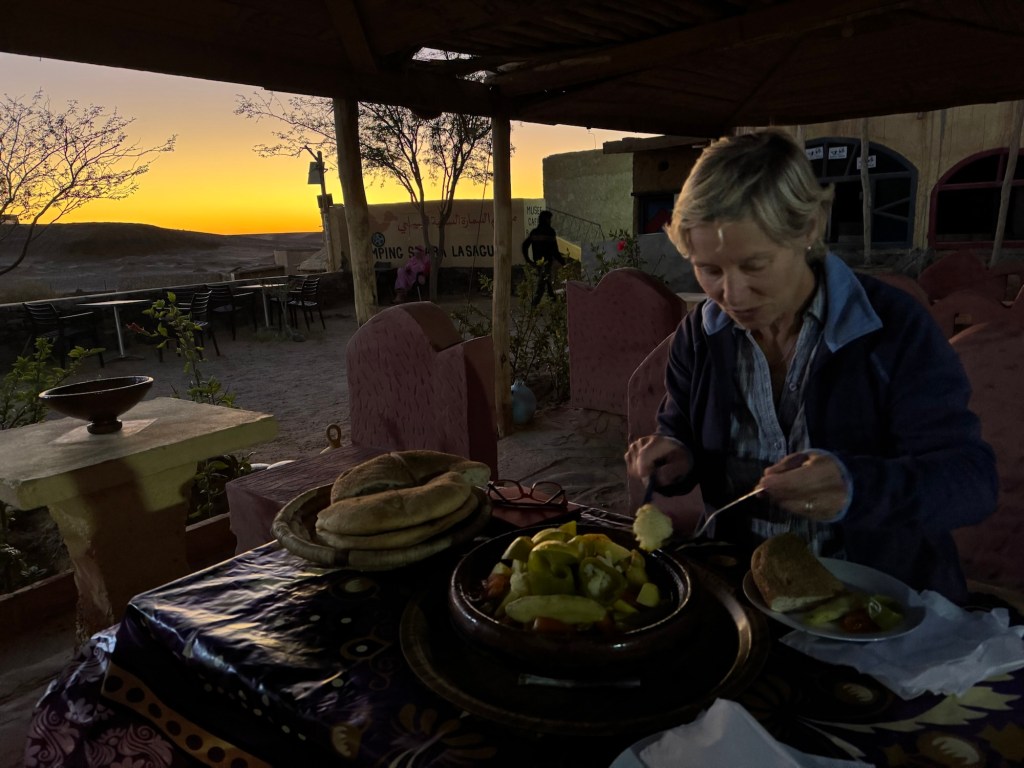
One of the louder lads in the group eventually came through the restaurant, swaggering and sure of himself, smiling at us and wishing us a good evening. Mustafa wasn’t smiling. After supper, when we got back to Arnie, we discovered that someone had climbed onto the roof and taken half the cover off the spare tyre to rifle through the things stored in the wheel well. Nothing was taken as there was nothing there of any real use or value to anyone else. It was the only time that happened in Morocco.
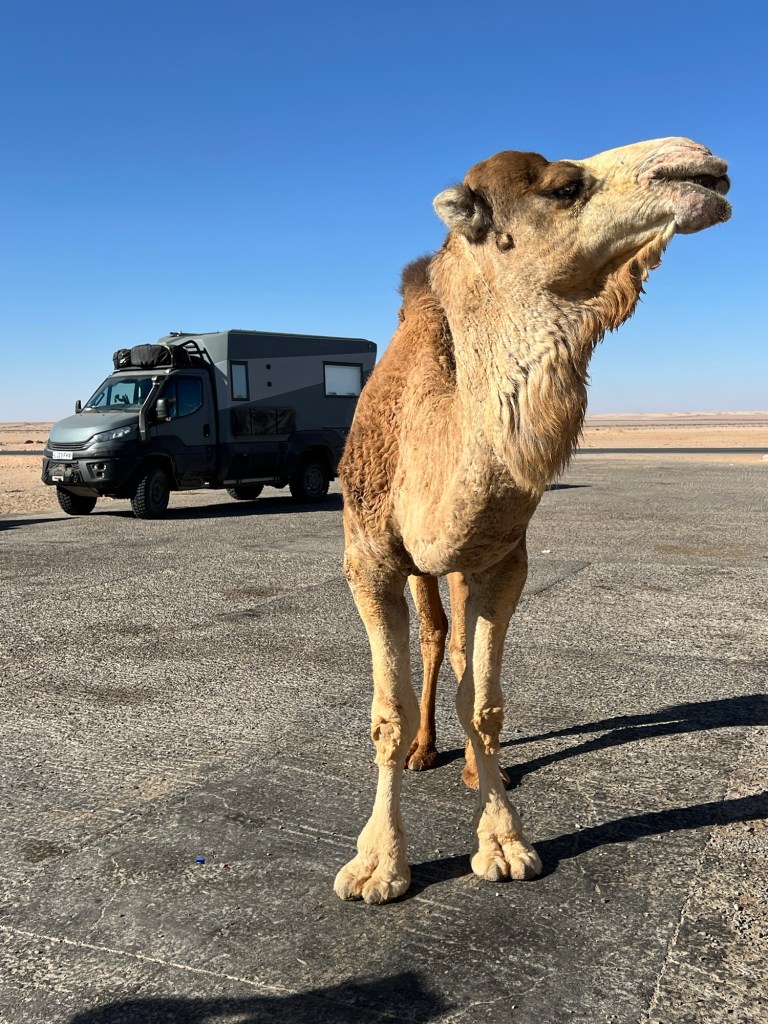
The following morning two long articulated lorries pulled up and the camels were taken in and off. We followed in their wake half an hour later. Our dip into Western Sahara was coming to an end. The region did offer incredibly cheap fuel (90 cents a litre) so before we crossed the border into Morocco proper we pulled into a lonely petrol station. Being the only one for a very long way, it was also popular. Everyone stopped, including a camel wandering between the pumps fishing for treats.
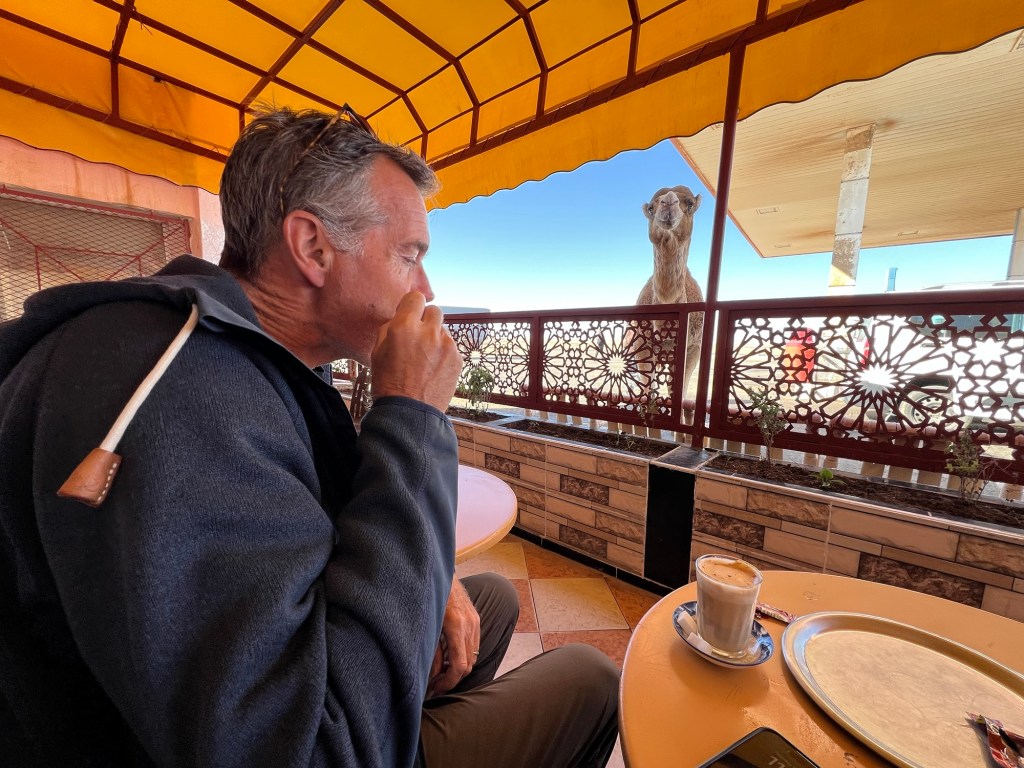
Someone came out of the snack bar with a bag of stale baguettes and we all took turns to feed the camel, everyone laughing.
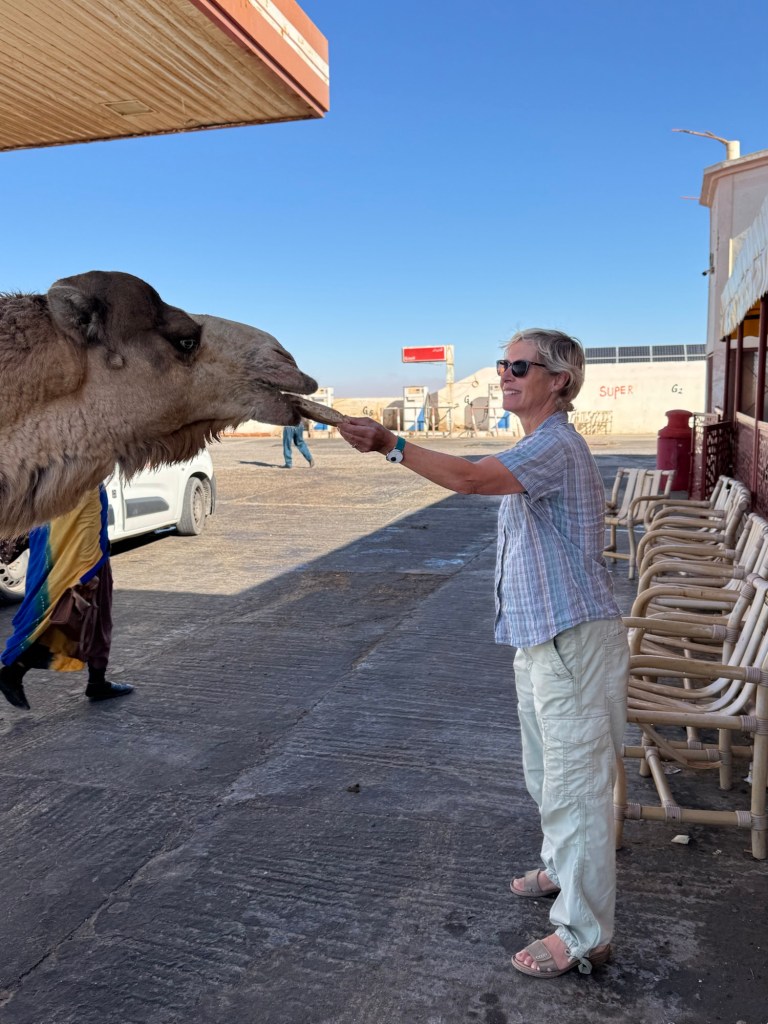
It felt a bit like something from a Jim Jarmusch film and that was Western Sahara in a nutshell; surprising, idiosyncratic, sometimes disturbing, but also with occasional, unexpected humour.


Leave a Reply