Although we’d left Western Sahara there was a heck of a lot more desert still to go. Leaving the border behind and heading north towards Abteih, the road curled between rocky hills and we spotted some intriguing shapes further off in the desert. They looked like giant beehives – dozens of them, arrayed in rows.
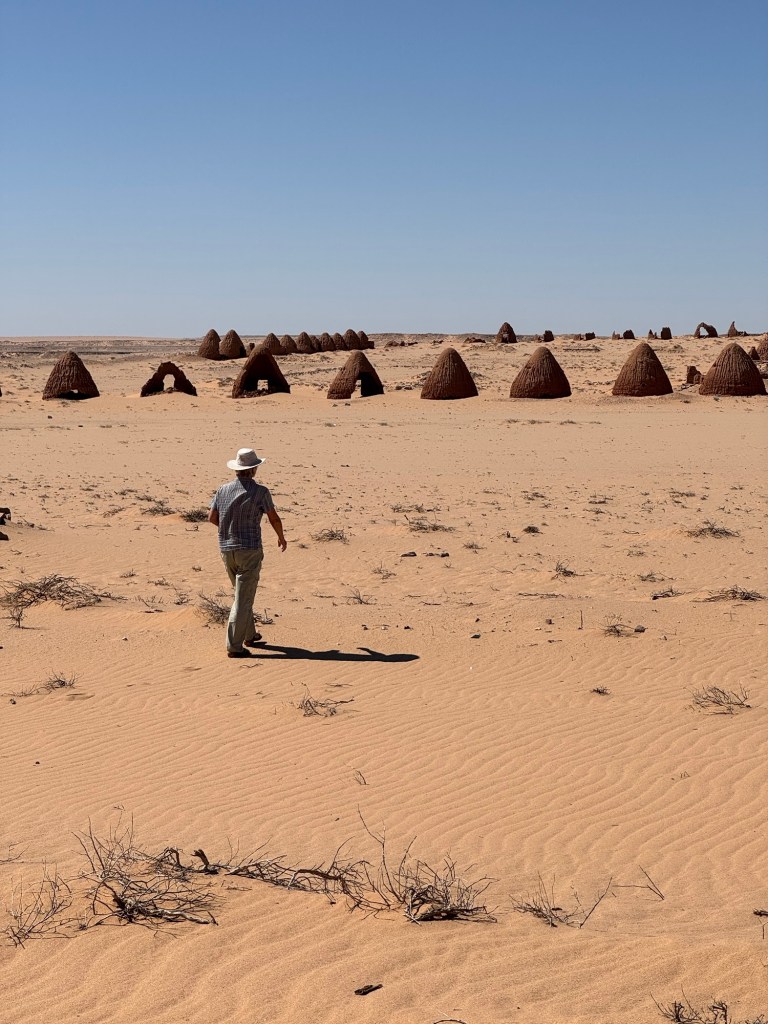
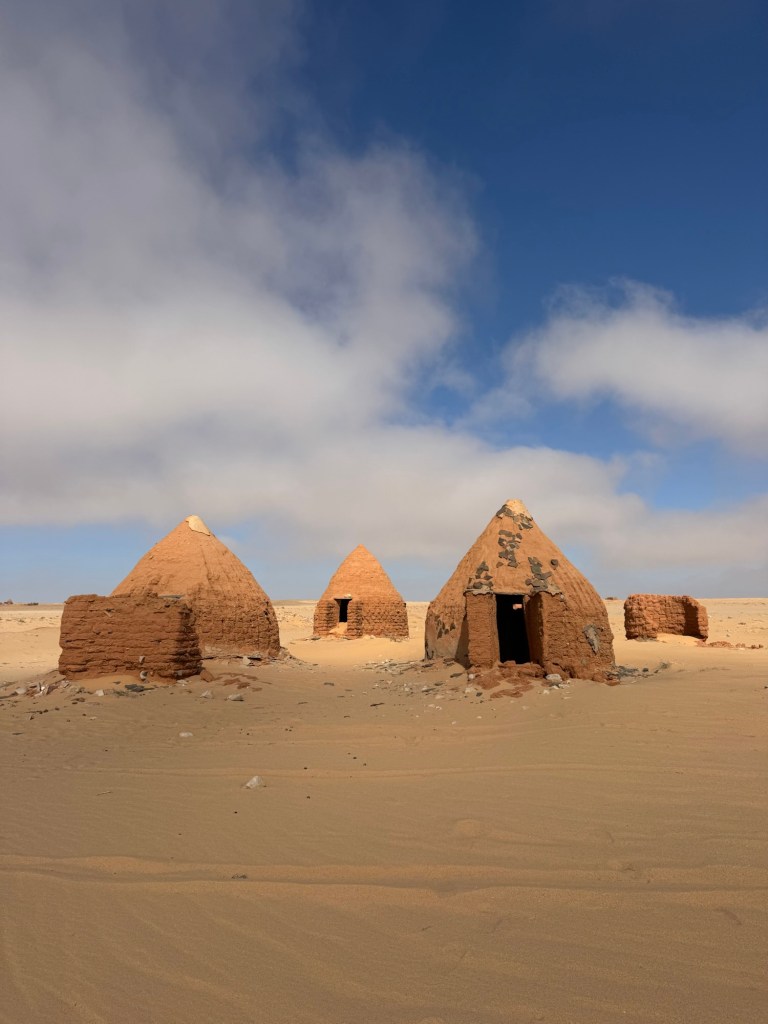
We drove across the sand to explore and I had fantasies that we’d stumbled across some sort of lost village, but the writer Alice Morrison who’d walked this way said they were built and abandoned by the army. They’d created a camp in this inhospitable place. Why? When? How? The answers were lost in the desert.
I’d never really appreciated quite how big – and varied – Morocco is until we started driving through it; from the rolling green mountains of the Rif through the snowy High Atlas, to the baking deserts of the south. Throughout it all, we’ve always been able to fill Arnie’s 200 litre tank with water one way or another; at farms which had tapped into nearby springs, from desert aquifers pumped by windmills into cisterns and city water of course – which often had the slight salt tang of desalinaton. But water access is more unreliable in north Africa than almost anywhere else on earth and while Morocco is better off than its neighbours in this respect, water is not something to be taken for granted here, something underlined for us in Tafraoute.
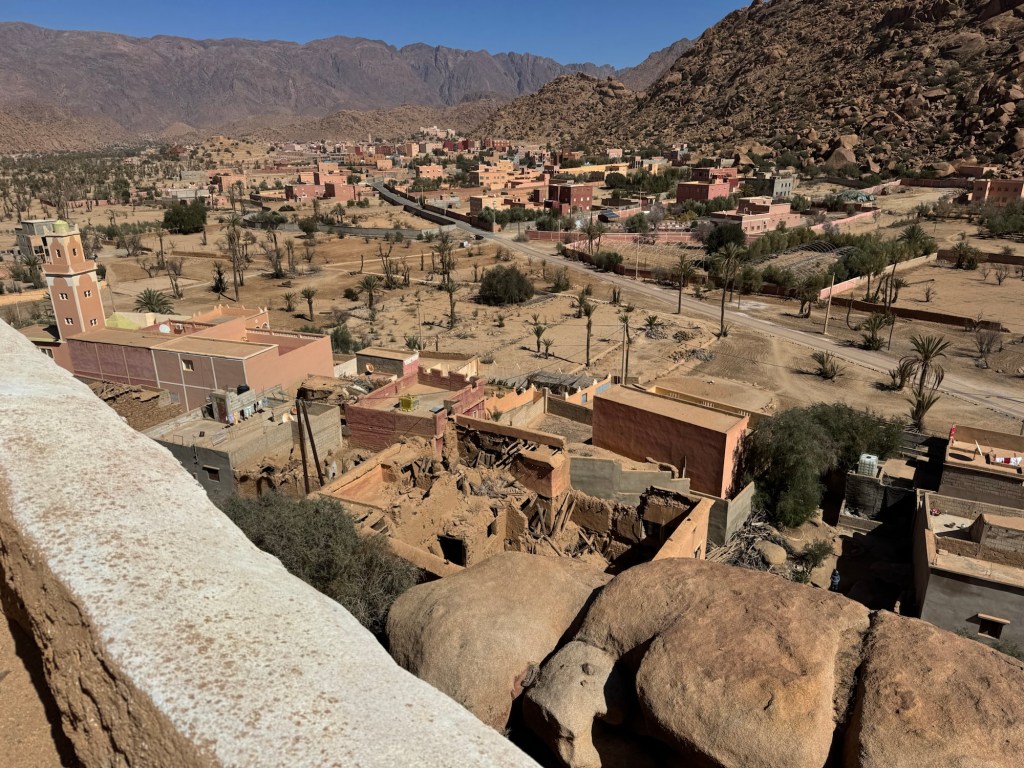
The town is one of the great palm oases. Its name comes from a word meaning “a basin into which well-water is poured” and it is arranged along the base of a mountain range of pink granite. The frothy swathe of almond blossom, punctuated by green fig trees, olive and argan groves was a welcome visual relief after days of relentless, sandy emptiness. Tafraoute is also a focal point of Amasigh/Berber culture and after parking between palm trees in the dried-up river bed we made for the old town to see what we could find.
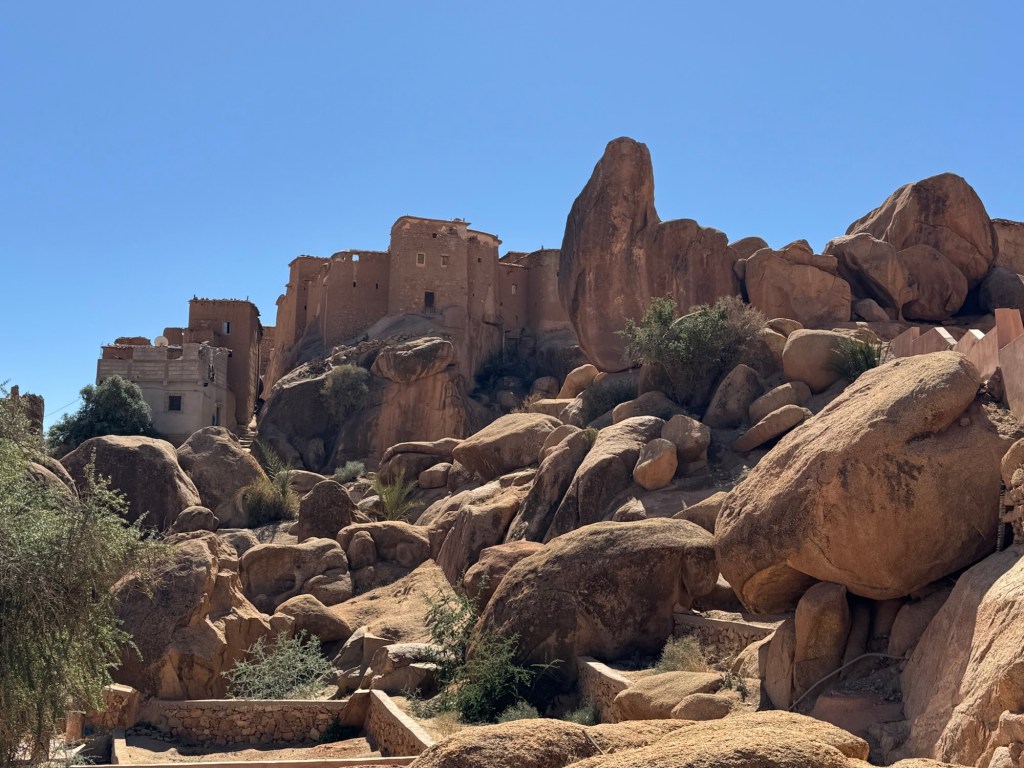
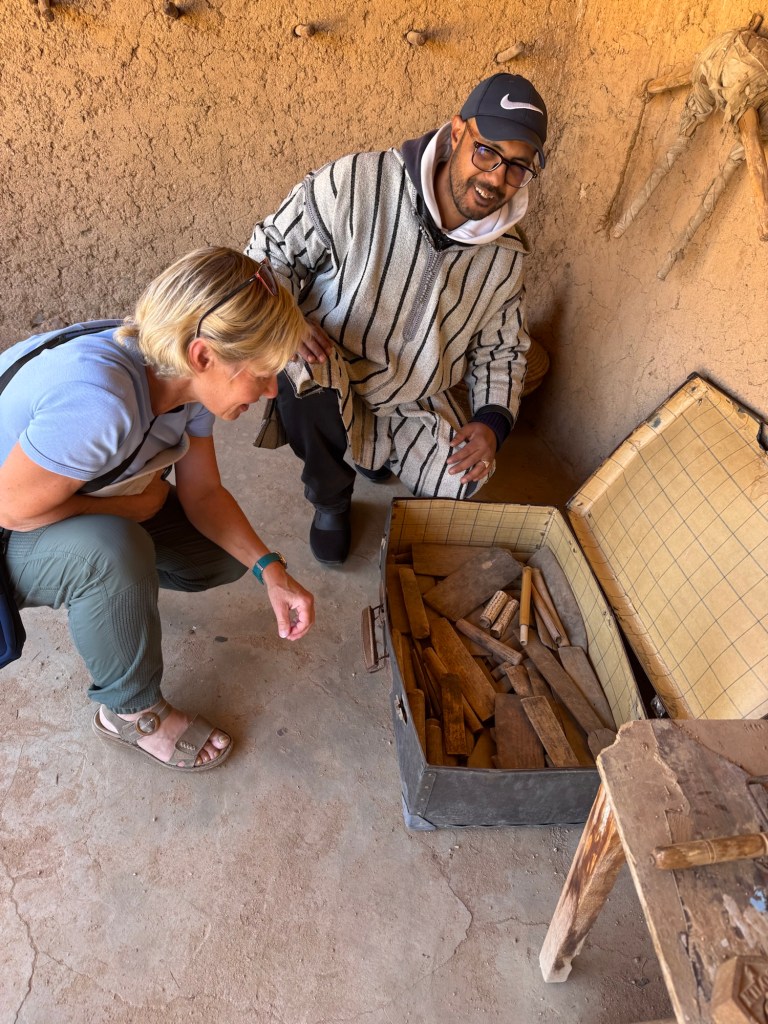
No-one answered at the “Old Berber House” when we rang the bell and we’d already started back down the alleyway when a man in a striped djebella called us back. Mustafa is part of the family that he said had owned the house for six hundred years, through Tafraoute’s heyday. He led us around the house and explained how it worked. All the rooms surrounded the kitchen on the first floor which offered warmth in the freezing winters.
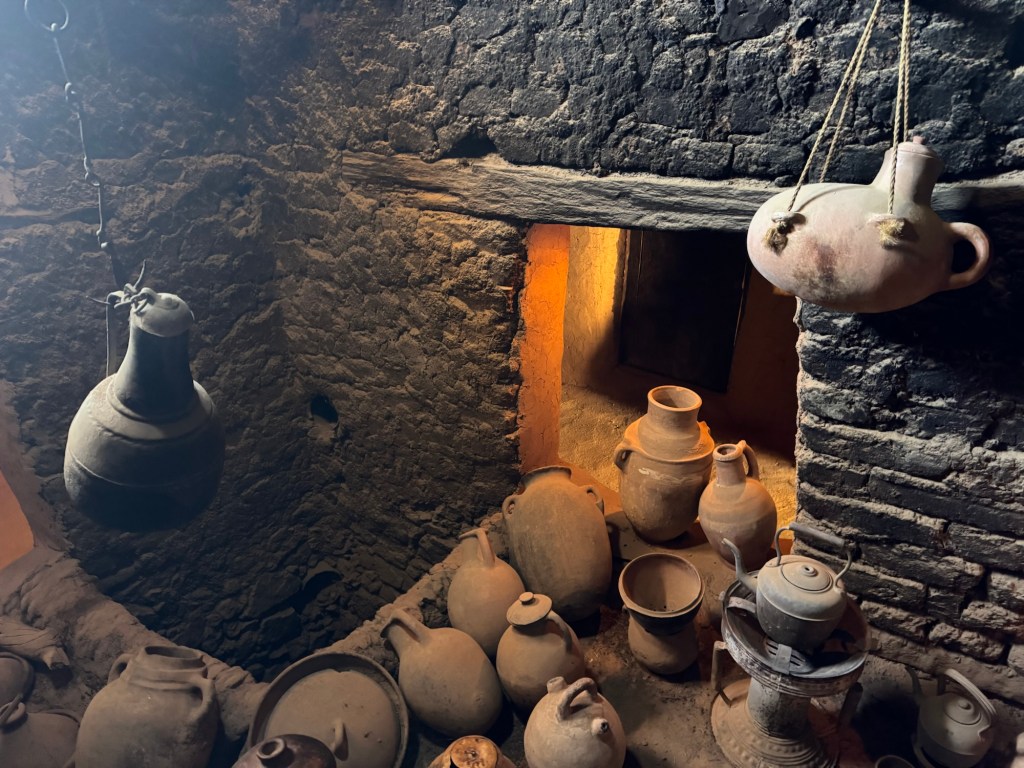
A hole in the floor allowed food scraps to be dropped to the animals below. Their warmth also flowed up into the house. The kitchen sink drain went out to the orchard. Nothing was wasted. Mustafa took us to the grander upper floors, where in the era of the great caravans, the building hosted merchants and nobles.
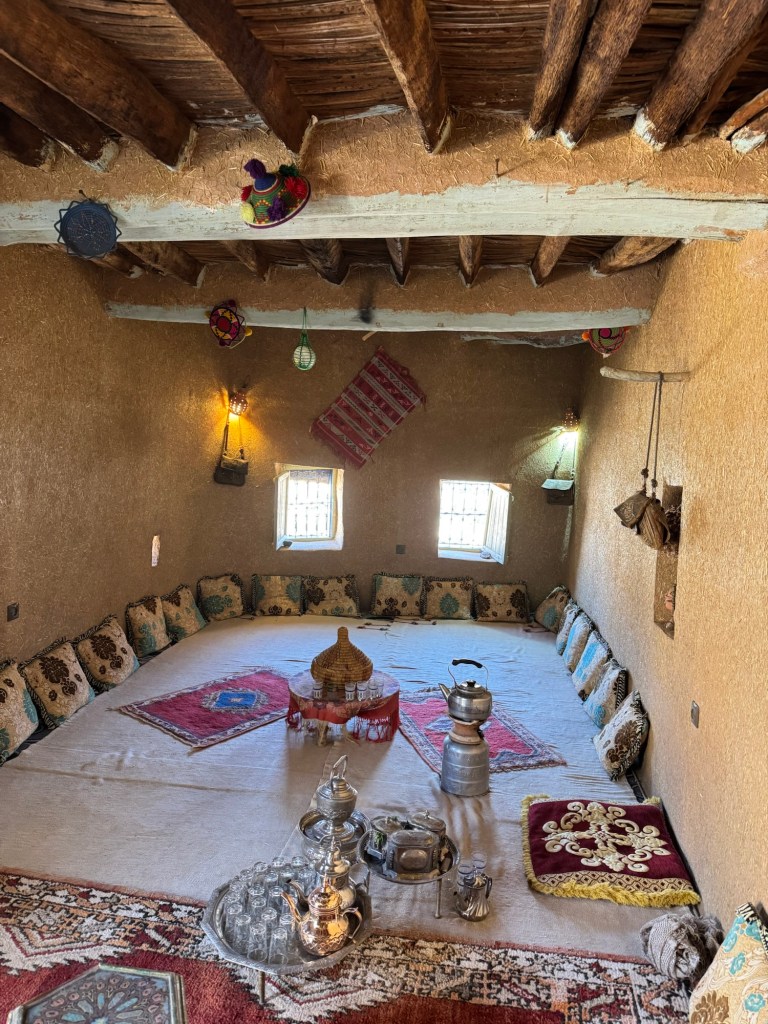
Legal disputes were settled here and he showed us an old suitcase full of scrolls and tablets recording wills, property ownerships and settlements.
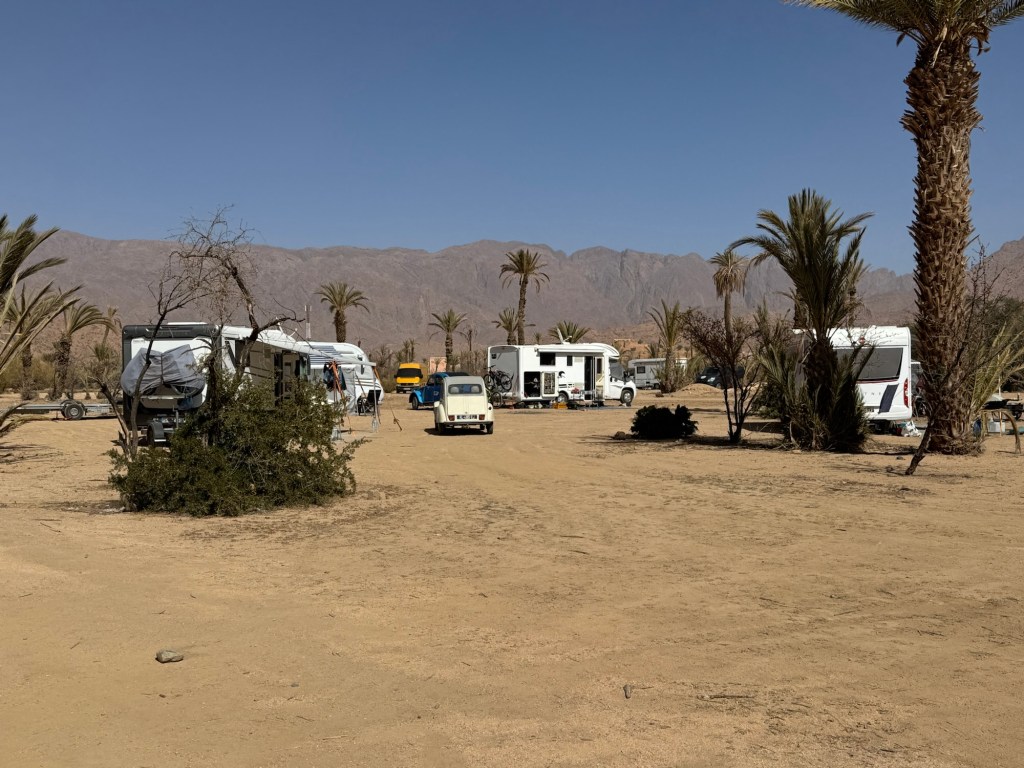
The town’s prosperity was due to its place on the river, but as we looked out from a terrace over the sweep of palms below Mustafa pointed out farms and houses that had been abandoned and fields turned to dust after a years-long drought. Even the palms in the river-bed were dying as the oasis dried out. The town he said, now relied on tourists to stay alive. Where once the oasis was full of camel caravans now there are campervans.
We turned southeast, skirting the mini-Atlas range of mountains, finding quiet places to camp in dry riverbeds surrounded by almond trees.
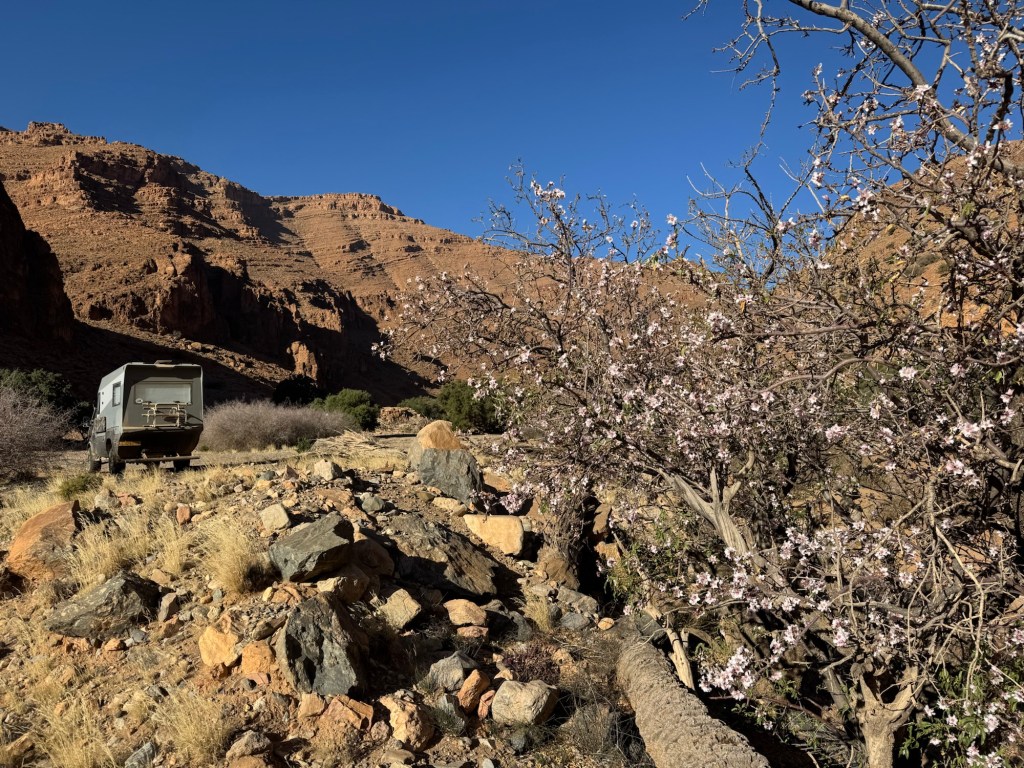
But as we drove, the river came alive and soon we were in what must be one of the loveliest river valleys in Morocco.
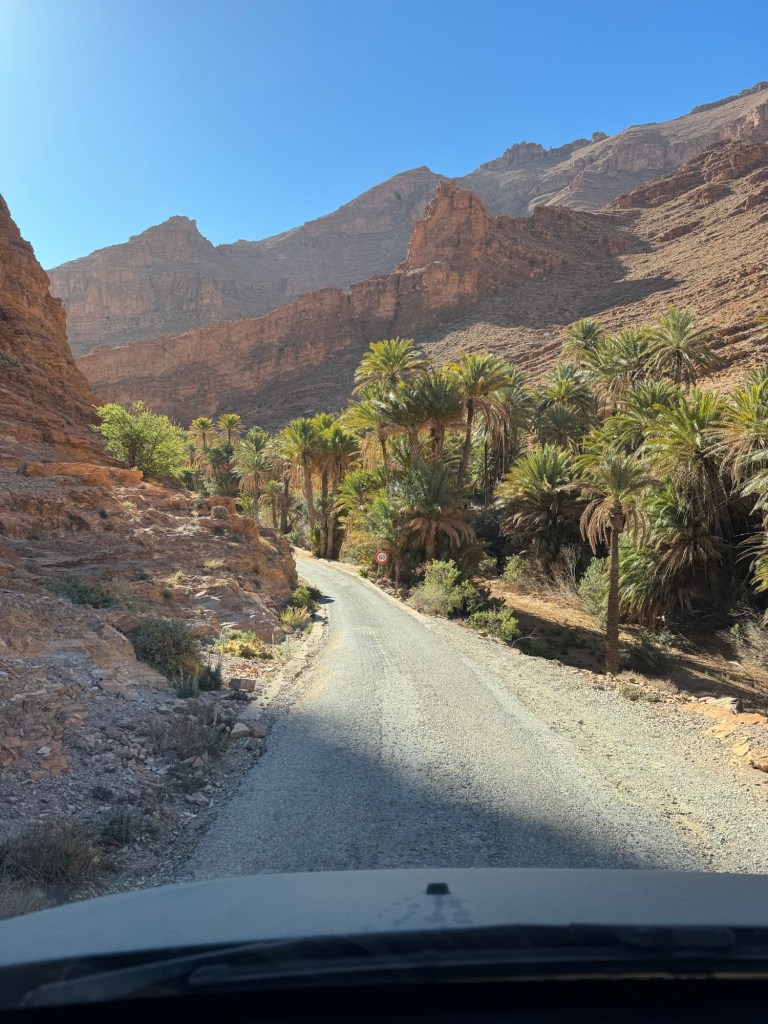
It was so narrow we were often nudging palm fronds out of the way on both sides of the truck. The water flowing at the edge of the road was cool and clear, glittering in the morning sunshine, shaded by the overhanging palm fronds.
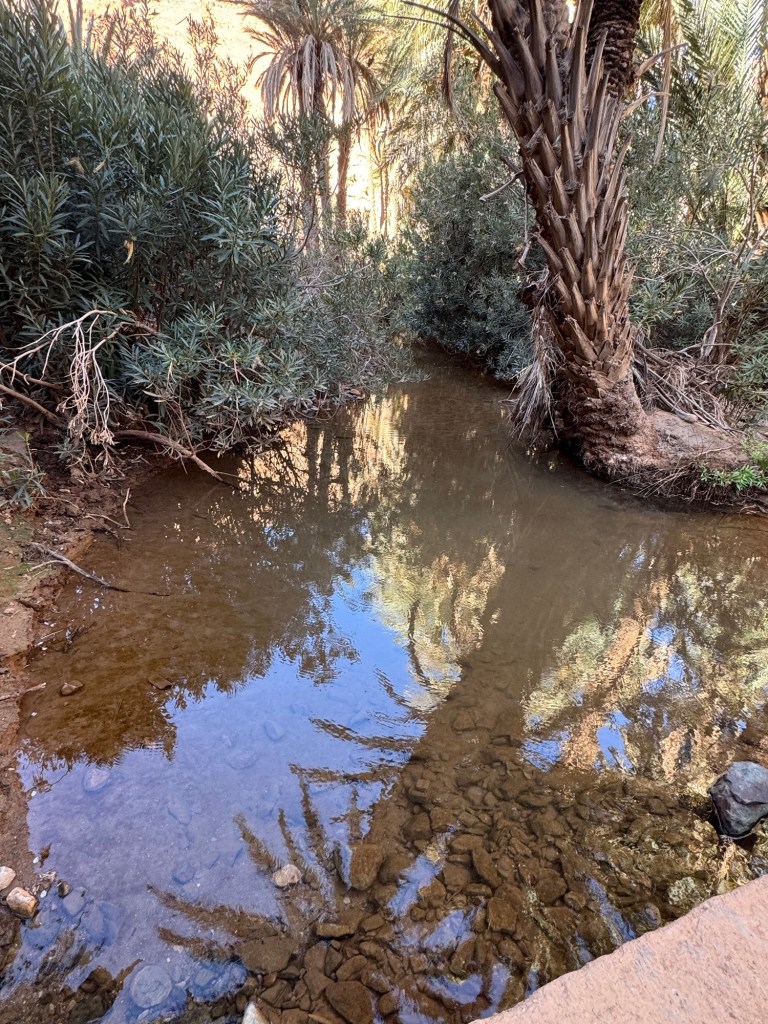
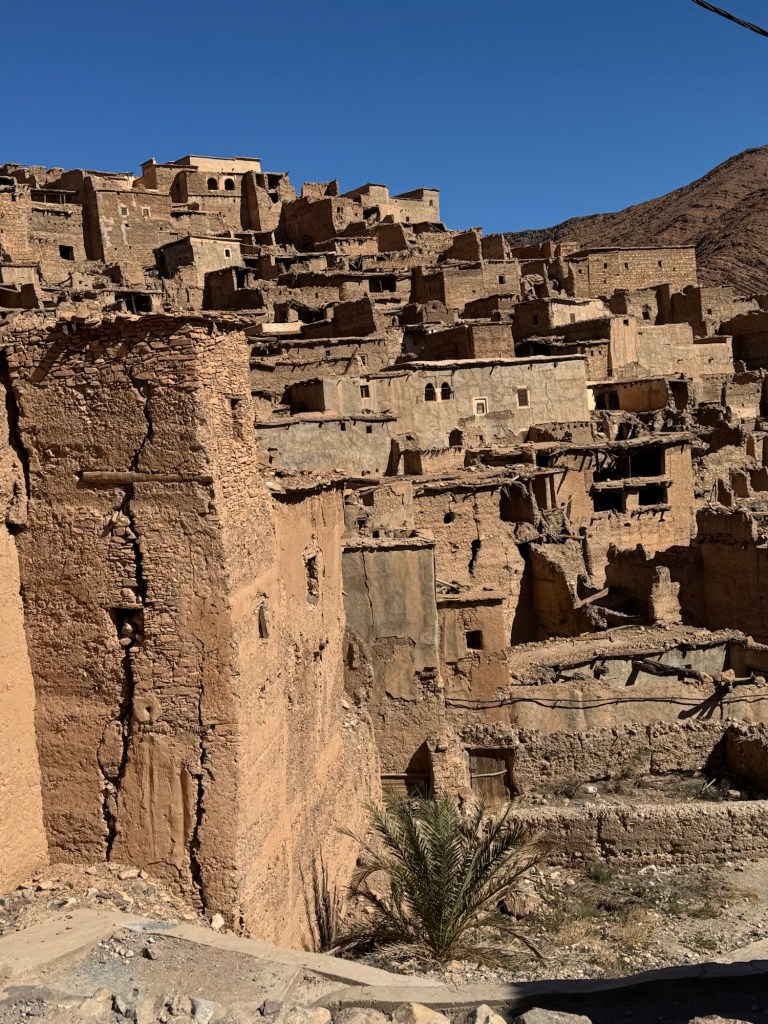
When we stopped there was birdsong. Sometimes the trees would part, revealing views to lofty villages that seemed to be extensions of the hillside although some had been rendered almost uninhabitable by earthquakes in 2023. It felt like a valley that had changed very little thanks to its inaccessibility and self-sufficiency.
All too soon, we lost the river and started climbing through the arid flanks of the mini-Atlas. A few hours later, we reached Tata, another town with a prime riverside position. It too had become prosperous because of the water flowing through it, carving a deep trough separating one side of Tata from the other.
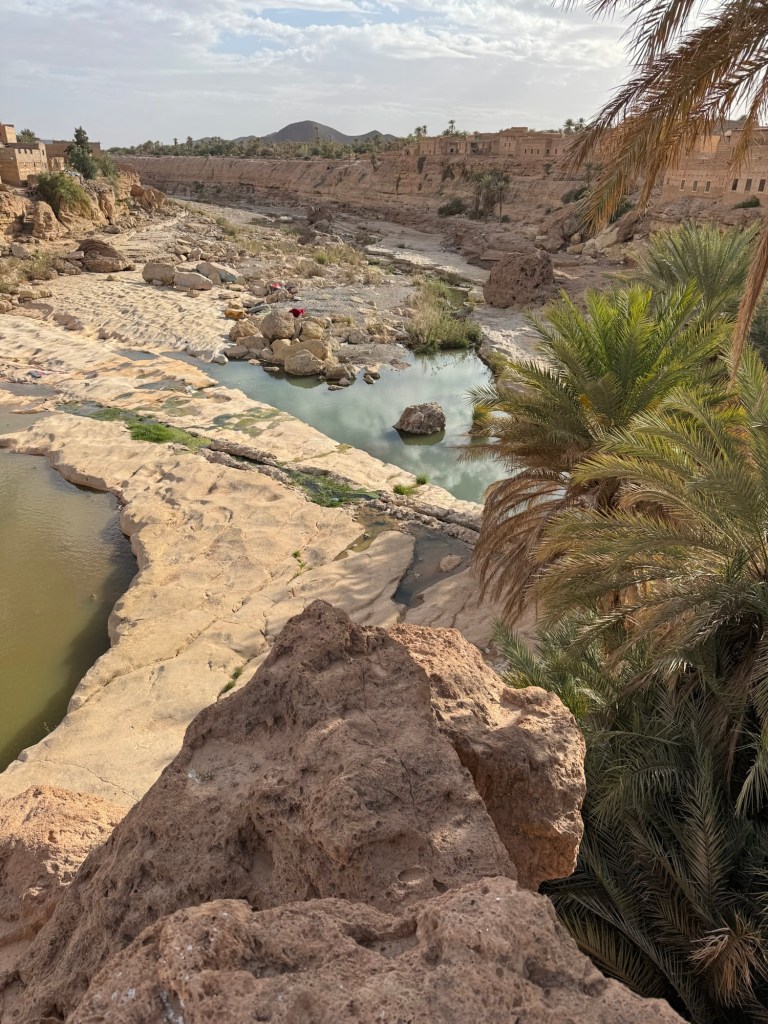
Although the river still flows, today much of old-town Tata feels derelict. We traced its crumbling alleyways and met hardly anyone, though washing was strung across the river and boys were playing on the rocky islands.
While a lack of rainfall has been a perennial Moroccan issue in recent years, a deluge in the desert over the winter had led to the re-appearance of a lake not seen for a generation. Reports from travellers suggested it was still there so we decided to head back into the desert to find it.
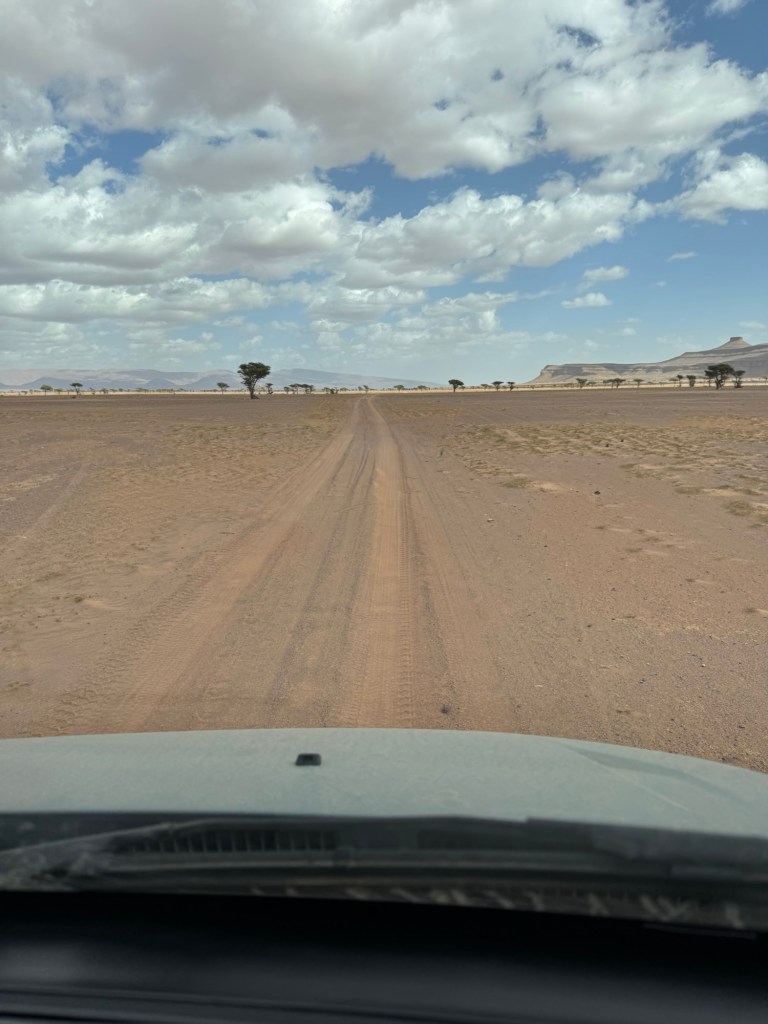
There’s no denying the thrill of turning off the tarmac and into the desert, leaving towns and creature comforts behind for the solitude and struggles of the sand. The map pointed us to an oasis en-route to Lake Iriki and it felt like the image that comes into my head when someone says “oasis”; a distant clump of palm trees sprouting from the sand, and there amidst them, pools of water.
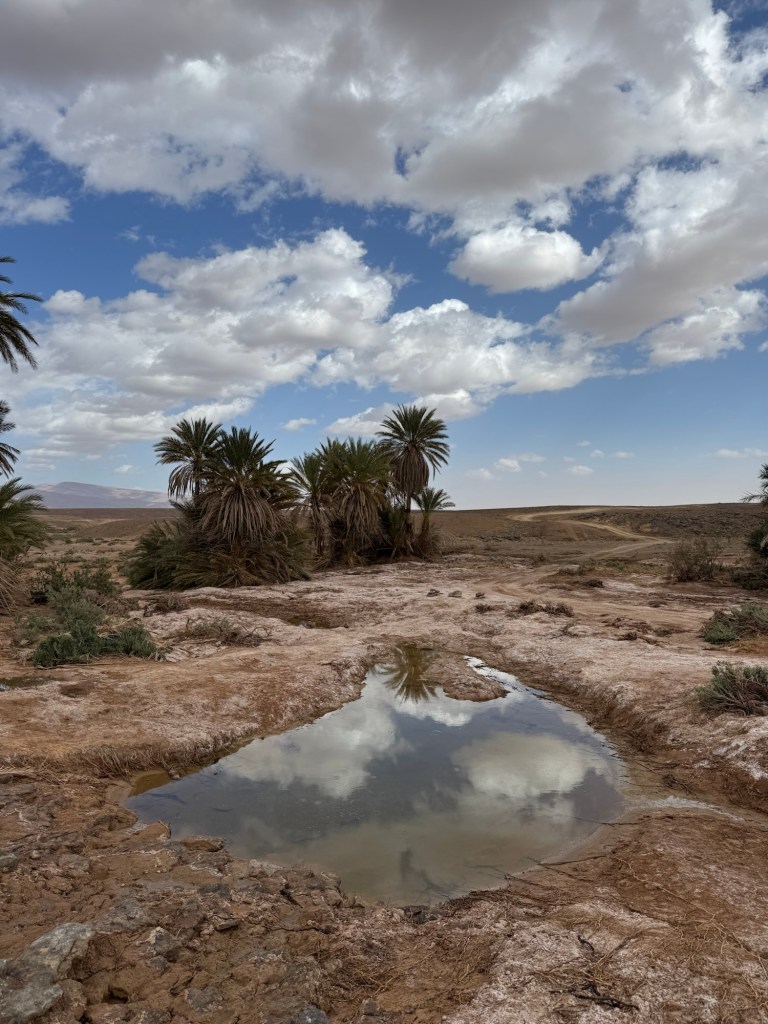
There was a well too. We drew some water and used it to make some (salty) tea.
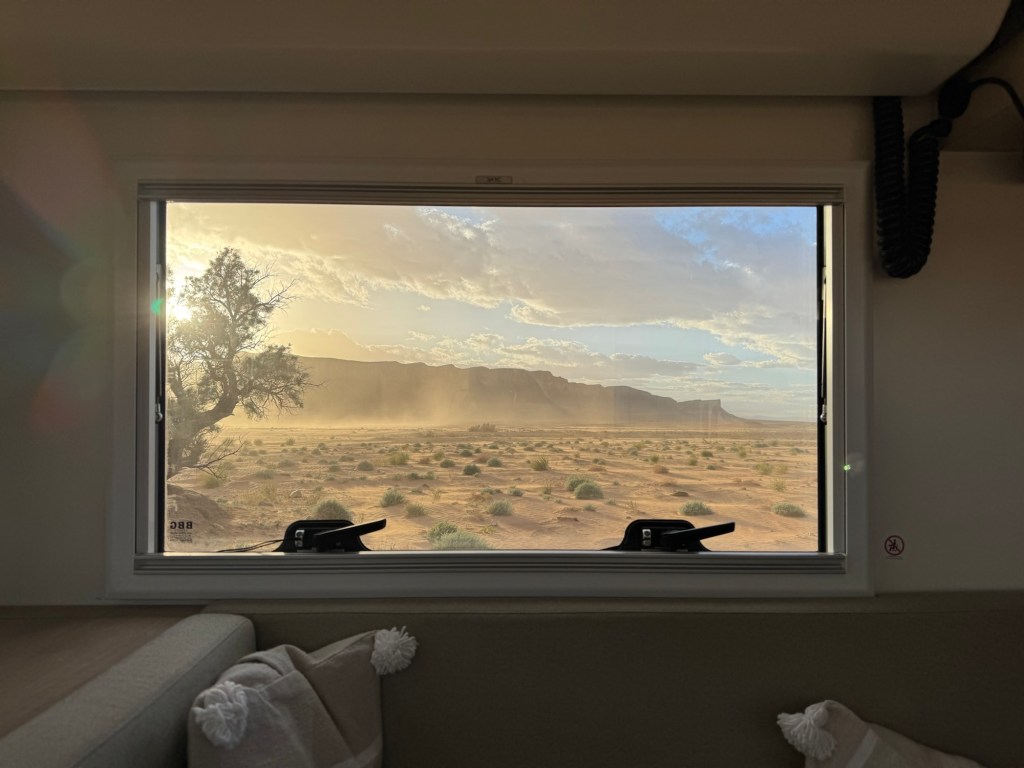
A hot wind blew dust devils and sent ghostly mists of sand across the track. We pulled off for the night and watched the sand playing outside until the wind died and we were back in that nocturnal blanket of silence.
Lake Iriki is on all the desert maps but it has been a dry pan for so long that no-one really notices it. It’s simply a smooth piece of sand to drive across. Not now though. Now it has water in it and those bits which are beginning to dry out again are slick with the kind of mud which grabs vehicles like ours and doesn’t easily give them back. So we approached it with caution, making first for a raised, rocky part of desert that used to be part of the ancient lake and is today dense with fossils.
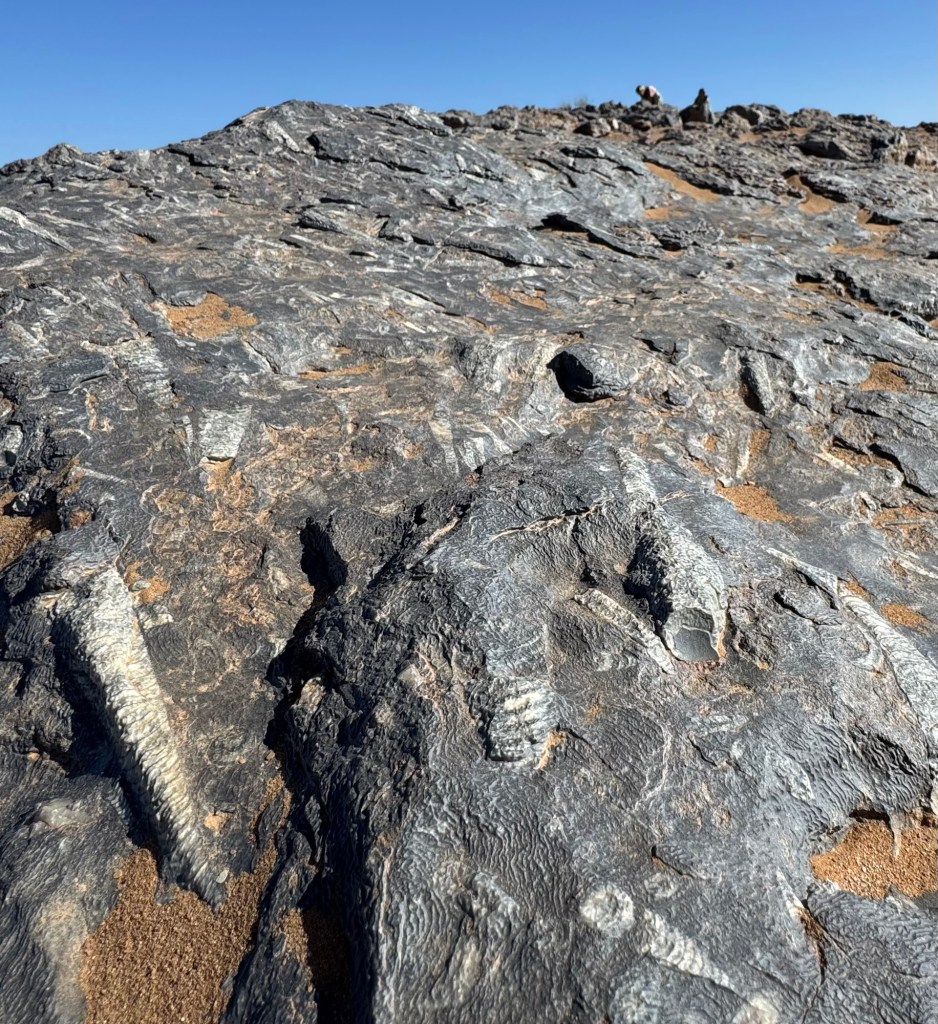
From that fossil platform we could see water gleaming in the distance. Lake Iriki, which hadn’t been a lake for an almost a quarter of a century.
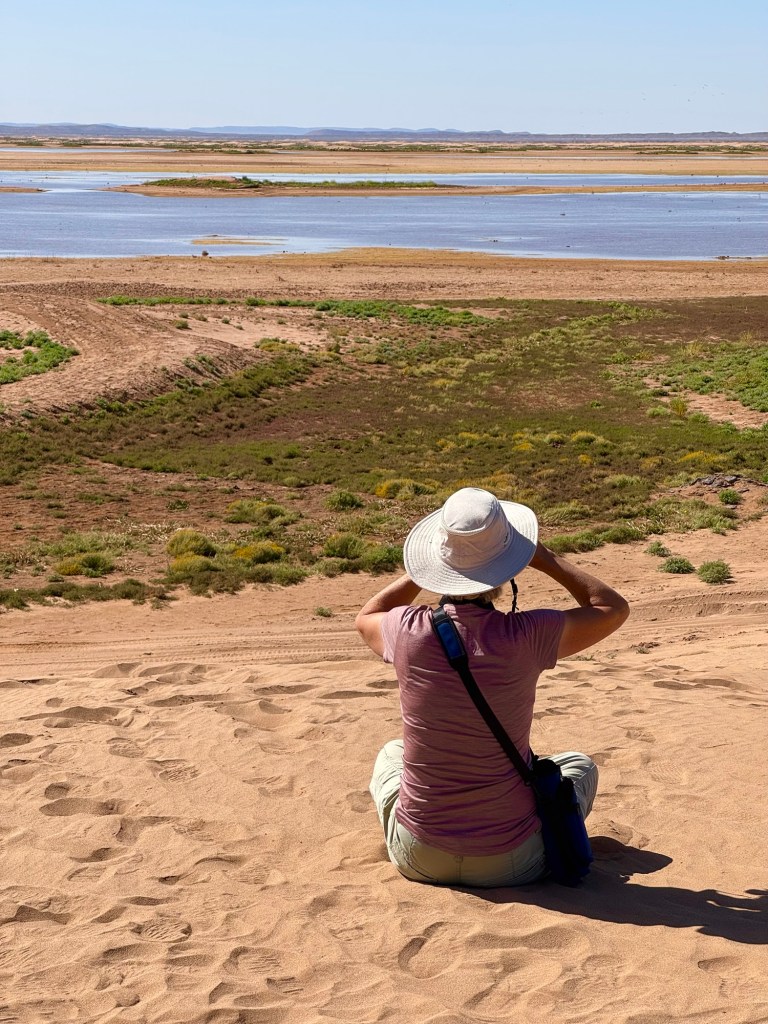
There is, as we keep discovering, something truly magical about finding water in the desert and Lake Iriki was a sparkly paradise, nurturing animals, plants and insects. Birds wheeled and soared over it and some waded through it. We could hardly tear ourselves away.
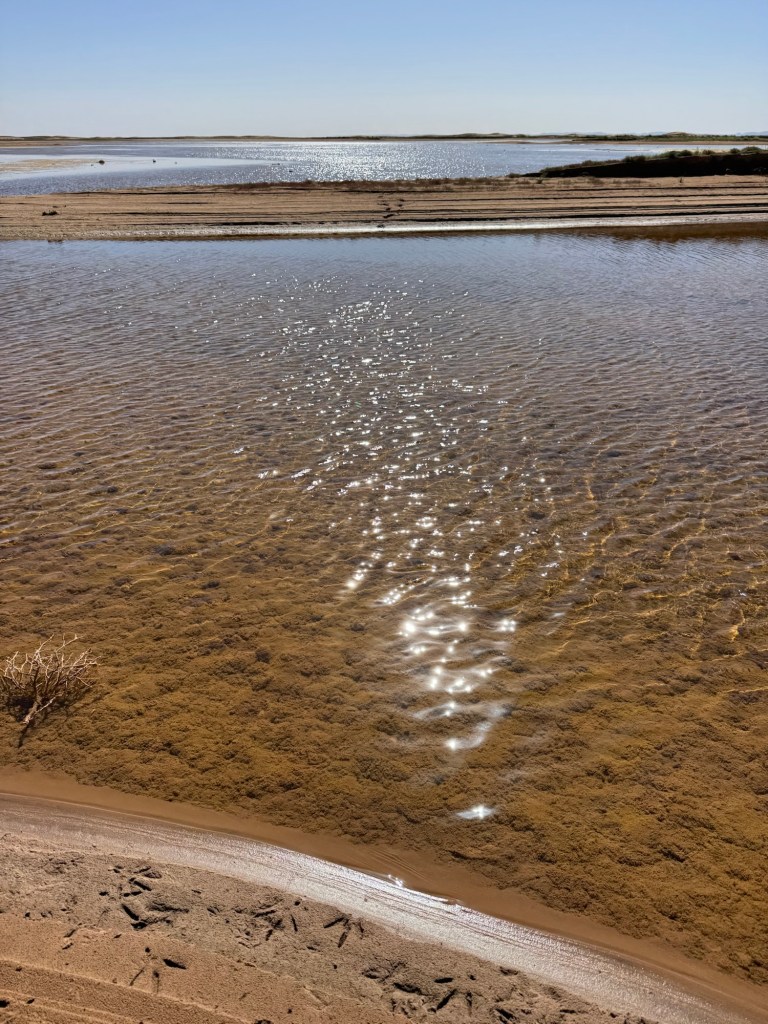
Just a few weeks later, Lake Iriki vanished again, leaving a muddy plain to capture unwary travellers.
It was time to leave the desert and we turned north, aiming for mountains and settled places and more reliable water. After two hundred kilometers at the edge of the Atlas we came to Finnt.
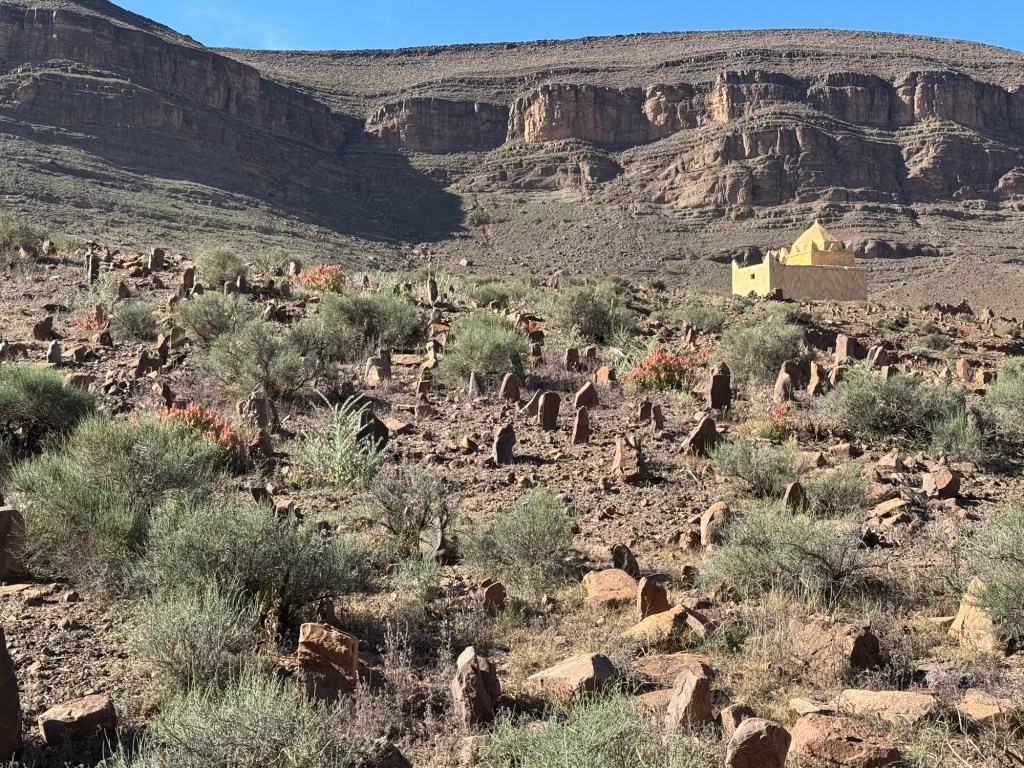
We’d aimed to park at an “ecolodge” at the edge of the village and we’d given Arnie’s dimensions to the owner who was very relaxed about our chances of getting through the village. When we got there, we were less relaxed. The village wasn’t built with vehicles in mind of course and its alleyways met at sharp corners overhung with low roofs. We cleared with millimetres to spare and when we got to the ecolodge, the owner and his family were amazed: “We’ve never had a vehicle as big as that get to here before” he said, delighted. Thanks for the heads-up folks!
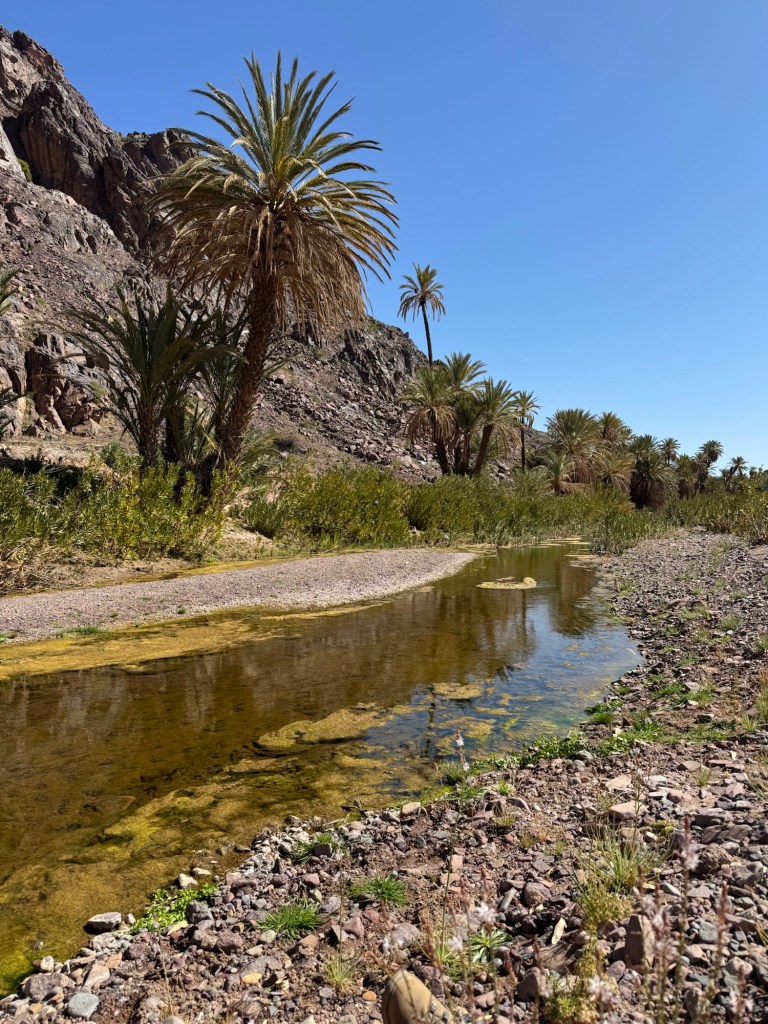
We were back in, if not “green” Morocco exactly, certainly a region where water is more reliable and eked out through ancient irrigation channels to fields and houses. Running through the village was a river flanked with palms and absolutely full of terrapins and fighting frogs.
After a few days in Finnt we braved the impossibly narrow drive out again, and headed deeper into the mountains. The highest peaks were still getting dustings of snow as we climbed
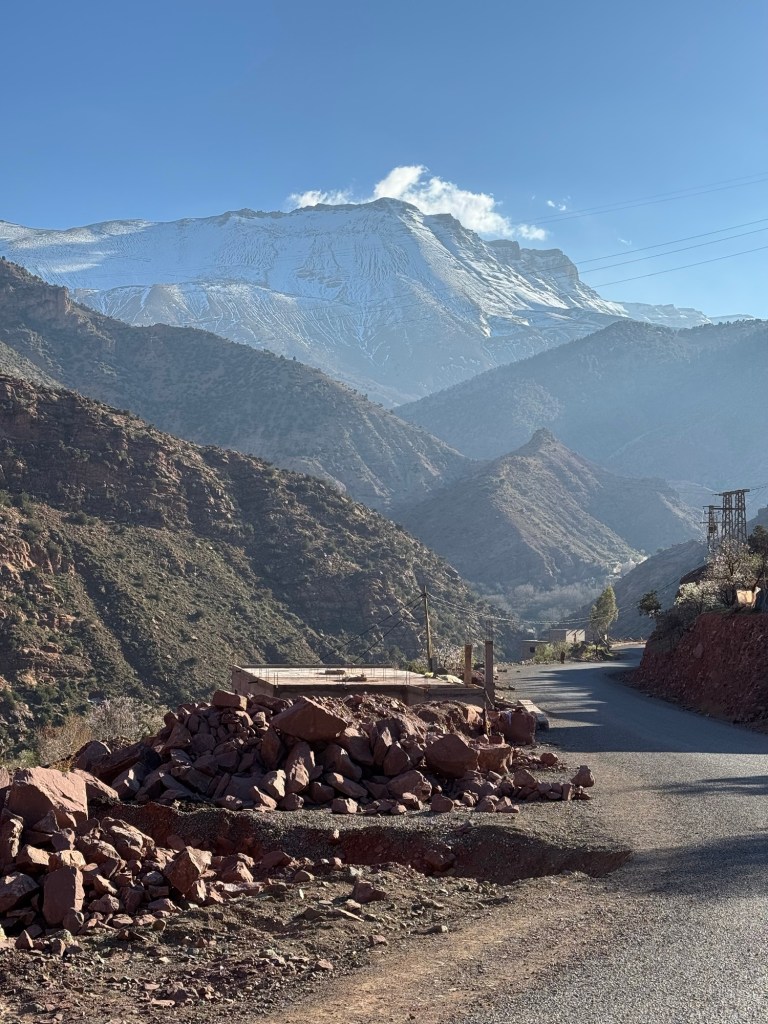
The snowfall in the mountains feeds the rivers in spring and keeps the land irrigated. But Morocco has been going through a long-term decline in snow cover. Less of it falls and it melts more quickly than in years gone by. Consequently, rivers are lower.
In Tifni, the power of the river created a natural rock bridge with a hole shaped, from one vantage point, like the African continent. There is just a trickle going though it today.
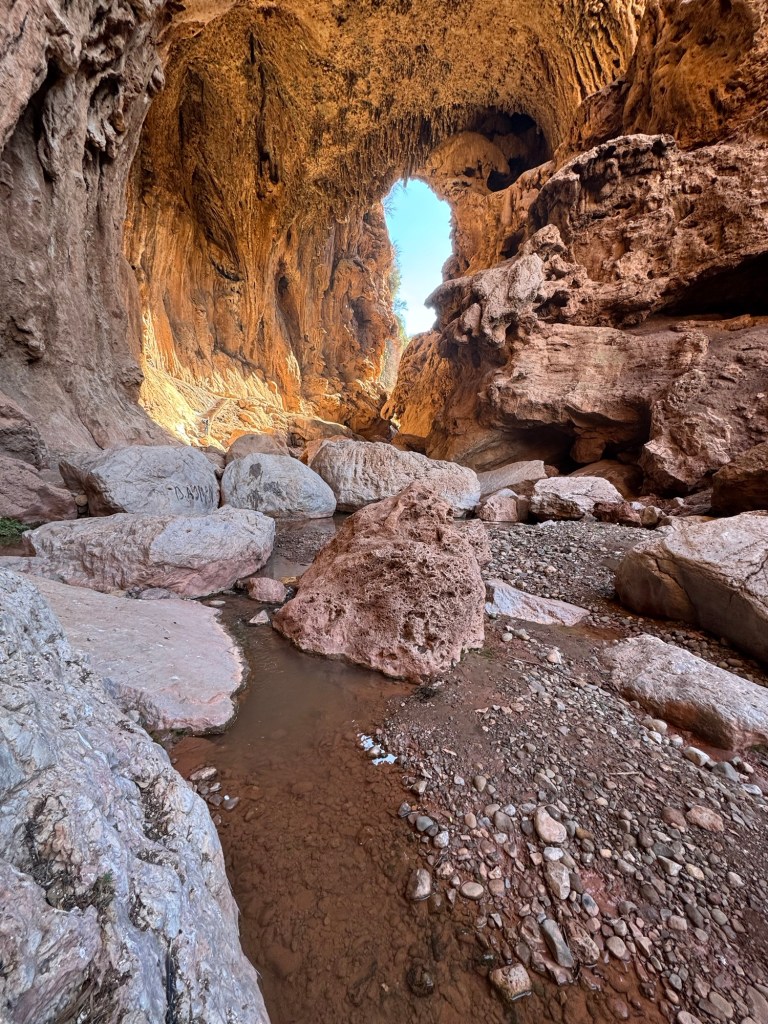
On the road over the natural bridge, we stopped for lunch at an empty cafe. On the wall was a big stringed instrument which the cafe owner shyly brought down to show us, strumming and sometimes singing quietly as if to himself. There was a melancholy to the piece, but – as always in Morocco – he was happy to share it with us.
POSTSCRIPT: The winter rains of 2025/26 were 95% higher than the previous year and brought the 7 year drought to an end. There was record snow cover too (and some massive flooding). But the future is set to be dryer and Morocco’s response to climate change is to invest in desalination projects, aiming to get 60% of its drinking water from the sea by 2030.


Leave a Reply