(As we wait for tyres in Europe, I’m catching up on the blog from somewhere sunnier…)
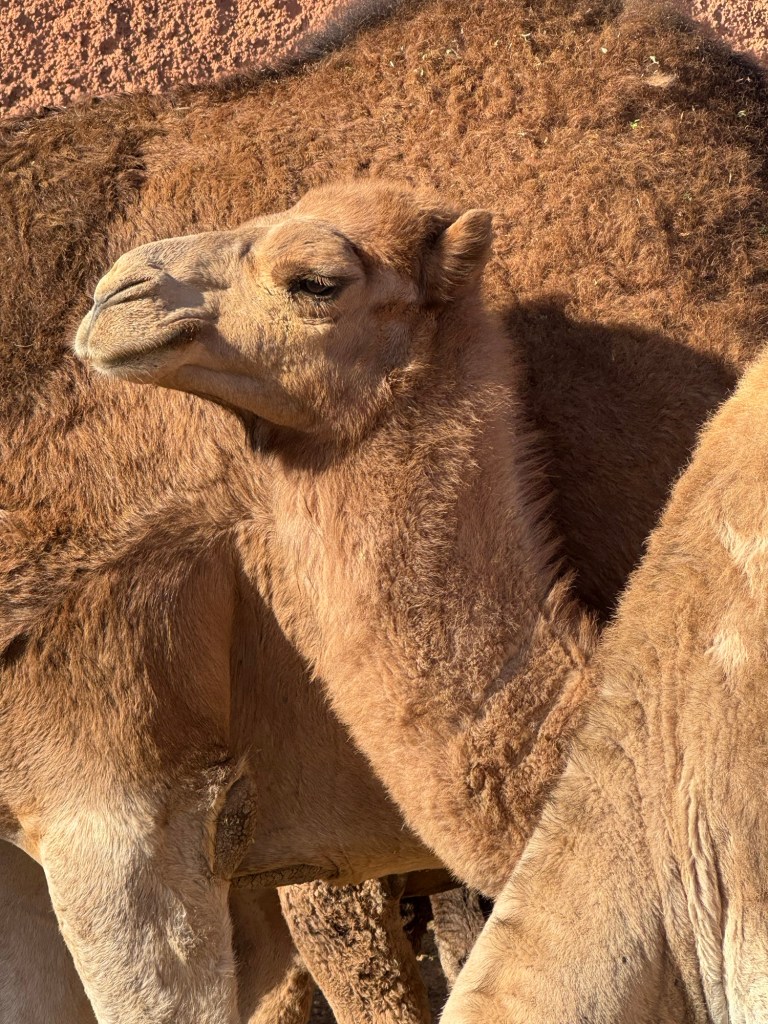
The Saturday camel market at Guelmim is reputed to be the biggest in Morocco. We aimed to be there early to take it all in but our overnight spot a short drive away was beset with feral dogs who barked, yipped, fought and made-up for half the night. So it was the crack of ten am by the time we hit the road, blearily trying to find our way into the right part of the city.
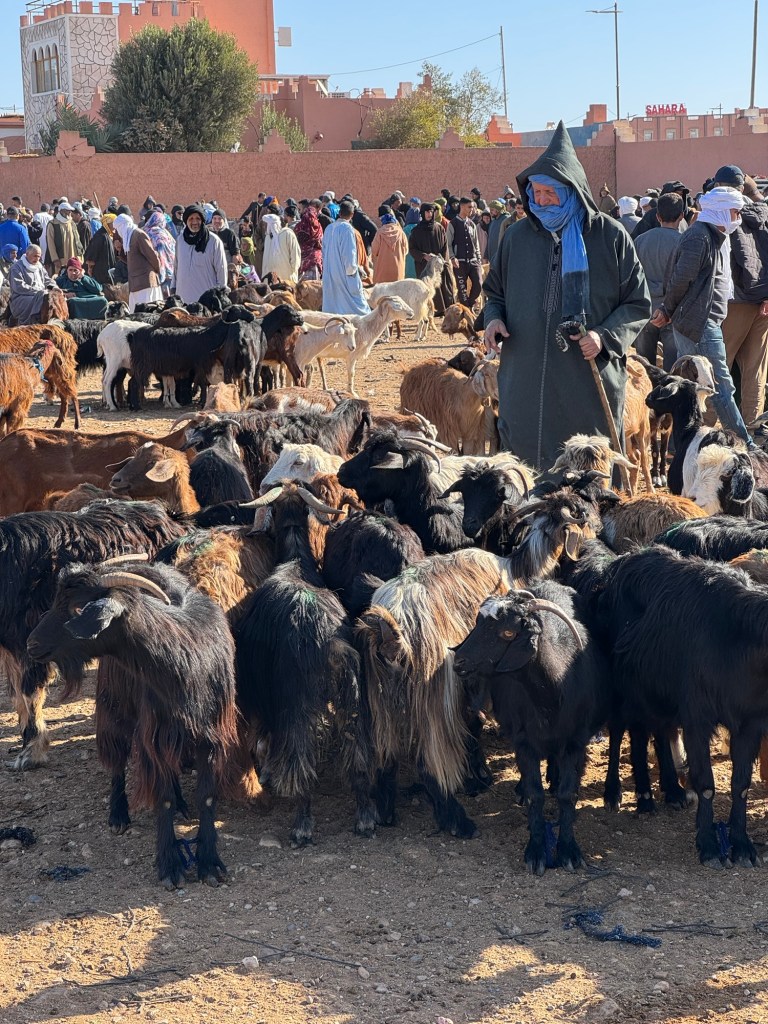
By then, Guelmim was packed. The streets surrounding the market were full of men with barrows, serious-faced women with shopping bags, kids with footballs, goats with kids, shepherds with sheep and impatient drivers honking at everyone to get out of the way.
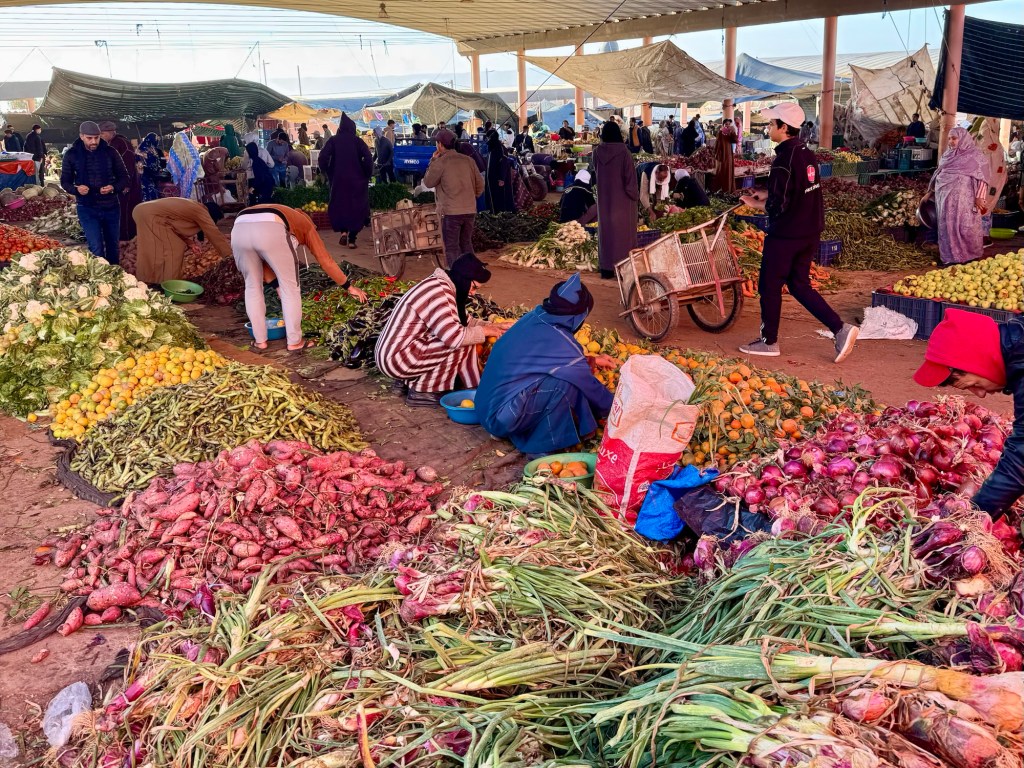
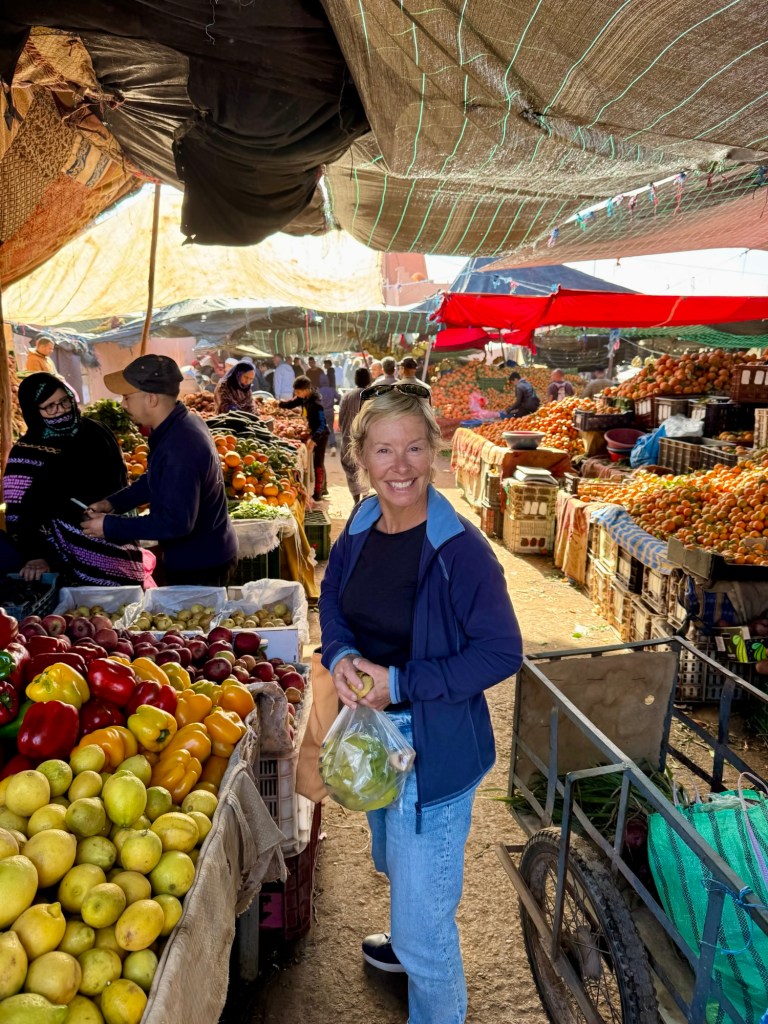
Under a large tarpaulin, the market itself was magnificent; tables loaded with multicoloured mountains of oranges, pears, apples, and bananas, swathes of green veg, bushels of earthy carrots, bunches of green herbs and piles of muddy potatoes.
As well as food there were ancient, well-used tools for sale, piles of shoes and fearsome butcher’s stalls displaying camel heads – somewhat startling, but a reminder that at this market most of the camels they sell weren’t going to be pets.
The market alleyways were busy with Moroccans focused on what they were there to buy – along with a handful of wide-eyed tourists trying to avoid getting run down. The camels were in an outdoor enclosure watching us all with a wary eye.
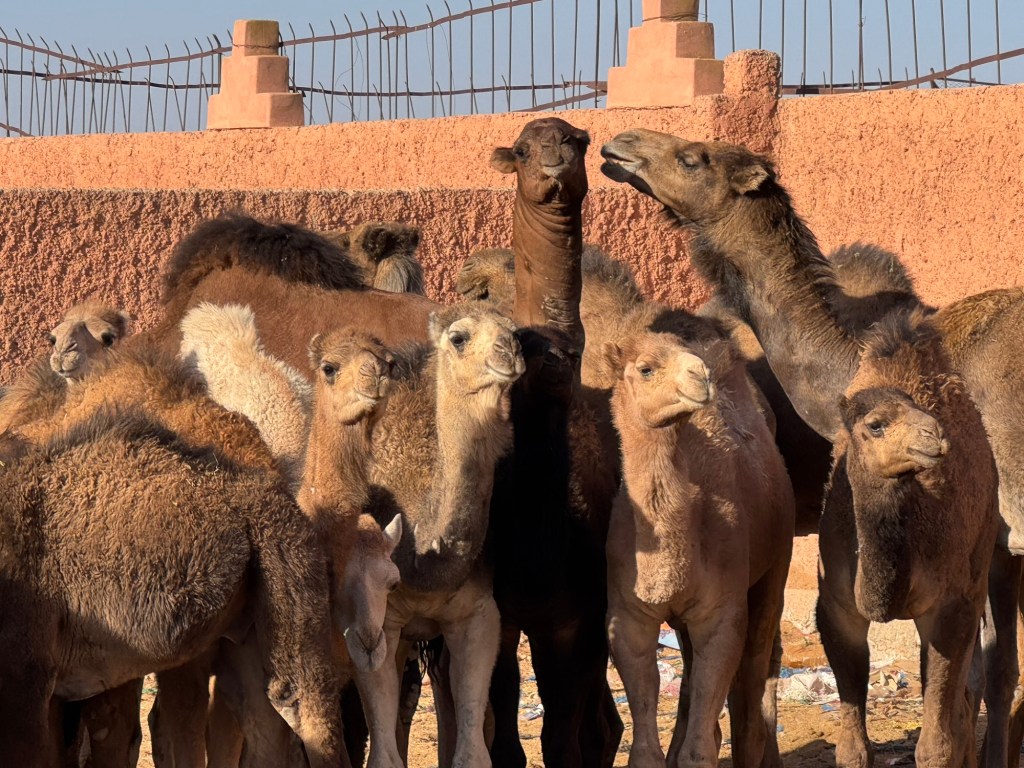
Strictly speaking these one-humped camelids are dromedaries but why use four syllables when two will do. We lined up to take photos of course and saw that we were not alone. There were Moroccans doing the same. For many northerners, camels are also an exotic treat rather than an everyday experience. We watched one prospective buyer moving through the camels selecting and discarding while the owner followed.
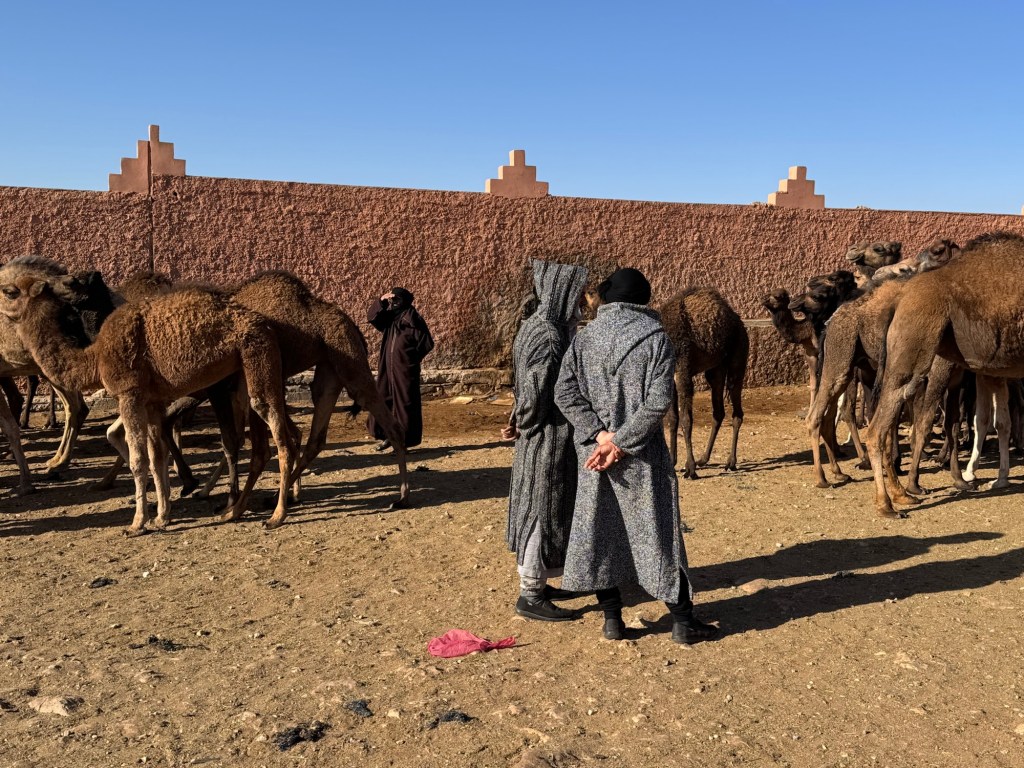
They did the deal on the edge of the enclosure; heads together, talking quietly until the buyer produced a brick of notes and passed it over. Elsewhere camels were being loaded onto the backs of pickup trucks with surprisingly little protest.
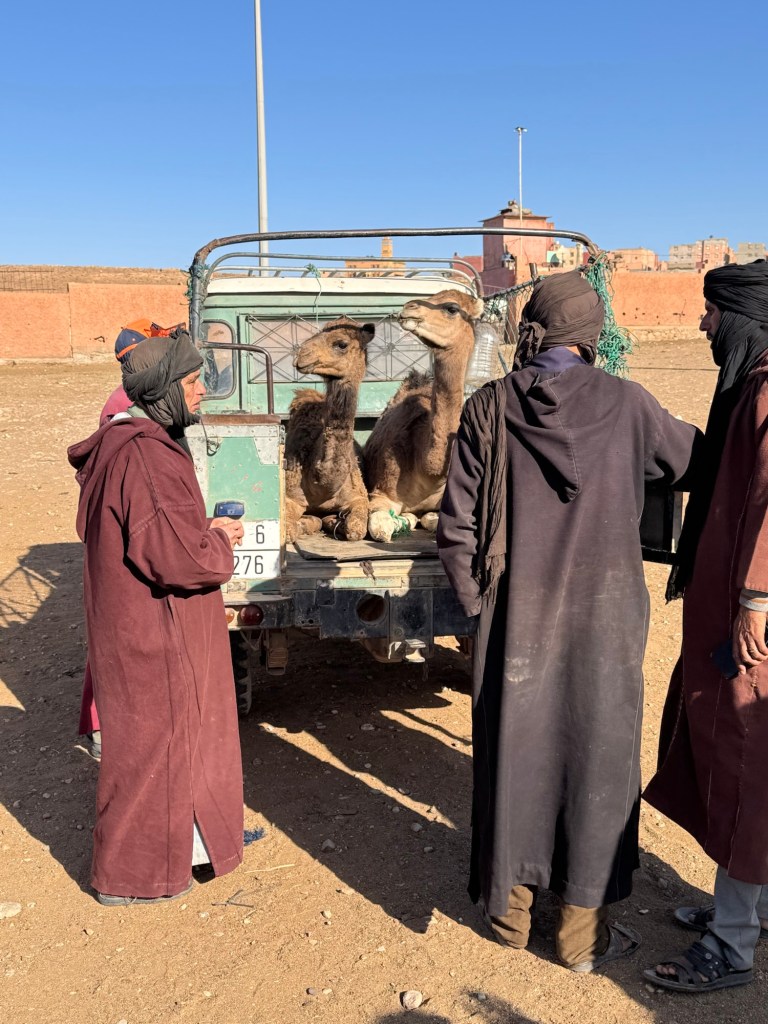
It’s not uncommon as you head deeper into the south, to see camels stacked into all manner of unsuitable vehicles, looking stoically out at the landscape and passing traffic.
We stocked up on fresh fruit and veg and a tub of amlou – a kind of almond butter – ready for our drive deeper into the south where towns are fewer and farther between and shopping choices are a bit more limited.
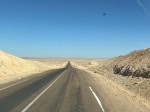
Leaving Guelmim, the character of the country began changing again. The bluster of the Atlantic coast was behind us and the green foothills of the Atlas were receding and flattening into rolling desert. Algeria lay a couple of hundred KM to the east, and Western Sahara about the same distance south.
We stopped for the night in the oasis of Asrir, once a major stop on the trans-Saharan trade route where caravans of camels from Mauritania and Mali would be watered and traders would have a break amid the lush oasis greenery before heading north to Guelmim.
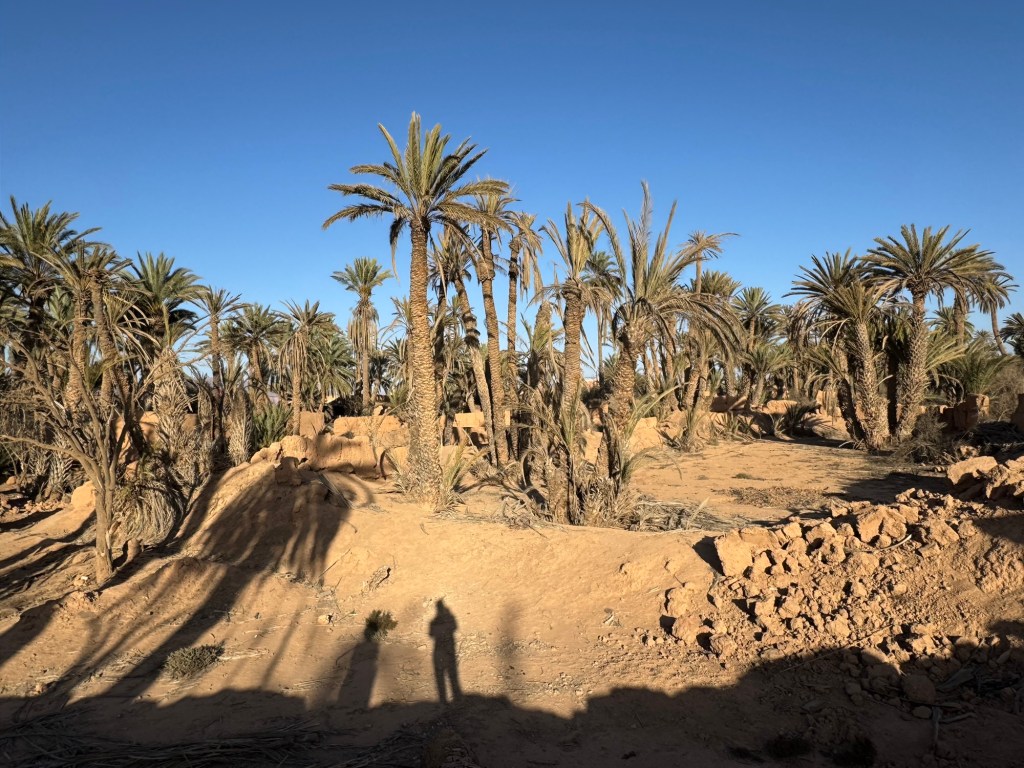
Like so many oases in the south though, Asrir is suffering from a years-long drought. Once a busy and prosperous place, some of its date-palms are now keeling over and the mud walls between the plots are cracking and crumbling. People are less able to make a living in these places now and many such communities are slowly being abandoned. Asrir does still have some spring water and we saw small fields of wheat and maze. But it is clearly a struggle.
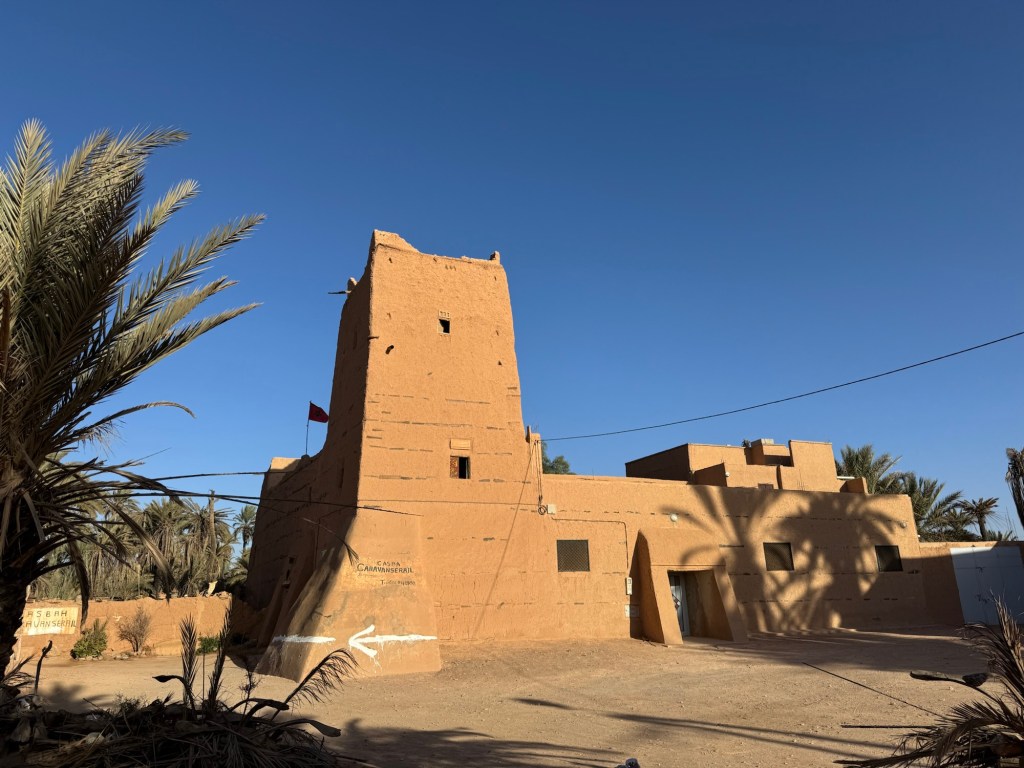
Walking through the village, quiet in the heat of the day, we passed a squat Kasbah with an open door.
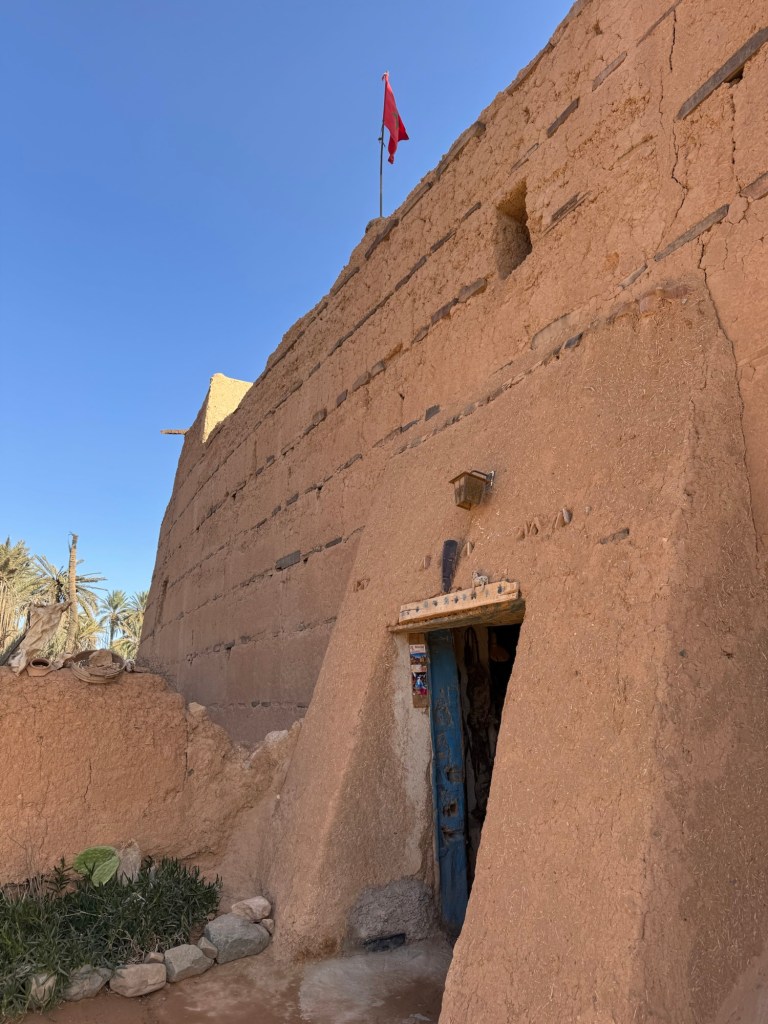
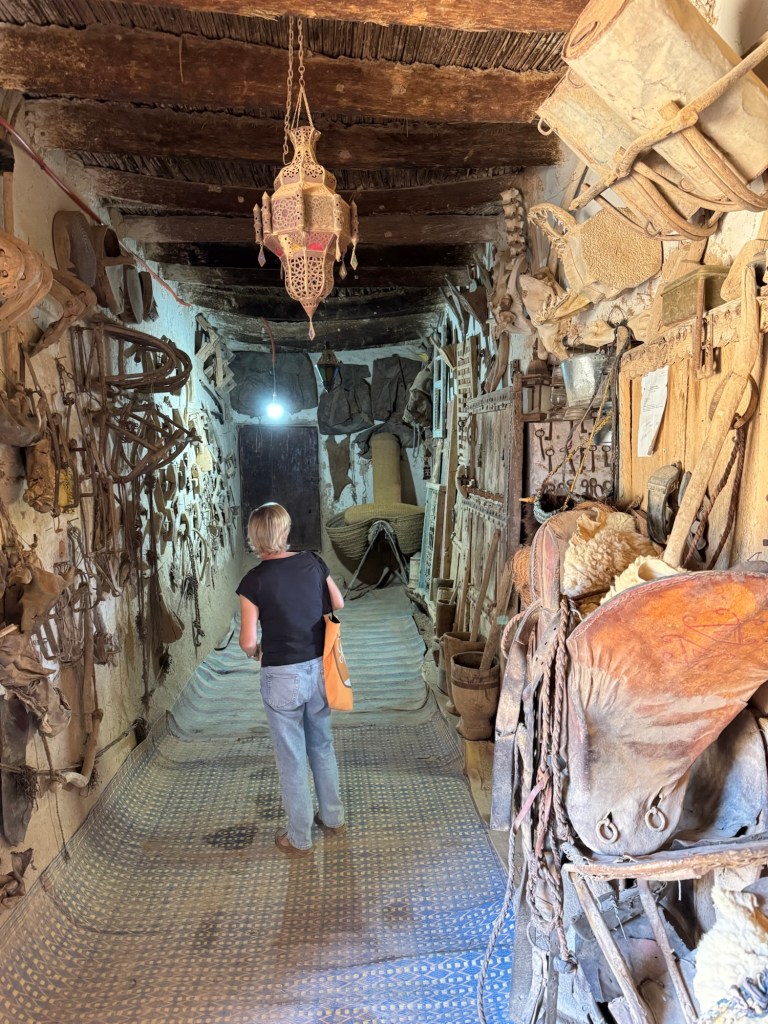
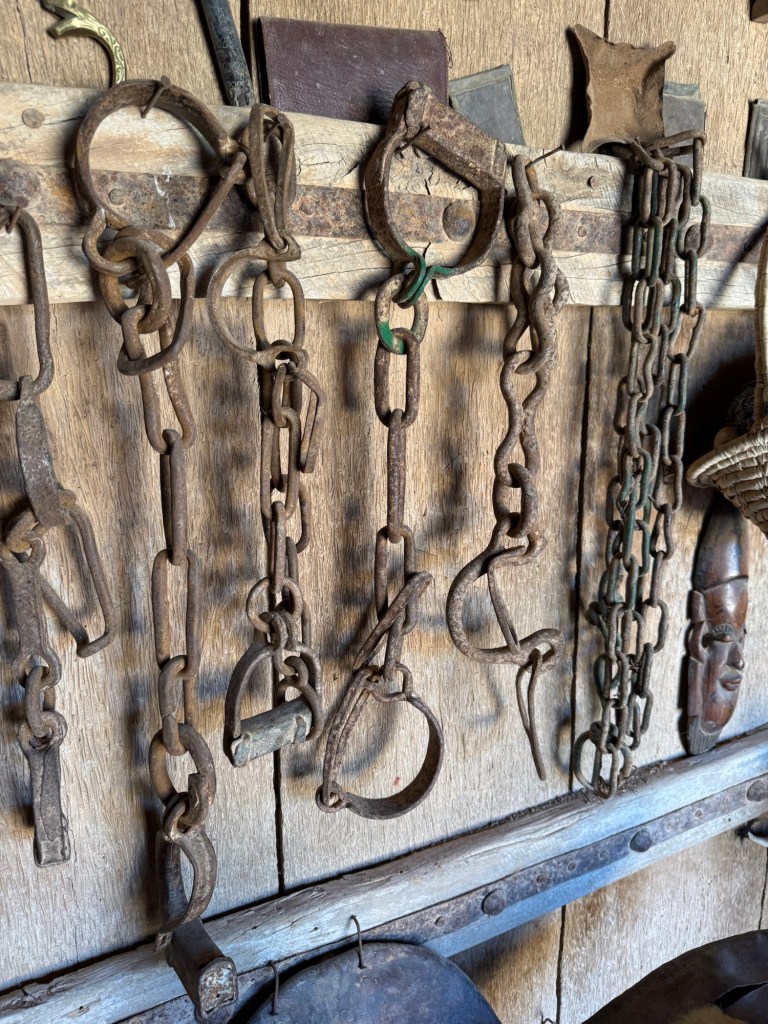
Inside it was cool and quiet, the floor covered in mats and the walls covered with anything you could think of; a camel saddle, leather bellows, hoes, a gaping shark’s jaw, butter paddles, wooden door locks, manacles.
We walked deeper into the building and were met by a tall man with a long blue tunic, a rope of wooden beads and a dazzling blue chiech wrapped around his head so that only his eyes were visible. “Salaam!” he boomed.
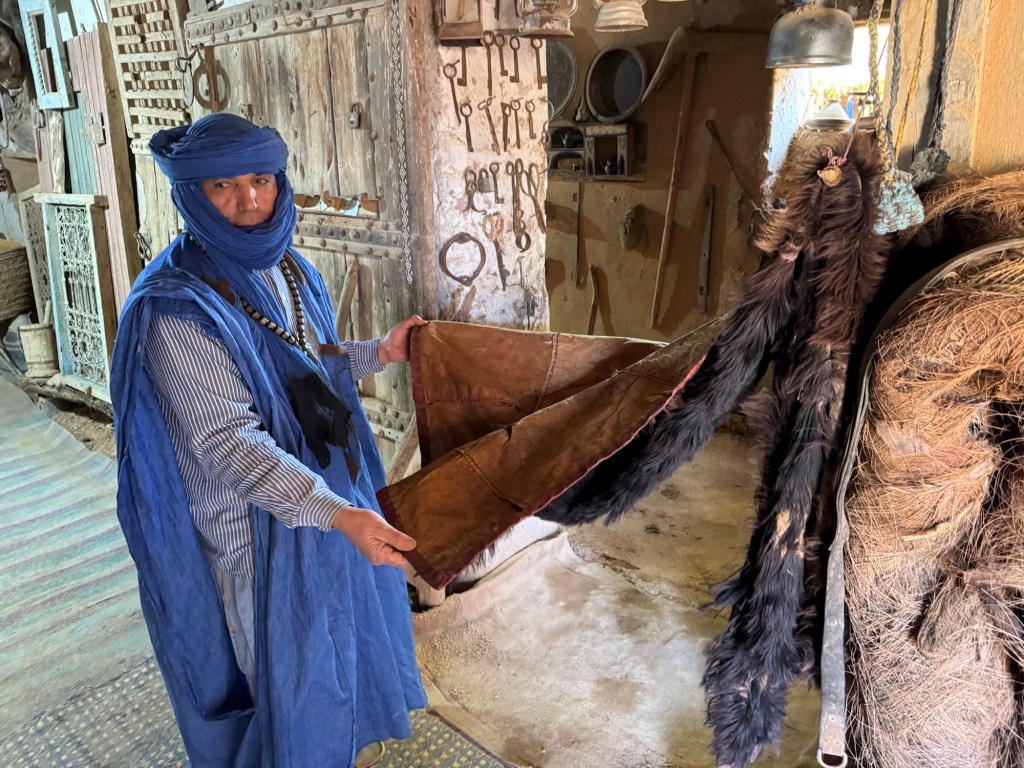
This was Habib, part of the family that had lived in this building before it became a museum.
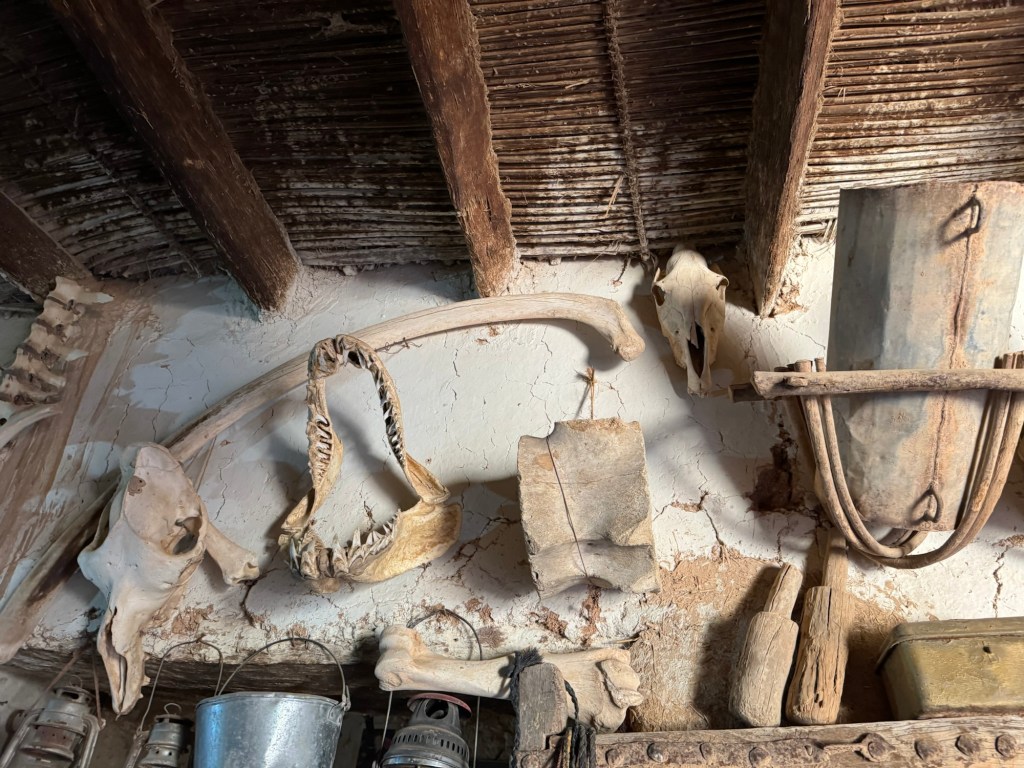
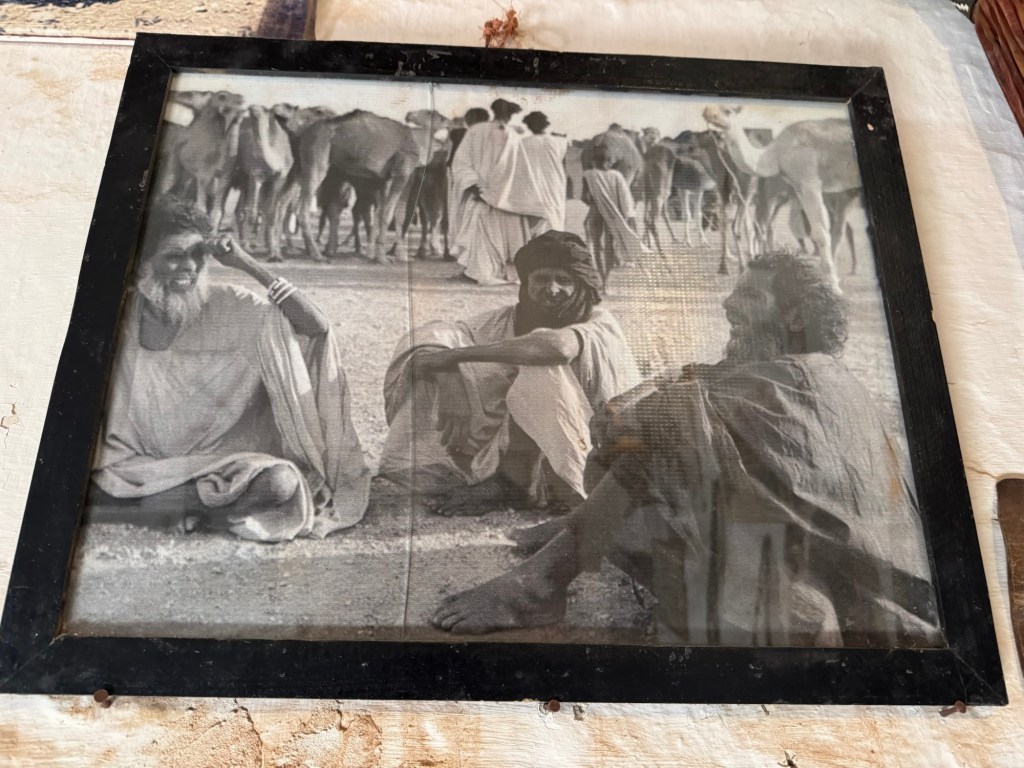
He began explaining the items around us in heavily accented rapid-fire English. Here were bags for carrying water, beads from “Africa”, whale-bones from the coast, animal traps, iron door-knockers with different notes used by either men or women to announce their presence. Old photos too, including one of his father sitting barefoot with a group of camel traders.
And yes, those manacles. “For slaves from Mauretania, Mali, Niger” he said, unabashed.
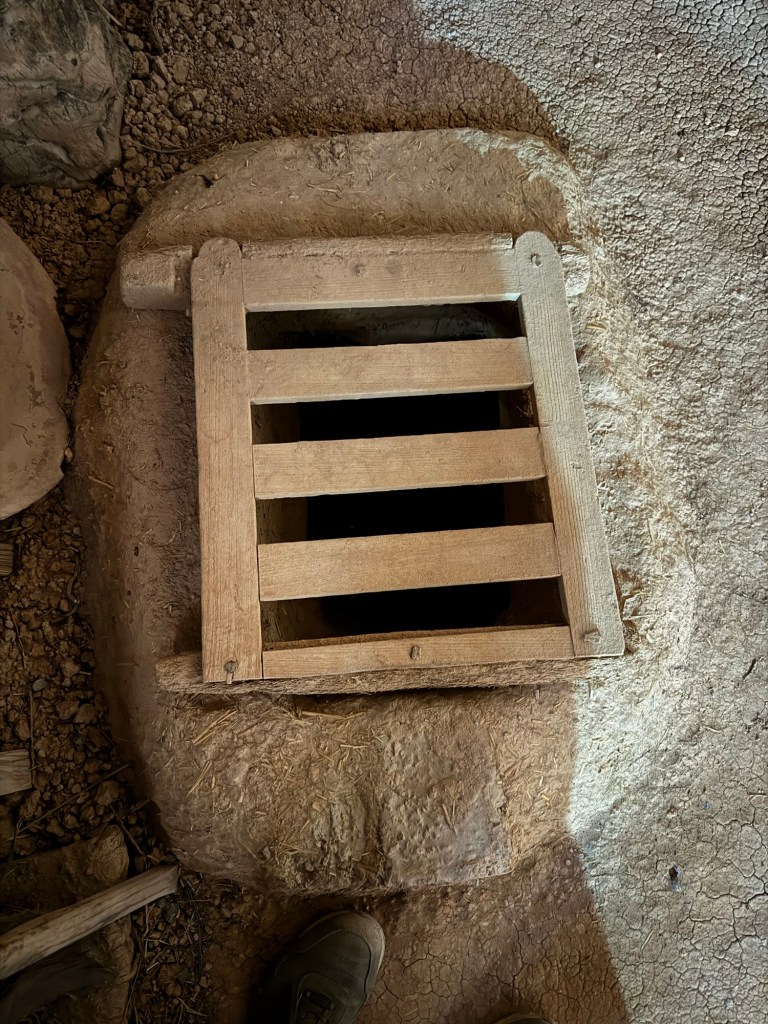
All the big houses had enslaved people. He pointed to a wooden grill in the floor which opened onto a low pit, barely tall enough to stand up in. “Slave cell” he said, for those that “misbehaved”.
This is a region where slavery has been accepted practice until relatively recently. It wasn’t abolished in Mauretania to the south until 1981 and wasn’t a crime there until 2007. It was estimated in 2018 that more than two percent of the popuation there lived in conditions of slavery. For our guide, the slave trade was just another part of the family history.
The tour ended, and he made us tea under an awning in the central courtyard, pouring it from kettle to glass and back again until he was satisfied with the strength. We asked him where he liked best in Morocco and he became wistful. “My village” he said, in a lonely spot on the coast reached by a dirt road. “You see all the white tents in the distance” he said “I could take you next week”. We were seriously tempted by that offer, but ultimately it would take a big chunk out of our schedule and we still had a lot of ground to cover.
We said our goodbyes and left Habib sitting in his tent, in his family’s compound surrounded by their history.


Leave a Reply