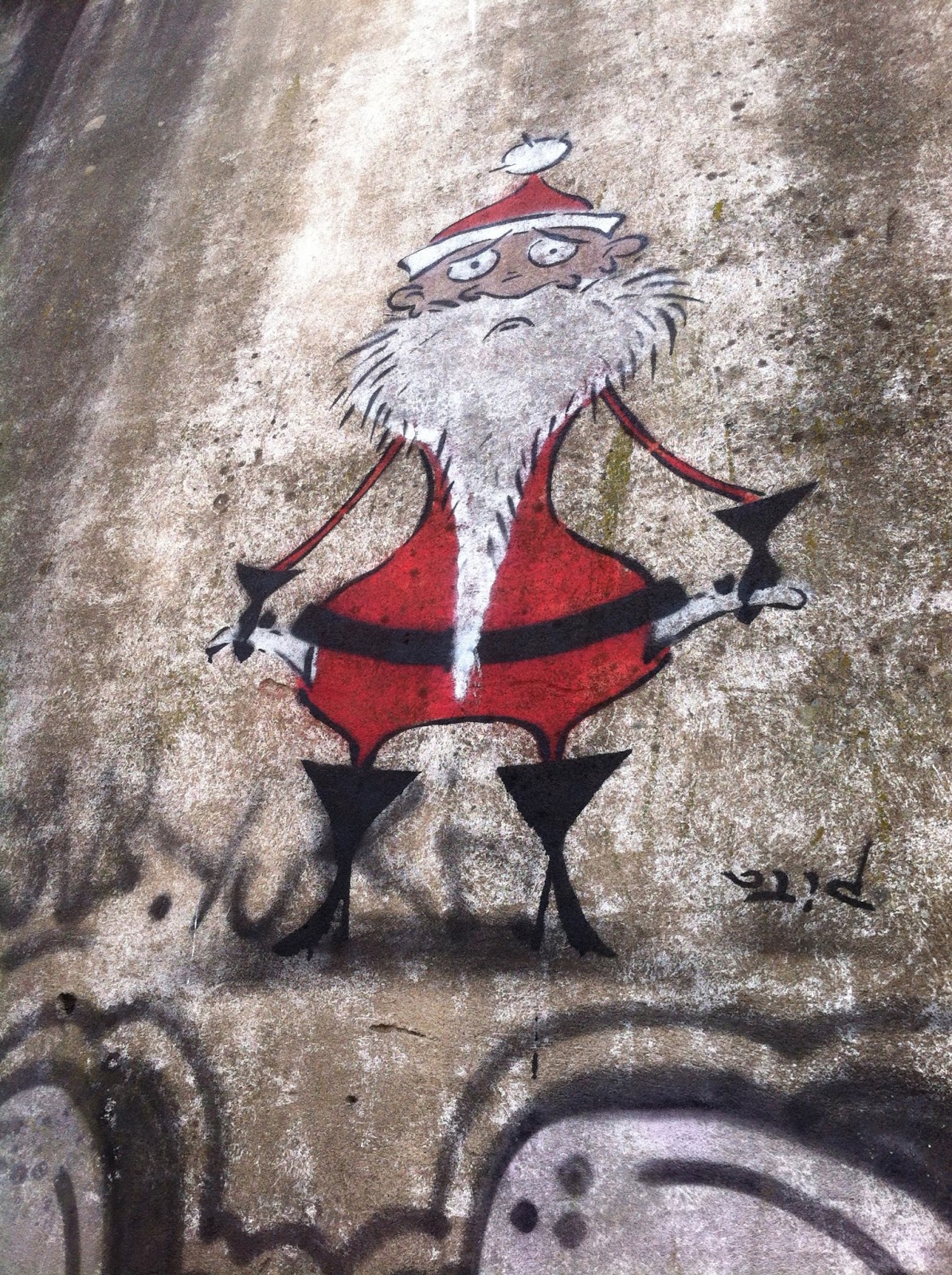
I have never been to any city with more graffiti. It spreads like ivy, regardless of whether the wall belongs to an empty shop or a lived-in house. Just about every other building has been used as a canvas for venting someone’s inner something. Looping tags, wild colours, thoughtful cartoons – like a gloomy Santa pulling his pockets inside out – speak of a city with issues, or perhaps just a different kind of art-appreciation.
 Usually when I write “quiet room away from the lift please” on a hotel reservation it’s a guarantee that we’ll be placed next to the lift and over the bar, but at the Eurostar des Artes we got exactly what we asked for and had a blissfully quiet night, waking to the sound of rain and seagulls.
It turns out that Porto has quite a lot to offer. In short, it is fabulous. It is that rare thing:a real place which is beautiful because its full history is on display warts and all – and even the warts are worth looking at and thinking about for a moment. It must rank as one of the cleanest places in Europe with either the hardest working roadsweepers anywhere, or perhaps no need for them ( I suspect the latter). It hasn’t been prettied up or Disneyfied for the tourists and people seem to live and work on the same streets they have always lived and worked on. There is a feeling that money may be a bit tight – a story told by the number of decaying buildings on so many streets. A single line of houses may have several that are ancient and unrestored but inhabited, another with new windows and gleaming paintwork and the next with its roof caved in, sprouting rotting black timbers.
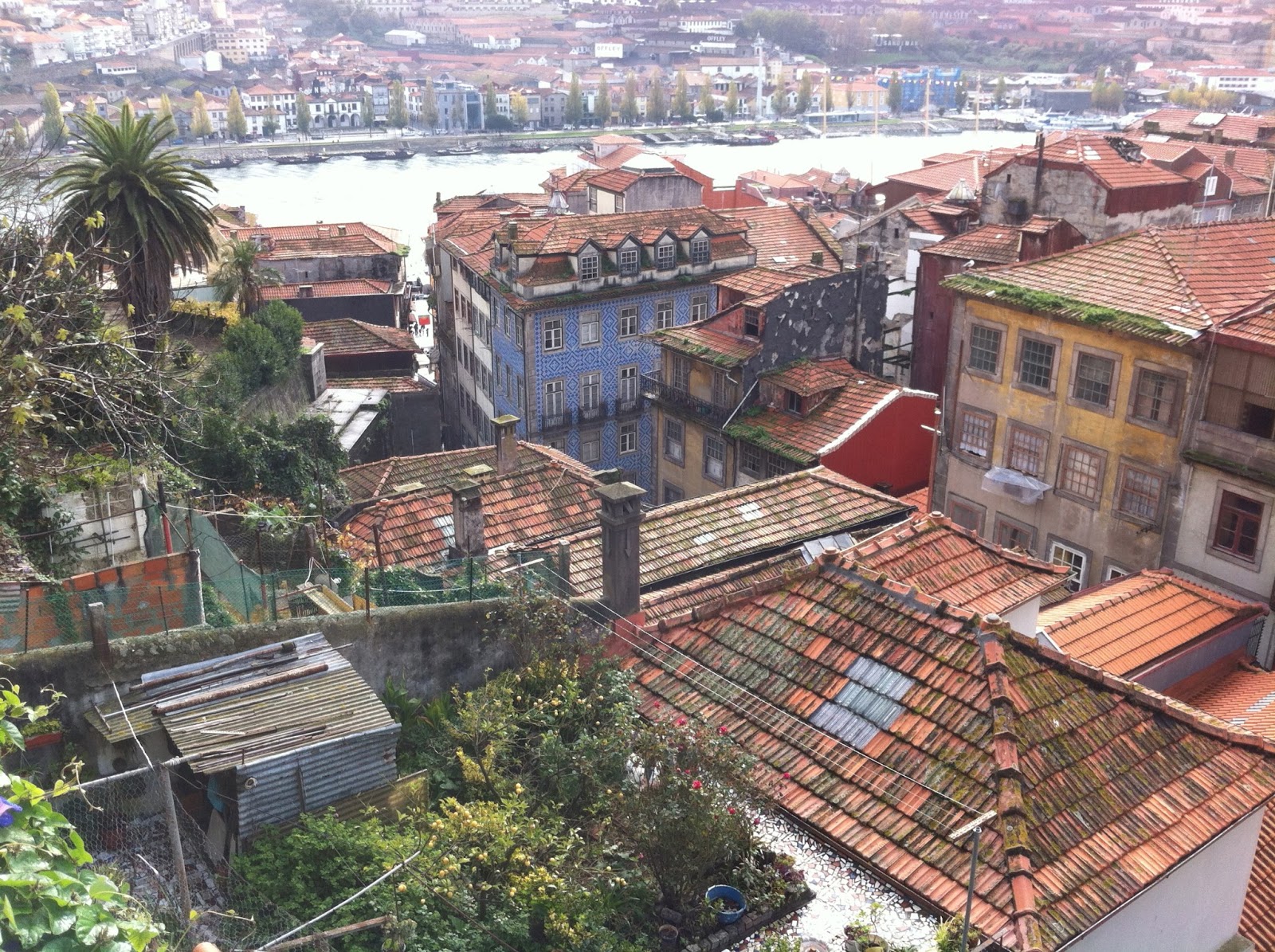
But those streets have such character. Many of the houses – like many of the churches – are decorated with tiles. Some are a plain dark green or brown glaze, others have patterns like faded wallpaper. There are iron street lights from another era, ancient doors thick with paint and window frames which haven’t seen a right-angle in centuries. On some streets there is a tiny grocery in a space like a big wardrobe with a single door and no window. They are lit by a bare bulb and crammed with boxes of oranges and cauliflowers, potatoes, hair gel, washing powder, cans of sardines and tomatoes. They all smell the same – earth and vegetables.
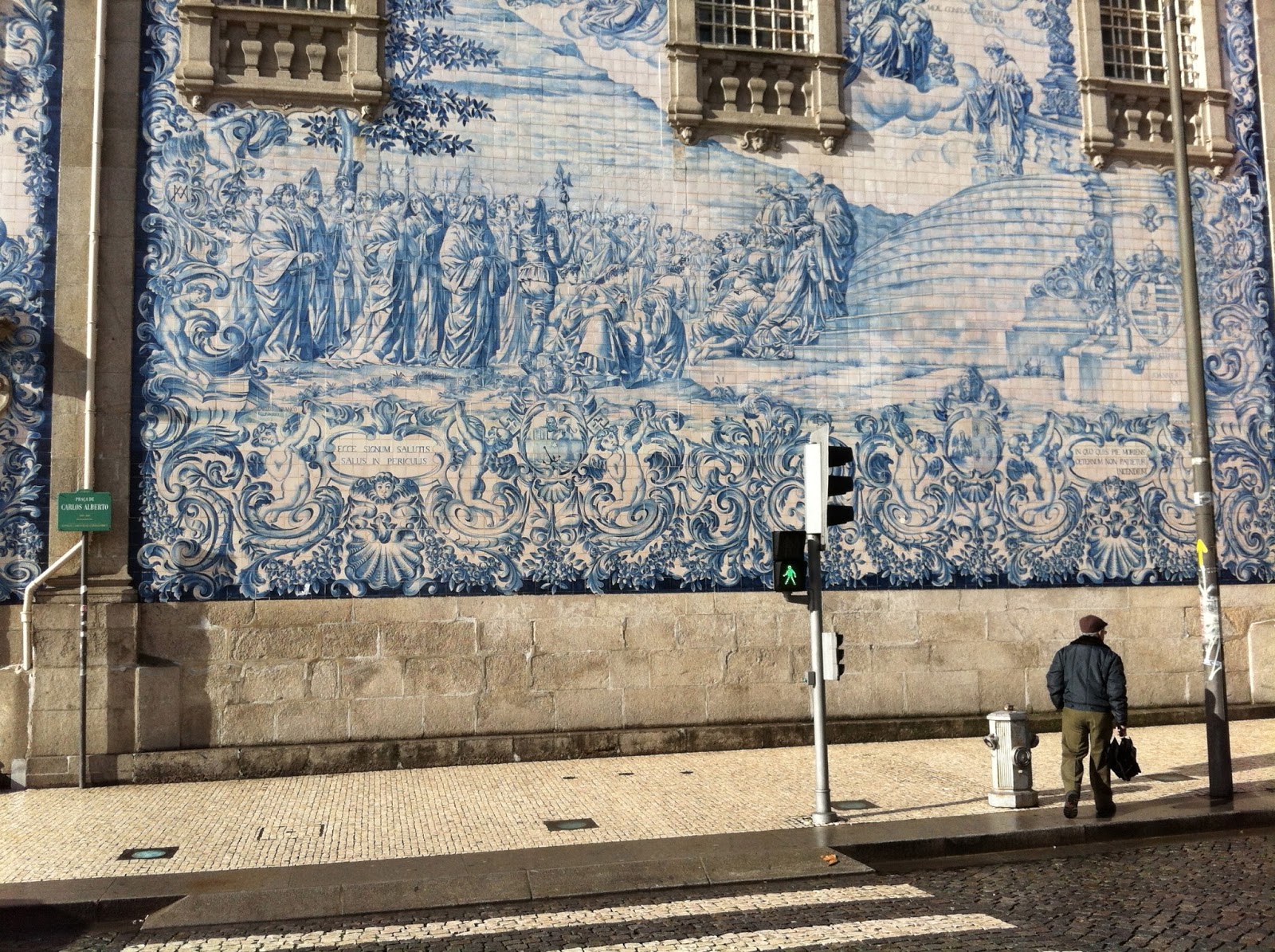 The Igreja Dos Extintos Carmelitas is a looming stone church, clad on one side with a vast tiled blue and white mural, and inside with gold. The huge ornate baroque nave is dazzling but with the gory statues and paintings of a bloodied and dying Christ, it all adds up to a slightly oppressive atmosphere, creating a place you want to get out of. We did, dropping coins into the cup of an eager young man with Downs Syndrome who was begging in the porch.
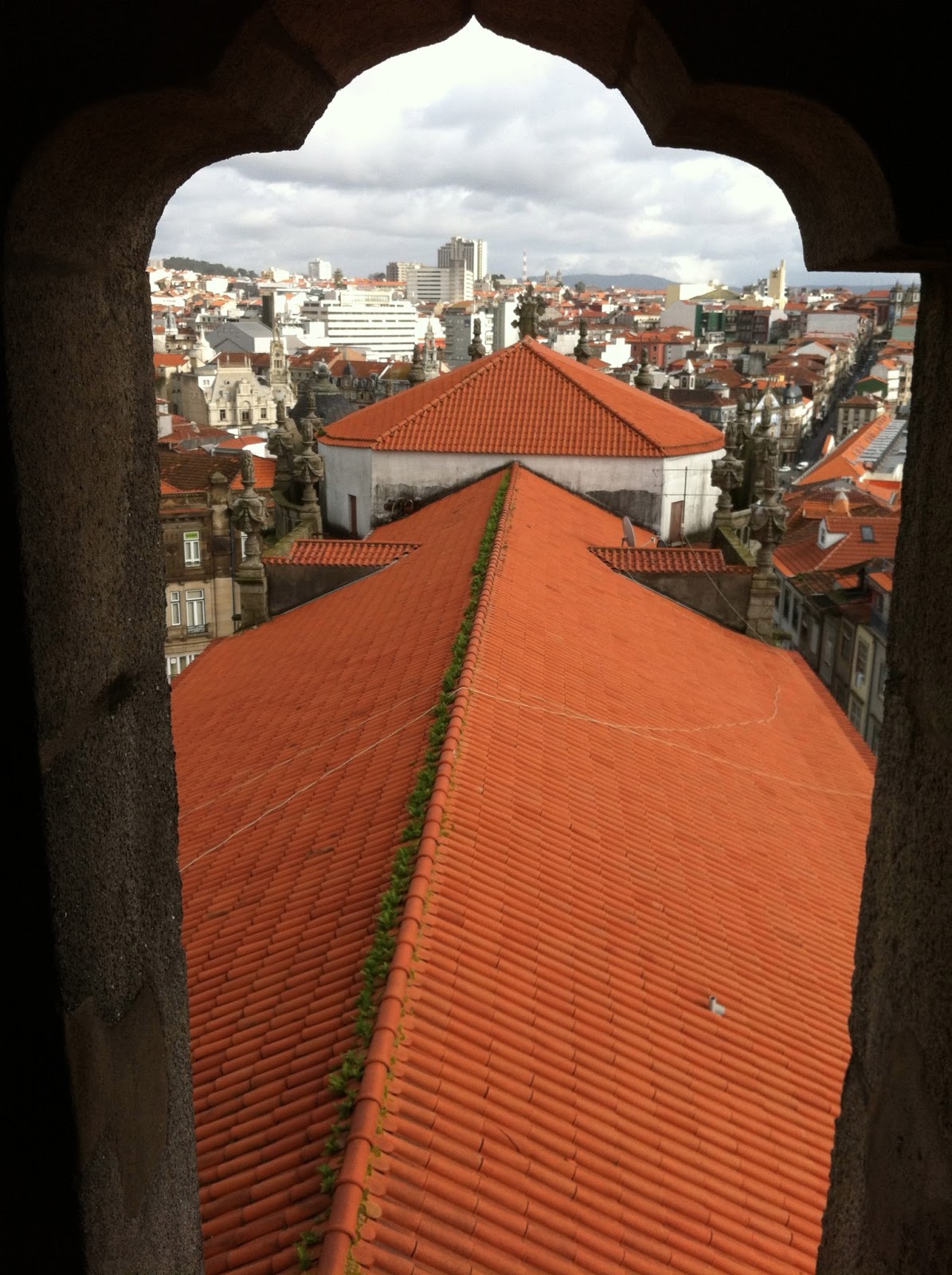
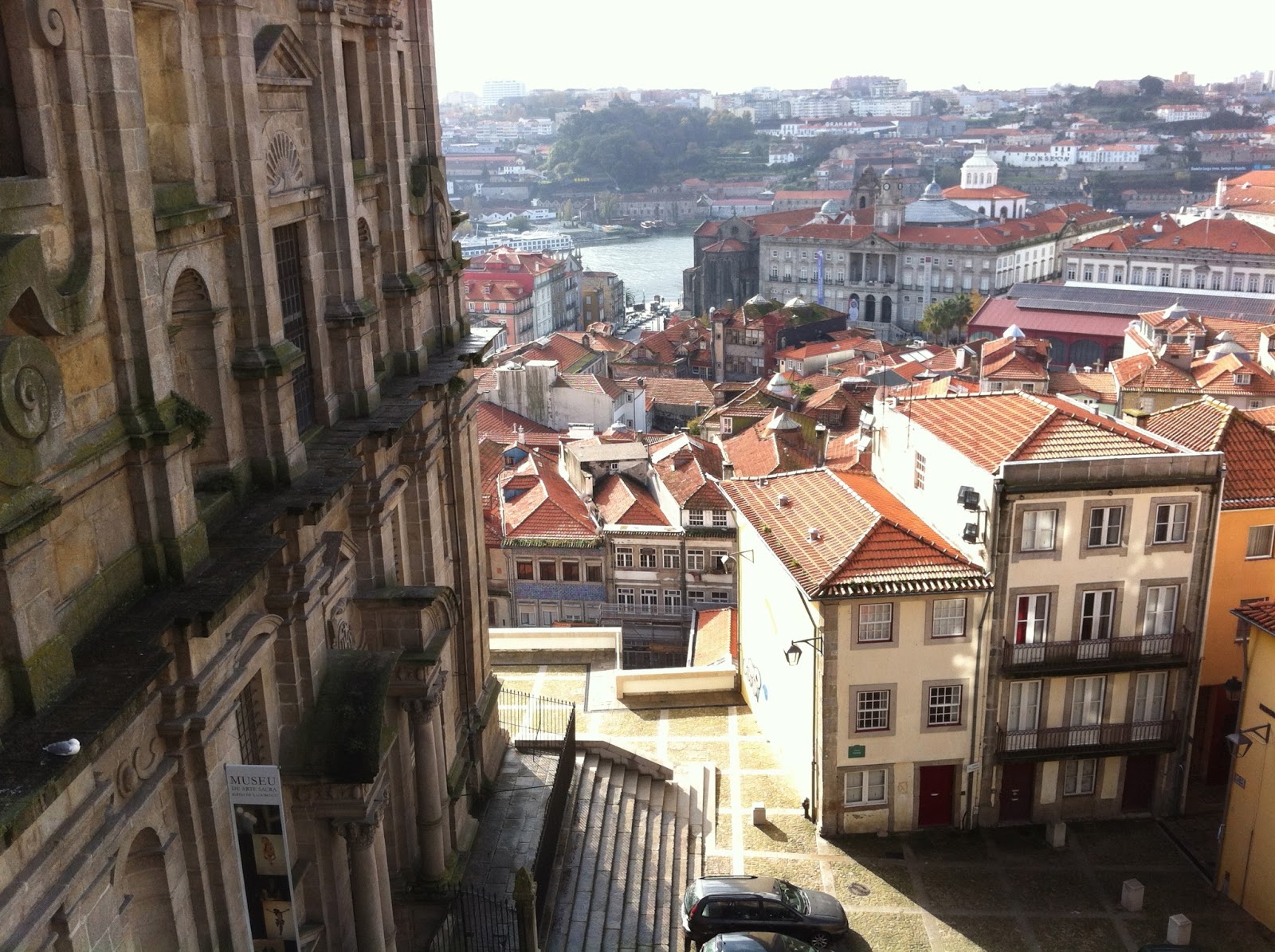
Next stop, the 18th century Clerigos tower, which charges a hefty two euro entrance fee (nothing seems to be a rip-off in Porto). It’s from the refreshingly straightforward school of take-no-prisoners-tourism, with steep stone steps becoming increasingly narrow, until they open out onto the tiny viewing platform with gaps between the stone balustrades which are exactly toddler sized. The view is sensational, across brick-red roofs to monolithic churches like big stone islands, and down to the river Douro dotted with the barges once used for delivering barrels of port. They have an air of an Arab dhow about them with their fine curving prows like scimitars.
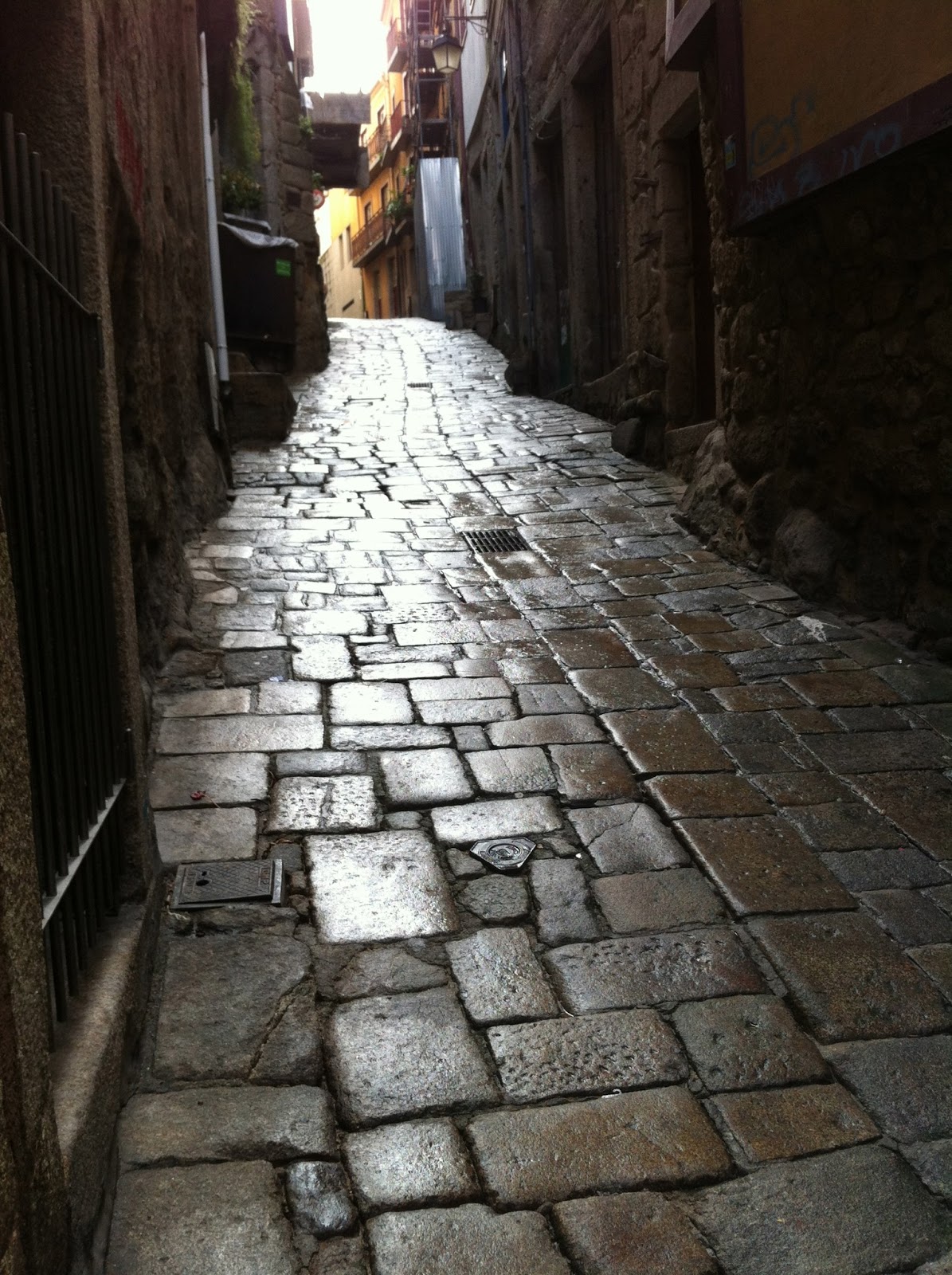
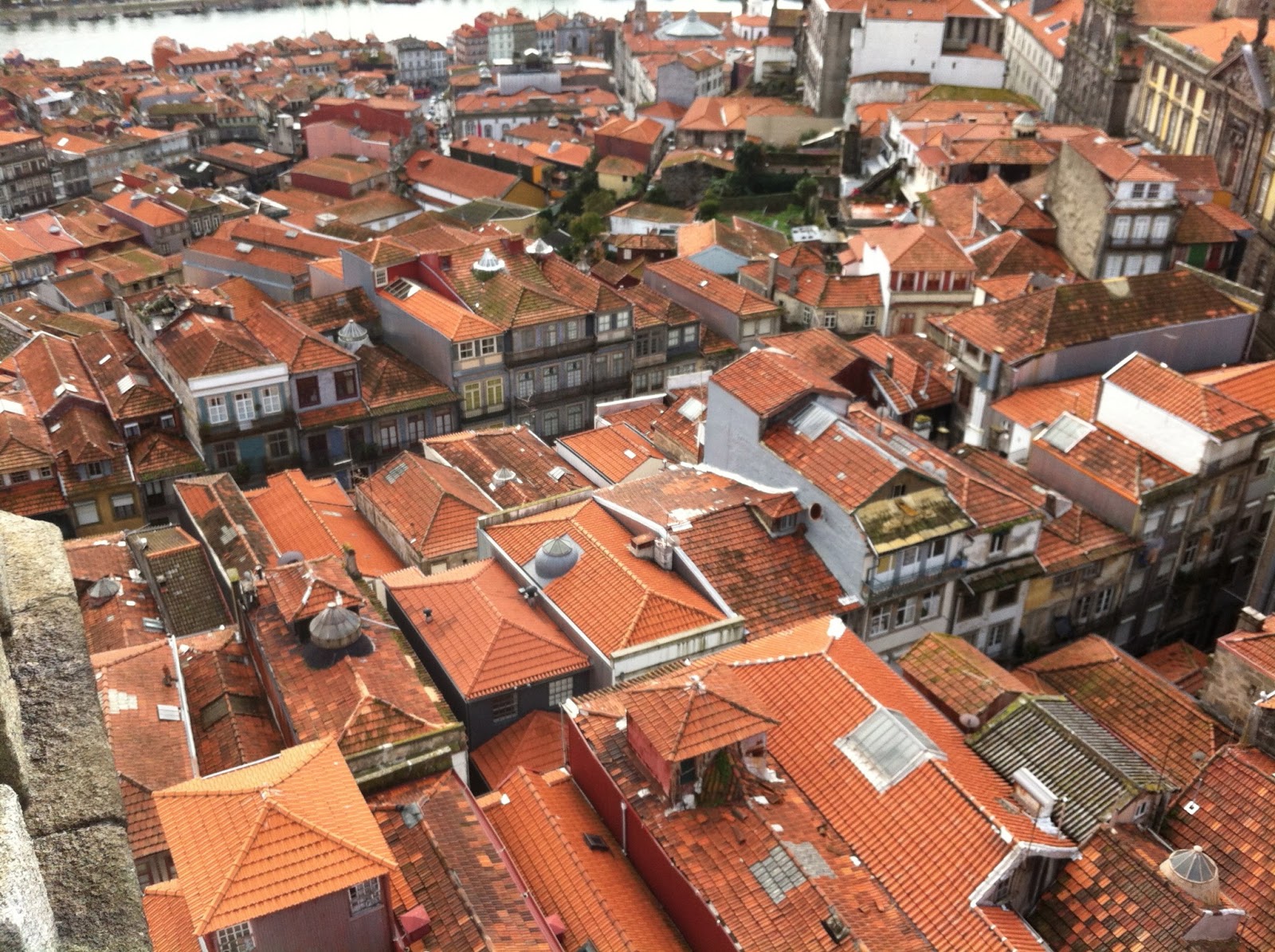 The buildings below the tower spill untidily down the slope of the city, along narrow streets which curl like thrown string. In places they are little more than alleyways and the buildings seemed to narrow over our heads, leaving just a slit of sky above, creating a gloomy twilight. On one street we stopped for what the Portuguese call a “Pingo” – an espresso with a shot of milk. Outside the heavens opened briefly leaving the cobbles with a gleam like polished pewter.
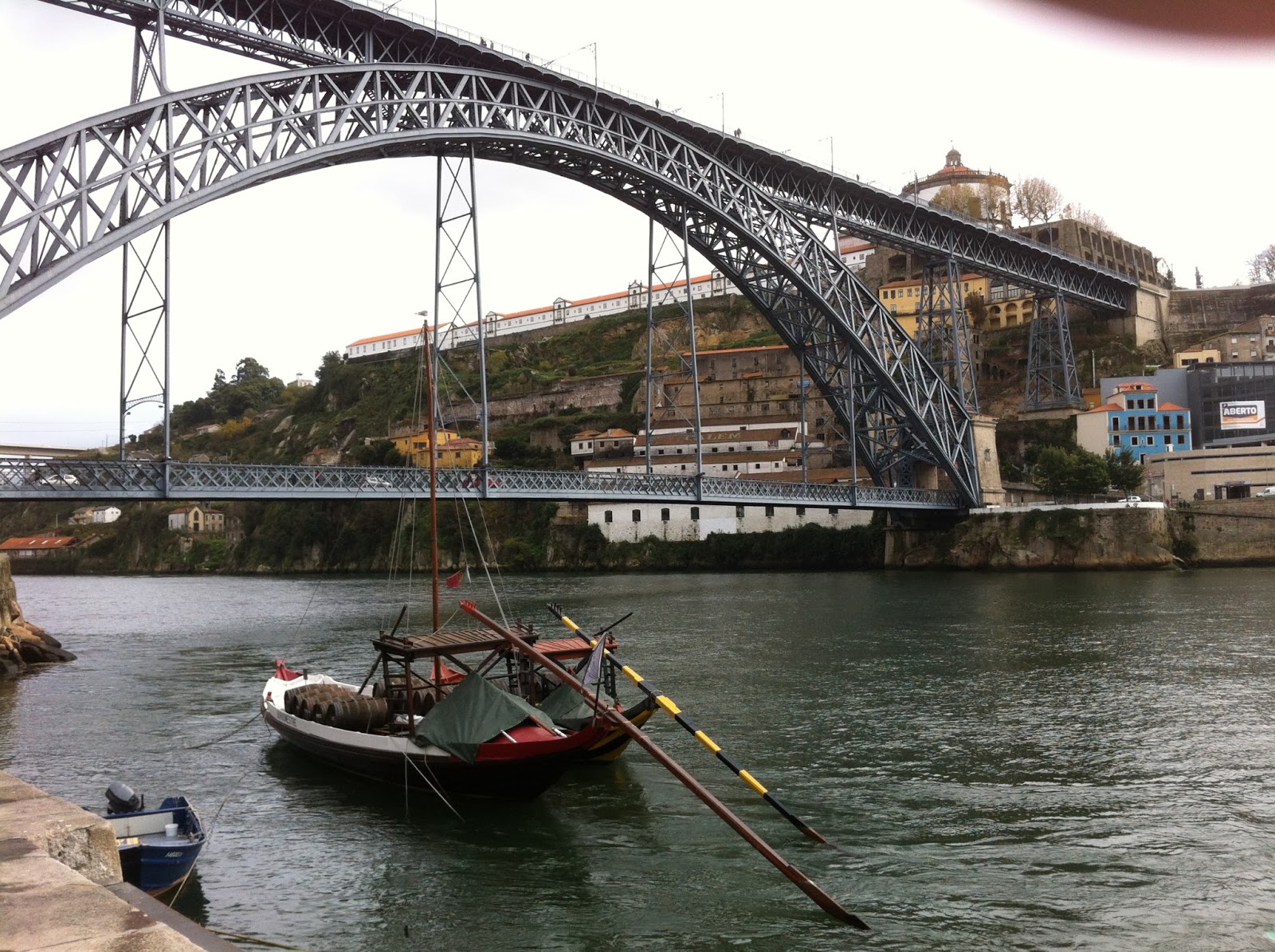 We found our way to the Dom Luis bridge arching high over the river and walked along the tram lines to look up and down the gorge. On our side of the bridge and edging underneath it were stacks of tiny houses, some were patched and neatly swept, others had smashed roof lights and crawling ivy. Still more were just outlines, with the remnants of old walls, still brightly tiled beneath the foliage. From above, you get a better sense of just how narrow the streets are and how difficult it would be to actually get to the houses that need renovation.
I think the purpose of any good weekend break is to use as many different varieties of public transport as possible so to get down to the river we rode the funicular by the bridge which descends so steeply that you can’t actually see the rails from the glass front of the car. It was like riding a roller coaster in slow motion.
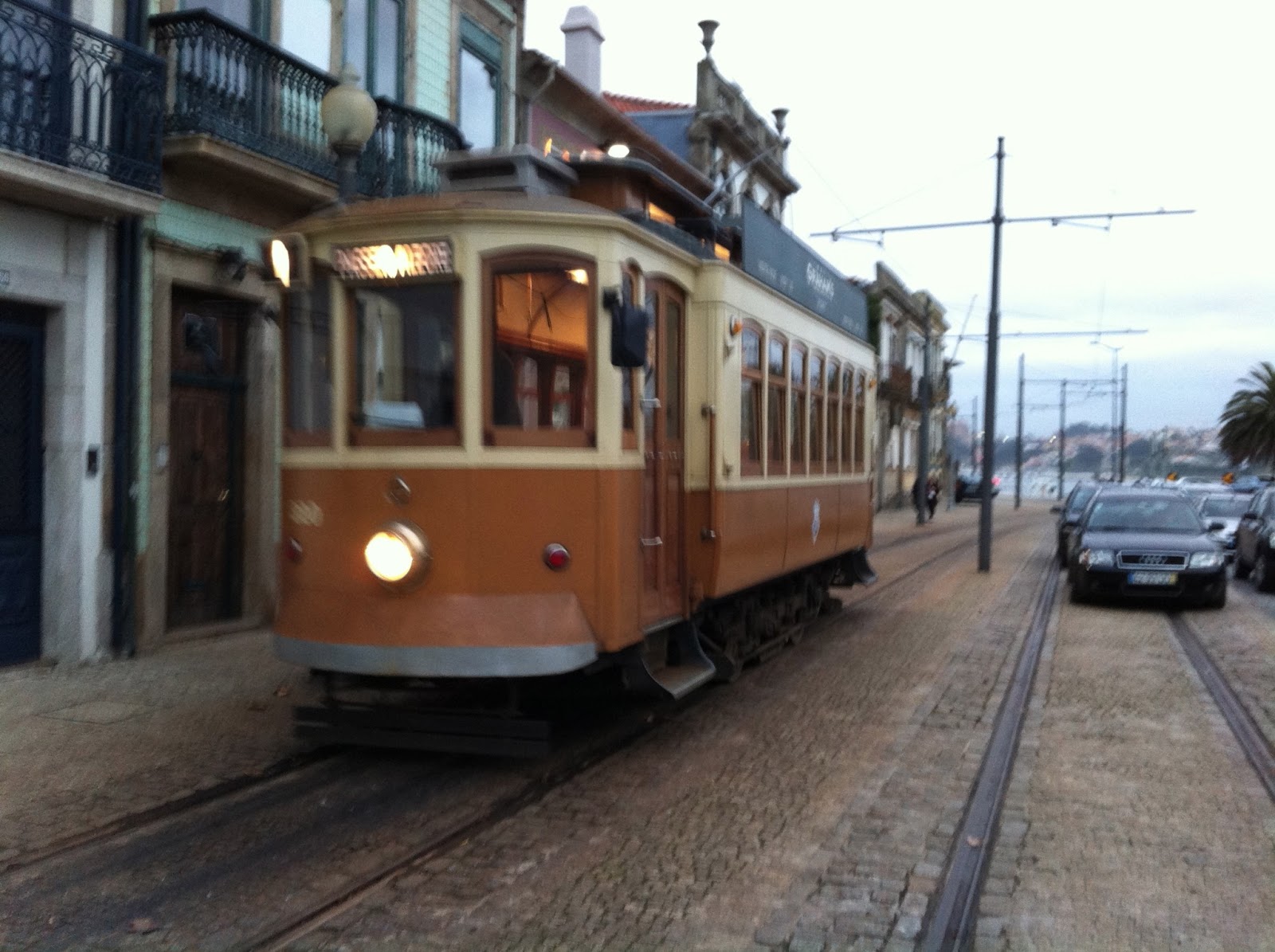 The Ribeira is the classic bit of river frontage in Porto with tiny shops and restaurants filling the arches of an ancient stone jetty. Schooners and sailboats were tied up along the modern key-side and tourists drank beer and looked up at the soaring spans of the bridge over the gorge above. Its a grand spot and P and I decided to follow the Douro through the city towards the sea, three and a half miles away. We took the tram route and every so often a single wooden tramcar clanked past us looking a lot like the cable cars in San Fransisco. They’ve all been restored with lots of polished wood and brass.
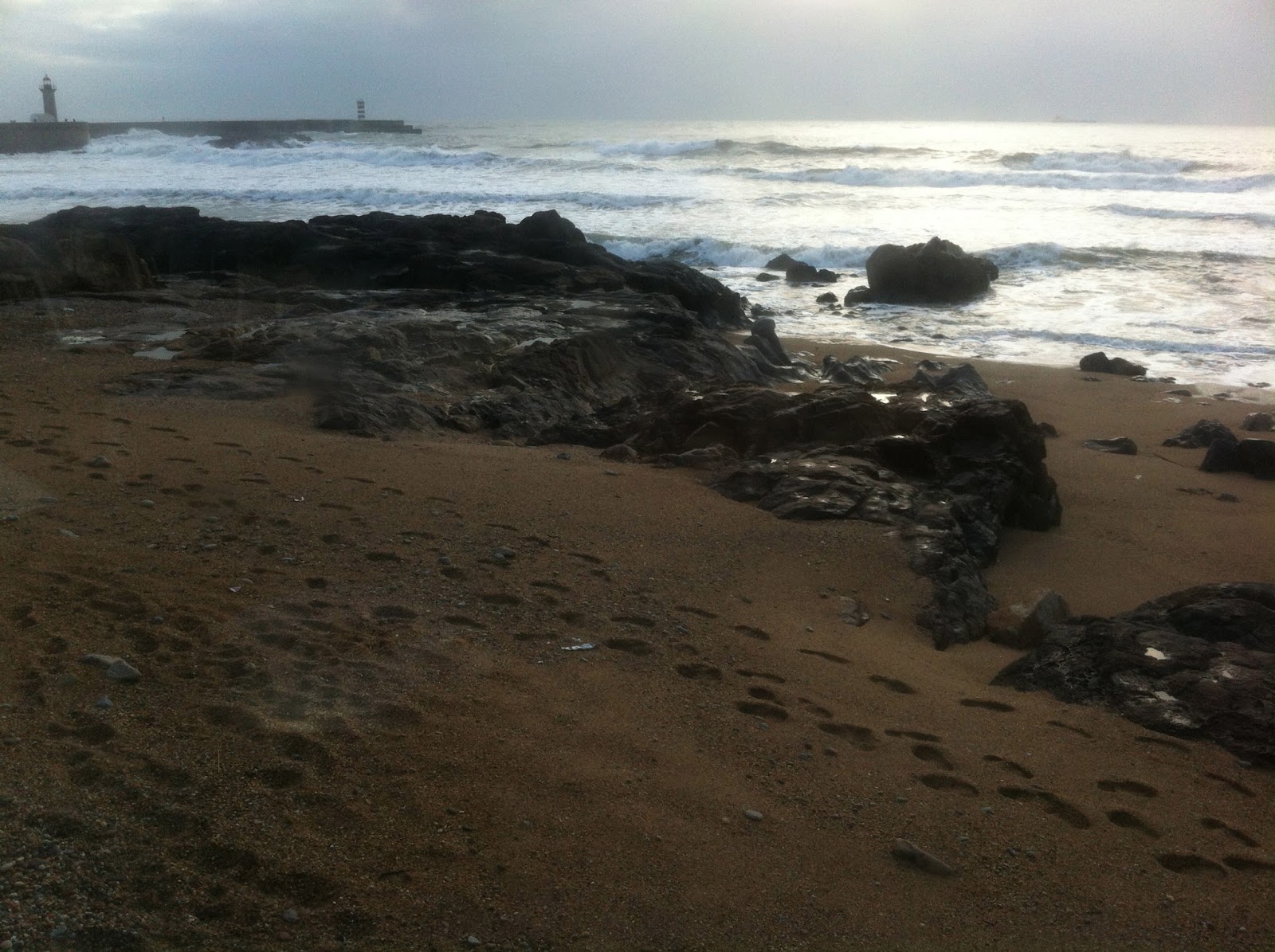
We kept vowing to turn around at the next tram stop but somehow never quite did and after ninety minutes or so we were watching huge waves pounding the breakwater where the river meets the sea. Having stuck by our breakfast pledge not to have lunch, we were famished, and providence directed us to what seemed to be the only cafe in the area, right on the beach, where we had a couple of beers and a white plateful of cheese and olives. We watched the surf as dusk fell and then ran for the last tram. As we rattled back into the centre of the city, the last traces of sunset drained from the sky and the pink, blue and yellow lights of Porto twinkled across the river becoming a soft glow settling over us.
 The Magic Bus
Leave a comment