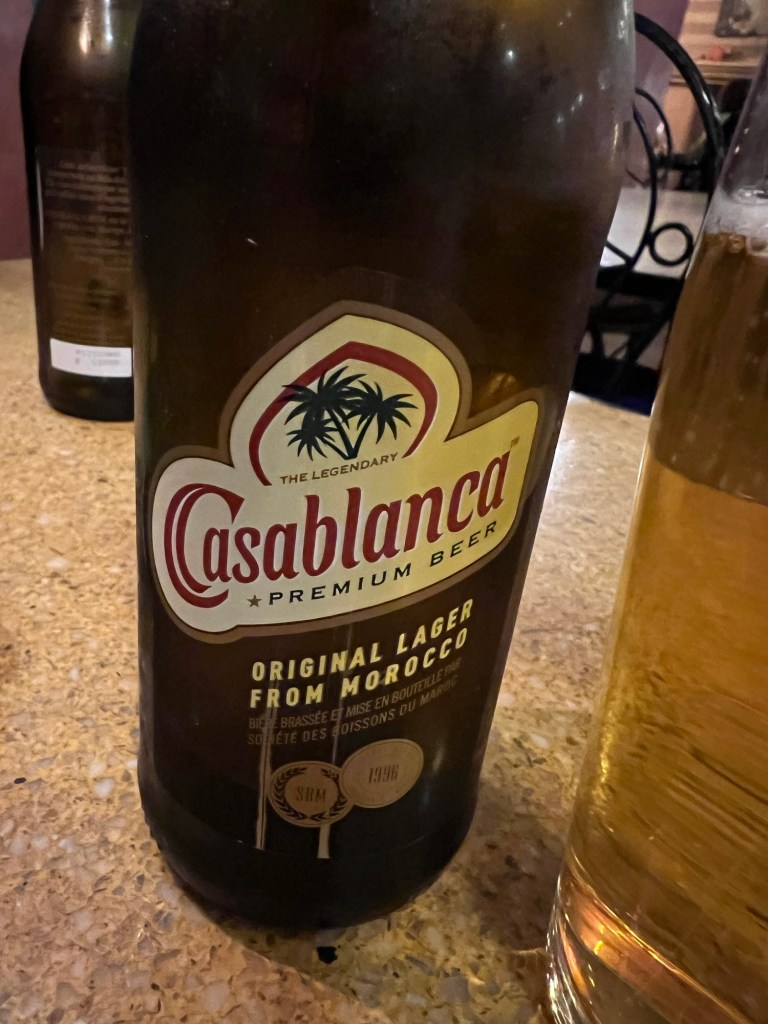
Morocco in late January belongs to the long-term travellers; the expats, the overlanders, the crusty young people in rattly van conversions and the oven-baked retirees in clean white boxes. We are a little oven-baked and also a bit crusty so we straddle both camps. The package tourists have mostly gone. There is a marked absence of children (all at school) and amongst our travelling clan there is no-one who looks like they have an actual job.
It is the depths of winter of course and while the blue sky and sunshine have proved reliable, there are days in this part of the country when the high dips below 20. Can you imagine. The nights though can be ear-pinchingly crisp, giving the stars an extra sparkle in a black velvet sky.
In a chilly campsite just outside Marrakesh we met up with our friends Danny and Kristin from Belgium who have a truck like ours and a similar outlook on life too. We’ve shared routes, tips, frustrations and small victories in the long road from ordering our vehicles to actually using them. They want to drive to India eventually.
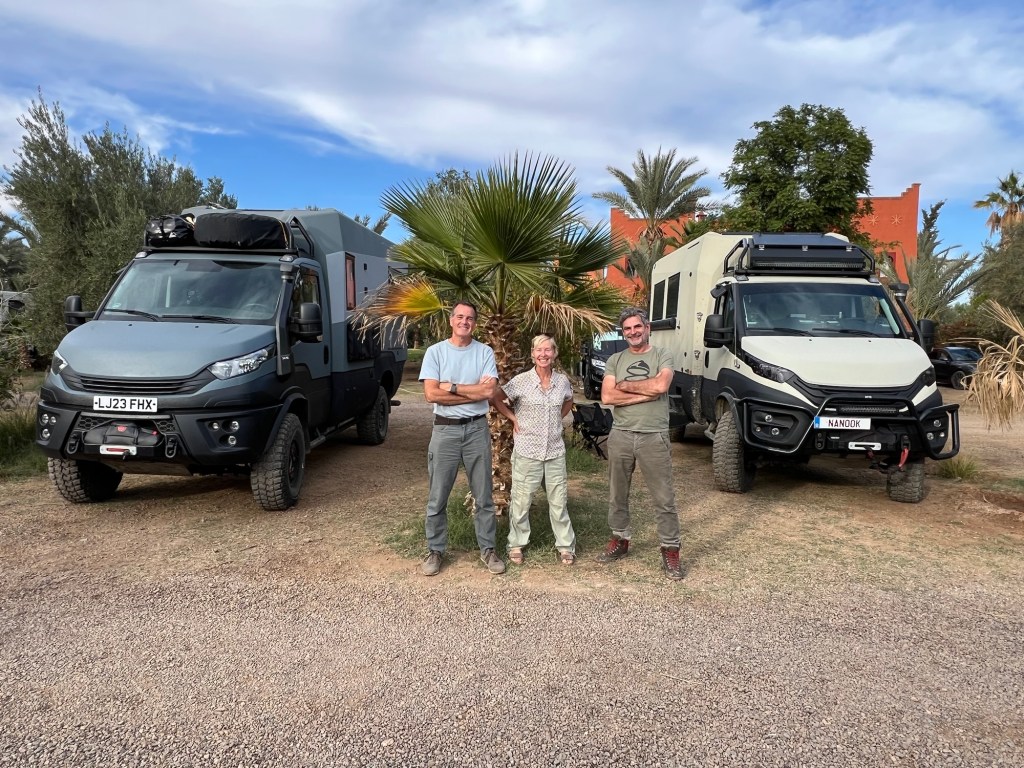
We promised to meet on the road somewhere and said our goodbyes before driving west towards Essaouria. It was a relief to escape city streets seething with frenetic taxis. As we drove, the traffic thinned out and calmed down, filing into long straight A-roads with sandy scrub either side. Drivers obeyed the speed limits and traffic police haunted every roundabout just to make sure.
We picked up a speeding ticket earlier in this trip. The officer, immaculately clad in a taupe uniform, signalled us to the side of the road, explained, sternly, that the speed limit was 60, they don’t pull you over unless you exceed 66 and we were doing 67. I could have launched into an anguished “but we’ve been following that truck doing 45 for the past twenty minutes and this is the first patch of dual carriageway and there didn’t seem to be a sign and and and…”. But of course he was right and that’s why the traffic cops pick these spots. I nodded seriously, carved myself a generous slice of humble-pie and ate it. The fine, with an accompanying explanation meticulously written on a long green receipt was 120 Dirham (€12).
It’s only a couple of hours to Essaouira but we stopped at a campsite in Ounagha on the way, purely because of its proximity to the Domaine du Val d’Argan, Morocco’s southernmost vineyard. Blurry – and probably unreliable – recollections of that visit to come, but the campsite proved a good introduction to travel in coastal Morocco at this time of year.
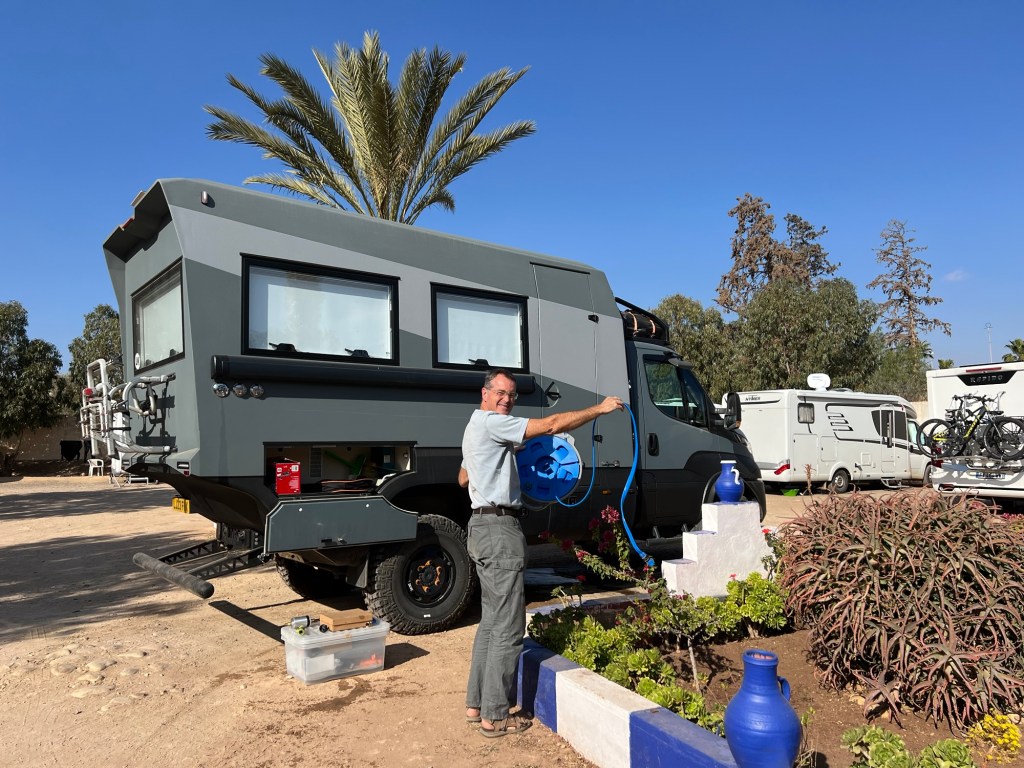
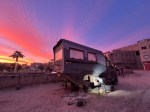
First, it was packed with every kind of white box camper you can imagine, parked like sardines. Many of the campers park in these spots for weeks – or months – at a time. There was a smattering of Brits, a handful of Germans and an avalanche of French people. They have colonised these places to an unsettling degree with tiny dogs, boules pitches, boulangeries, cigars, scooters, French TV via satellite, tiny cars on trailers, (including a couple of immaculate 2CVs) and a fine array of haughty stares for those of us not in white box campers. They keep their vehicles immaculately clean; spraying and wiping away any dust that dares to settle, working on the smaller spaces with paintbrushes. They have rugs at the bottom of the steps to keep the dust out (which is not a bad idea actually…). They all seem to know each other and they talk earnestly at great length and significant volume. It is a subculture – a club that we are definitely not in. Our “Bonjours” are not always returned and there is a fair amount of staring with furrowed brows at our dusty machine on its big wheels (not to mention our lack of an outside mat).
There is a sense that they haven’t so much come to explore a new country, as take their old country with them and re-establish it wherever they stop. But of course, we all do that to some degree. We want to travel but we also want some of the familiar comforts of home – especially when we are away for months at a time. So we Brits also shop in a Carrefour for things we can’t get in the souk. We watch Netflix and we chat to the other Brits when they spot our number plate and come over to compare notes.
The French have been more successful colonists in these campgrounds simply because their long relationship with Morocco means more of them come. For the most part their campers are not equipped with big batteries or solar panels, so they need to plug into a campground power supply to function. Campsites are not a choice, but a requirement. Along with warm weather and cheap prices they also want friends here. This travelling life requires you to leave neighbours and loved-ones behind and while WhatsApp is a miracle, it’s not the same. Our French fellow-travellers want the bonhomie of home and they have created it in Moroccan campgrounds. If they speak a bit louder, it may be because the youngest of them are in their sixties and let’s face it, we don’t hear as well as we did.
I said we don’t HEAR AS WELL AS WE DID.
And, when the sun goes down, they hop inside their white boxes and you don’t hear another peep from them until 8, when the dog-walking begins.

As we surveyed our artificial campsite surroundings, pondering how best to find Moroccan authenticity on our travels, we remembered that the French vineyard was just a walk away so we walked away and had lunch with a wine tasting. Actually we had wine with a lunch-tasting. We arrived expecting delicate sample glasses and talk of noses and ripeness and so on that we could nod along to with serious faces. What we got was far more sociable: “Here are several bottles of five different wines from red to white via rosé and gris, help yourselves”. And so we whiled away a perfectly good afternoon sampling some really delicious wine and eating well, surrounded by the clink and chatter of a happy group of people in a sunny courtyard who knew they were onto a good thing. The sun slid over us, stretching leafy shadows across our table as we sipped and nibbled. We were the last to arrive and the last to leave by which time the waiting staff had simply left the unfinished bottles on our table and retired to have their own lunch. The campground had an altogether rosier hue to it when we finally weaved our way back there.
One night was enough though. Campsites are useful for filling up with water (and power if it hasn’t been sunny enough for the solar panels), they often have bread on site (thanks to the French no doubt) and it’s just easier in a built-up area to stop at a campground.
Nothing beats wild-camping though and so the next day we found a place off the road down a sandy track into a scrubby woodland far from the nearest settlement. We weren’t the only ones. Here were our tribe – three or four off-roaders in converted vehicles having a quiet night for free. The vehicles ranged from what looked like an old delivery truck, to a jacked up van on big wheels inhabited by a couple with a baby. They smiled and nodded and we found a space far enough away that we were invisible, as were they.
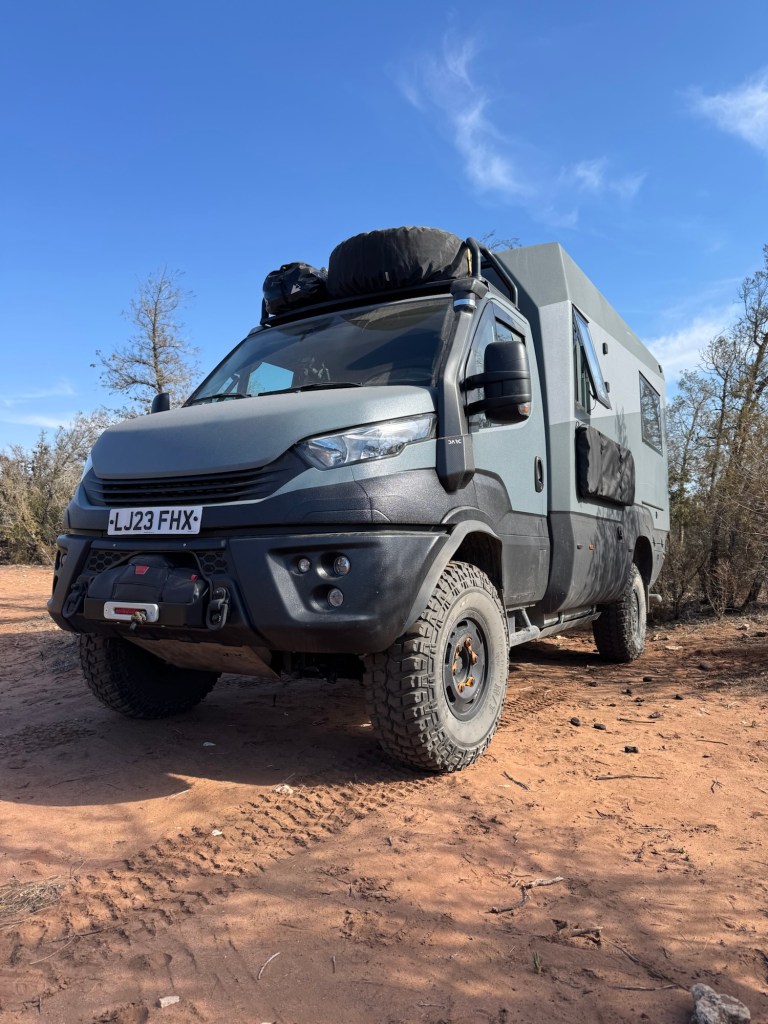
A camel herder came through and waved to us, but that was it. And that’s really the joy of this kind of vehicle (for us) – the alone-ness it can offer. The white box campers seem to most enjoy the camaraderie and community of other like-minded individuals and for the most part their vehicles don’t let them get far off the tarmac. But it’s finding the big, open, (mostly) empty spaces that most appeals to us.
That said, we probably feature in someone else’s blog as an example of ridiculously overequipped overlanders spoiling it for the real travellers who take up less space and fewer resources and commune more easily with the country they are in. Of course the bikepacking cyclists look down on all of us, with good reason.
As our quest for authenticity continued we discovered a fromagerie a few minutes away offering lunch. It had the air of a Spanish hacienda about it, all tiled roofs and whitewash. The owner had a penchant for striking iron sculpture – exuberant topless women and double-take furniture.
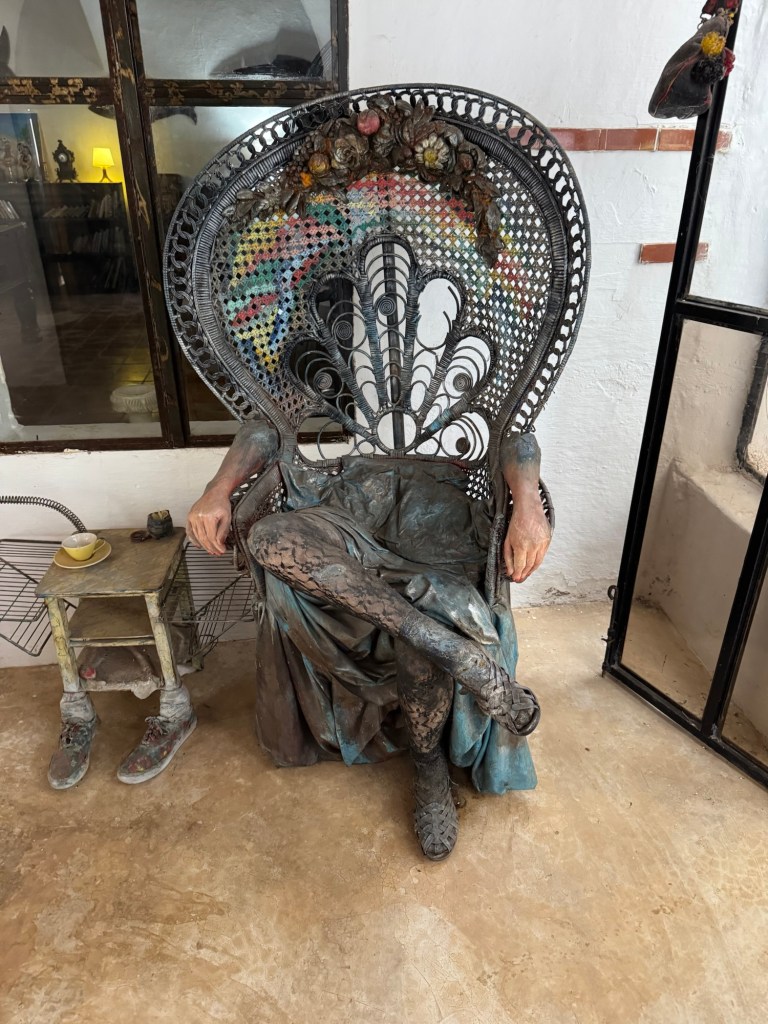
It was a peaceful spot and the food and people were a treat. We both had a feeling of making the most of the sophisticated comforts available before heading deeper into Morocco’s wild south where such attractions may be fewer and further between.
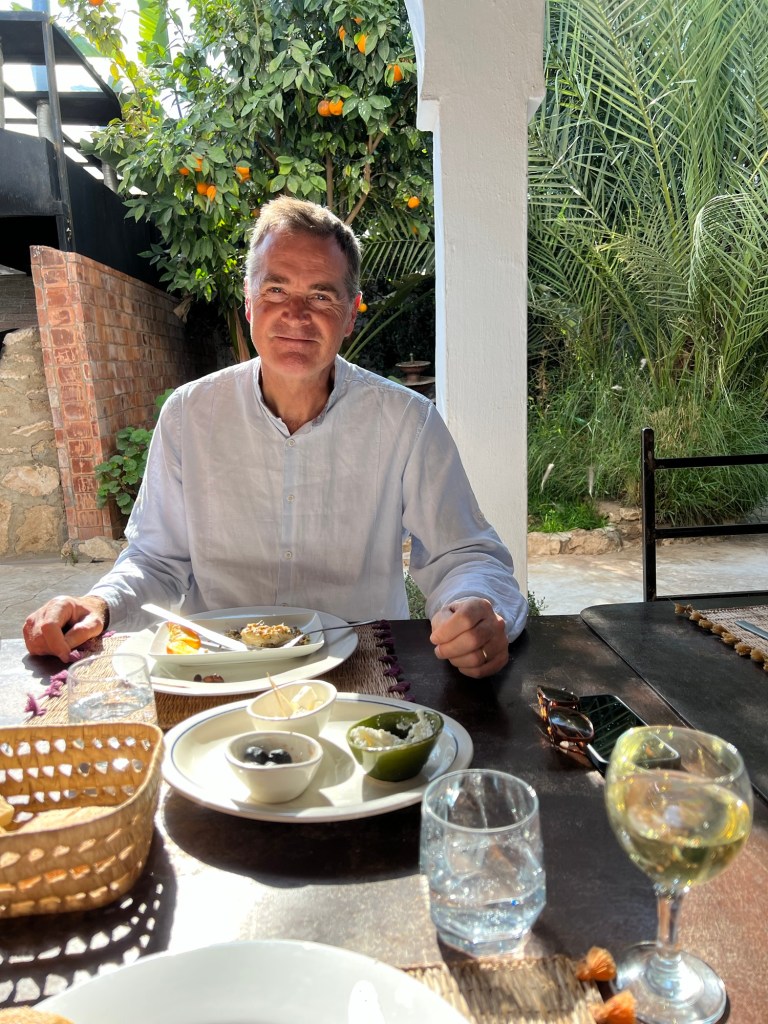
After a couple of months inland it was a joy to see the distant sapphire glint of the sea again. Essaouira has a beautiful old town with a pristine new town around it that wants nothing to do with RVs. “No Campervans” signs abound, sealing off streets and parking areas, channelling you through the city until eventually you get chucked out and find yourself going back the way you came. We kept aiming for car-parks only to be re-routed, or met with a gatekeeper shaking his head. Turning into an unpromising side-road though, a parking guardian sprang up and directed us into a spot by the street. These semi-official road stewards work on tips and it’s good to know that someone is keeping watch when you leave your vehicle.

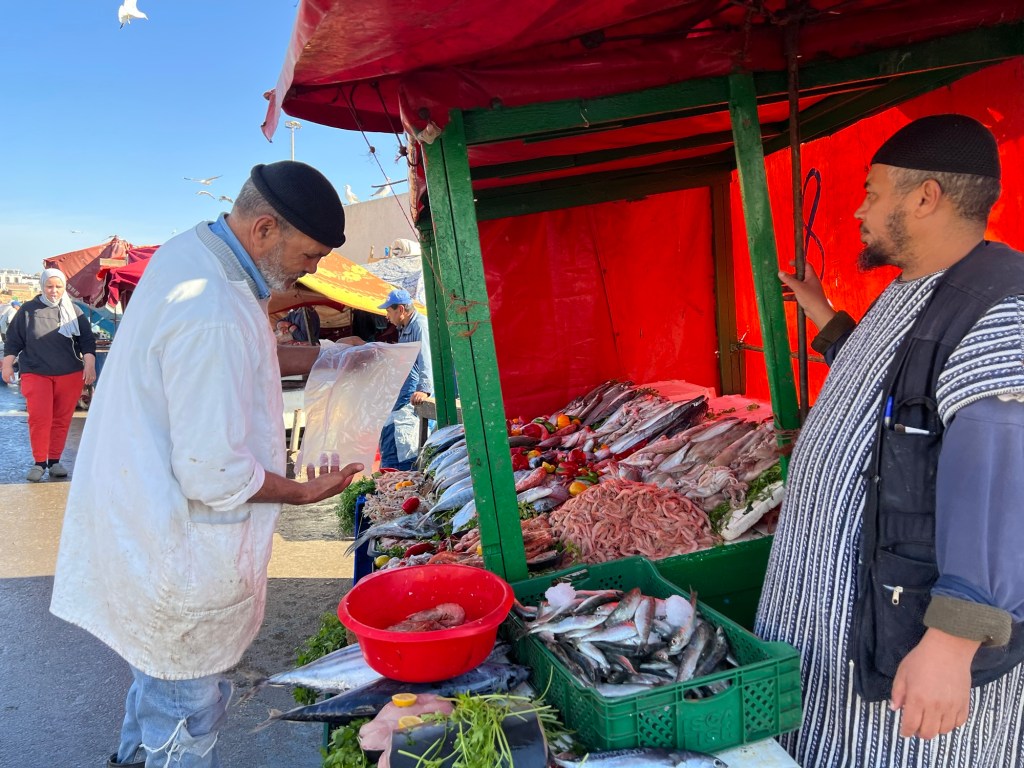
We followed our noses to the fish market, a long dense cluster of stalls on a harbour wall laid out with white fish of every shape and size, but also small marlin and jagged-backed tuna, mottled dogfish, octopus, shrimp, sea urchins, and eels in vivid yellows and greens.
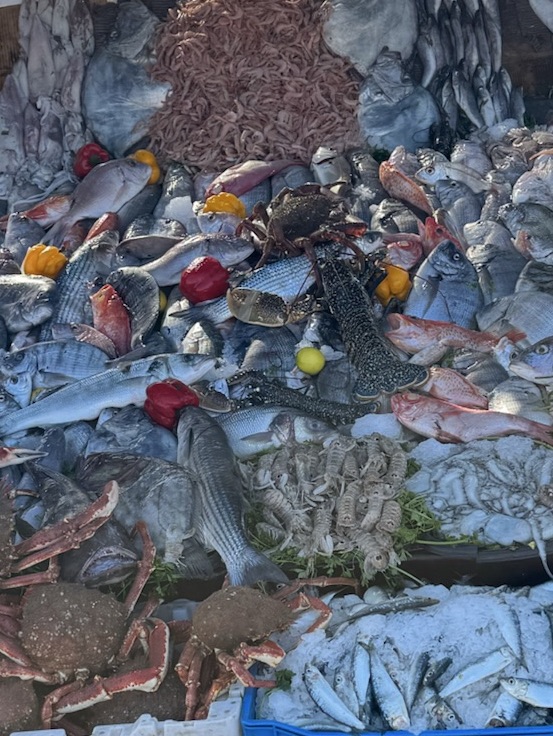
Lads wheeling barrows packed with ice scurried through the waterfront crowds, scolding those who snatched handfuls to cool themselves down.
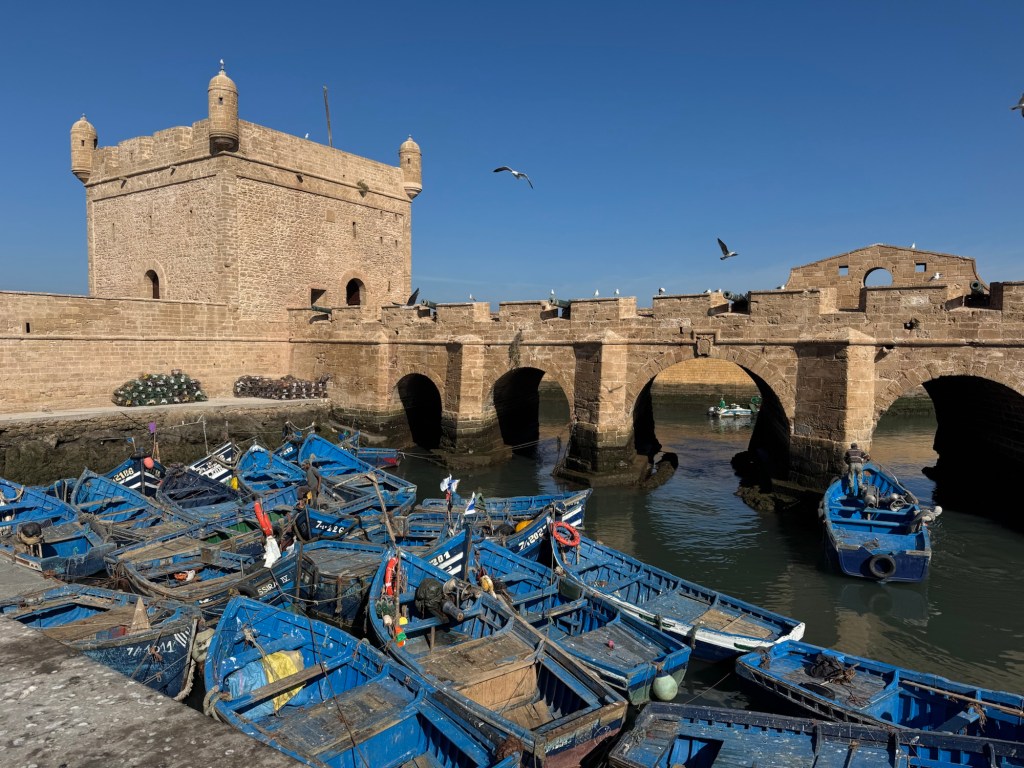
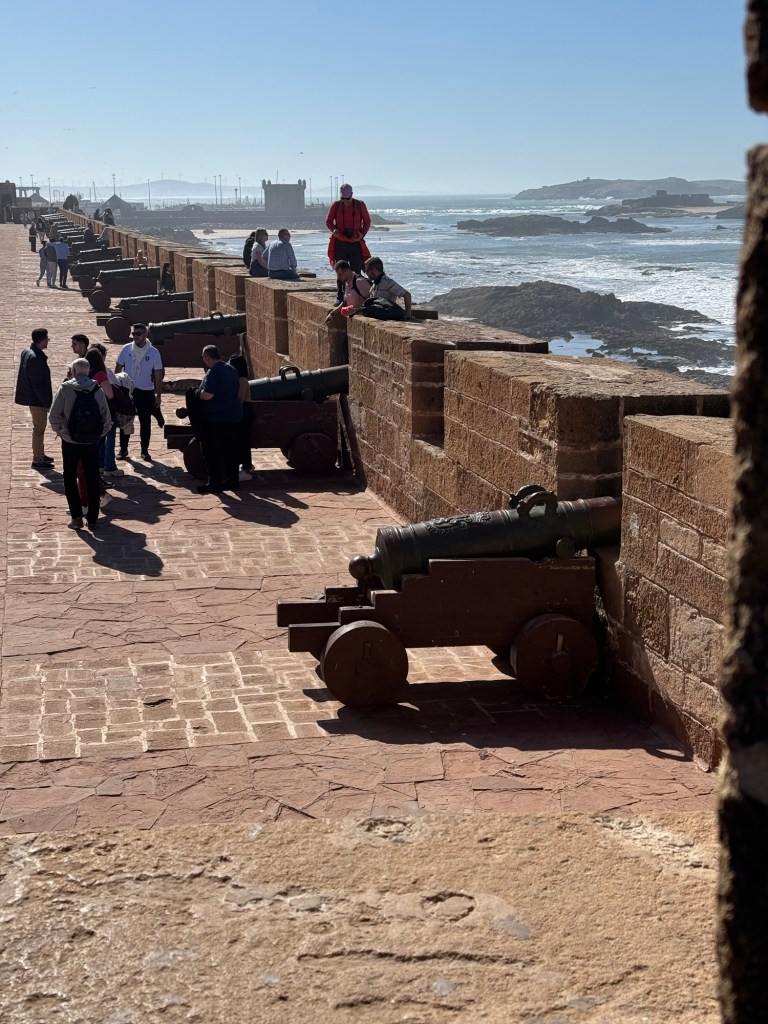
It is a fine place, with azure fishing boats roped together and bobbing in unison in a harbour protected by thick 18th century ramparts lined with canon.
We bought some huge prawns which the stall-monger kept on ice for us to pick up later.
The medina is behind the harbour and the atmosphere was much more relaxed than others we’ve been to. There were no scooters buzzing through the alleys and more shops behind doors rather than stalls. Essaouira has an upmarket vibe, confident in its appeal.

A wind was rising from the sea, banging windows and flapping washing. We found a breezy restaurant to sit it out and waited a very long time for some delicious vegetables and overcooked fish. You can’t have it all.
We returned to the fishmonger to pick up our fat prawns. This being Morocco, he threw in some sardines for free. When we got back to Arnie the parking guardian appeared magically out of thin air (as they do) and accepted our tip with a salute.
We seemed to be the only camper heading south out of Essaouria. We weren’t of course. There will be others ahead of us in campgrounds and off-road spots and we are all doing the same thing really; trying to explore a bit and have an adventure. So with sand blowing across the road and the lowering sun in our eyes, we set off down a craggy coast-road in the general direction of Western Sahara.
 The Magic Bus
Great post! We experienced this phenomenon in the Algarve last winter. The ‘plastic fantastics’, another overlander called them. Perfectly fine for people to pursue that lifestyle but I genuinely don’t understand why it so often comes with such unfriendliness to those passing through. We went to an awful site one time for the reasons you describe, and the death stares from the petanque pitch as we pulled in were quite intimidating! Our neighbour (and self-appointed campground officer) immediately remonstrated with us because our door was facing towards his (entirely enclosed) awning and he insisted we turn around. The only comfort we got from the situation was that Ivy enveloped all the petanque players in a cloud of black smoke as we made lots of manoeuvres to squeeze out of, and then back in to, the pathetically small space. As you can tell, I am SO over it! 🙂 Happy trucking.
LikeLiked by 1 person
That is priceless! Not so many Plastic Fantastics where you are now… Happy travels!
LikeLike