The Rif in Northern Morocco is a mountainous, hardscrabble region, home to one and a half million people who are mostly descended from the pre-Arab stone-age tribes of Northern Africa. They have their own languages and for many decades they have been something of a law unto themselves. It was the “Riffians” who first revolted against Spanish dominance in the early 1900s, leading to a war in the 1920s, memories of which we found were still kept alive in the Rif today.
Then there is the cannabis.
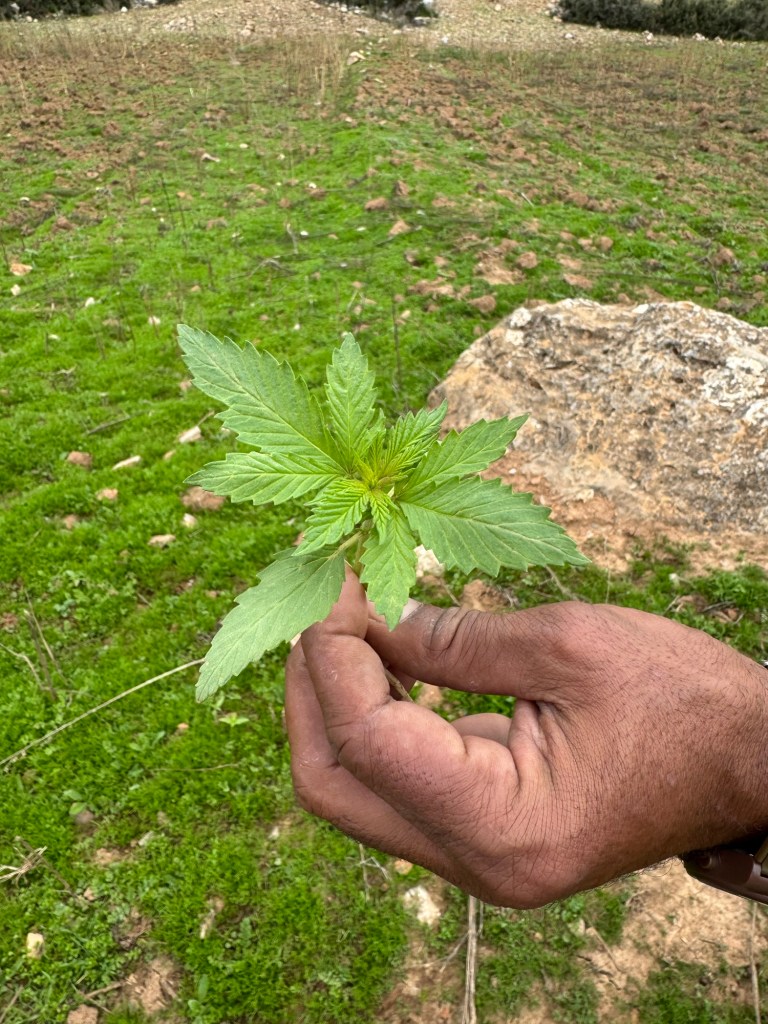
The Rif is the source of nearly all of the crop grown in Morocco, and seventy percent of the supply which reaches Europe. So exploring the Rif is best undertaken with guide. Amine was ours, a vigorous, enthusiastic man of about 50 with skin darkened from an outdoor life.
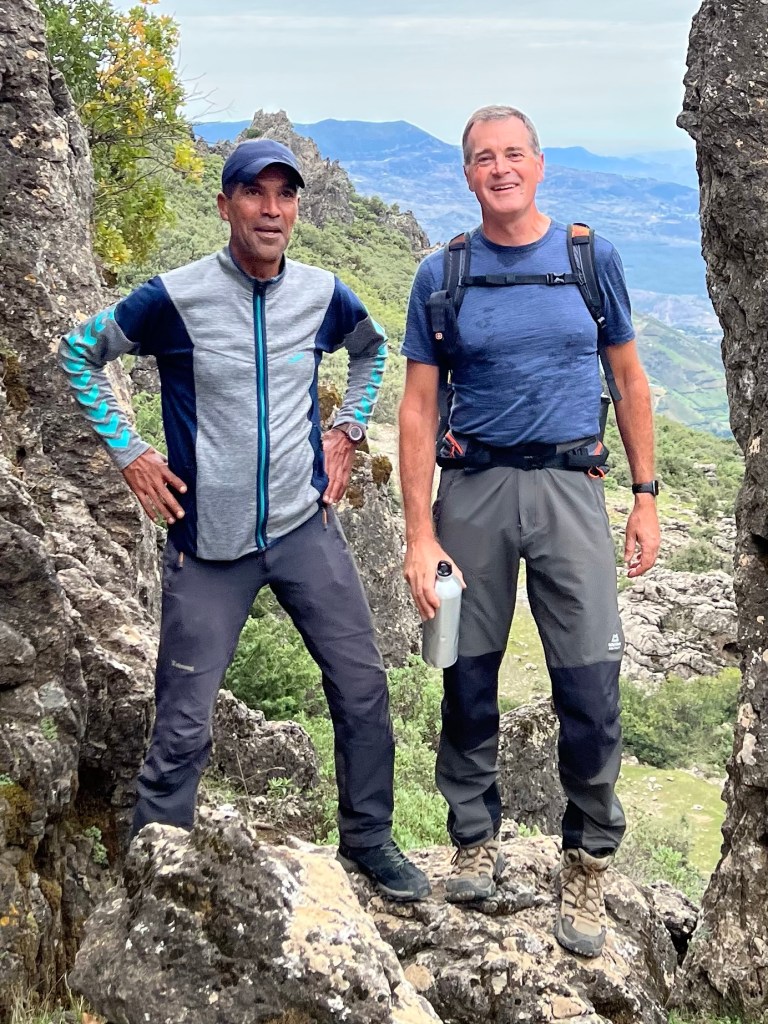
He met us at our campsite above the “Blue pearl” of Chefchaouen, where we left Arnie for a couple of days. “Thank you for coming to my country, Morocco” he said, adding that he’d grown up in these mountains in a Berber village. We’d read that “Berber” comes from the Latin word for “barbarian” used by the Romans. The guide books suggested, tactfully, that the better term for the people who live there is “Amazigh”. I asked Amine about this. “No”. He said, shortly. “The Amazigh live in the Middle and High Atlas mountains. We are Berber.” Local ethnicities are always something of a minefield.
The walk from Chefchaouen to a gîte we’d booked in Zawiya, began as a steady uphill. We passed areas strewn with enormous boulders.
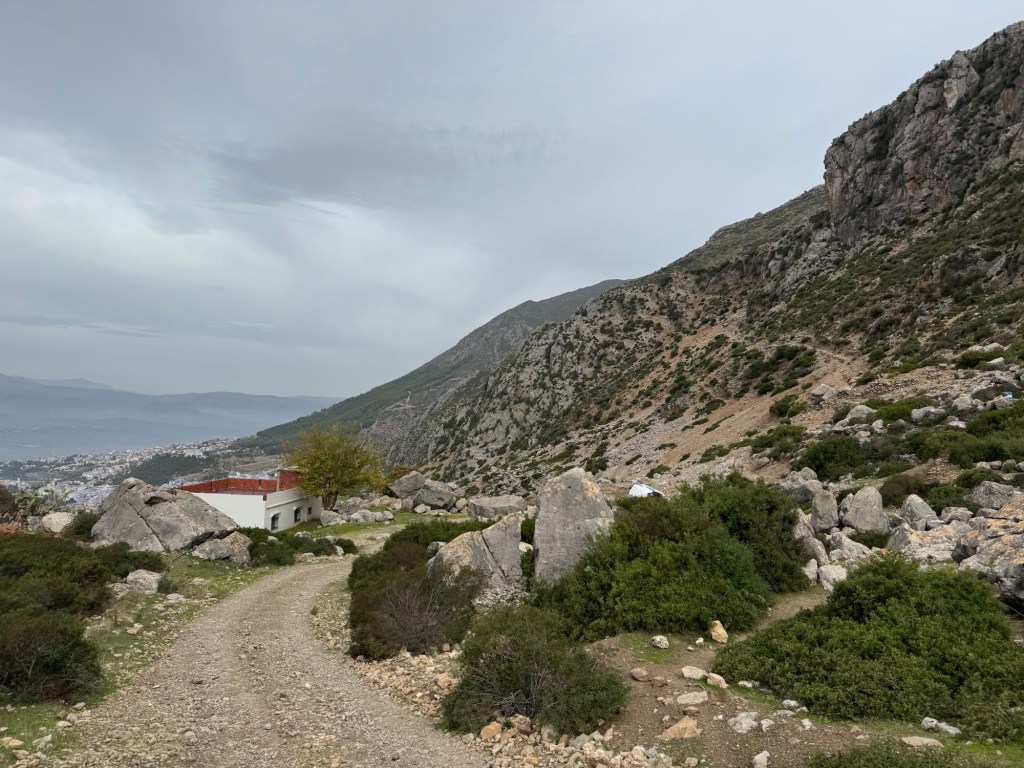
“Spanish bombing” said Amine pointing out caves that were used for concealing Riffian fighters and weapons in the twenties. Amine spoke with some bitterness about the Berber villages that were destroyed by Spanish forces.
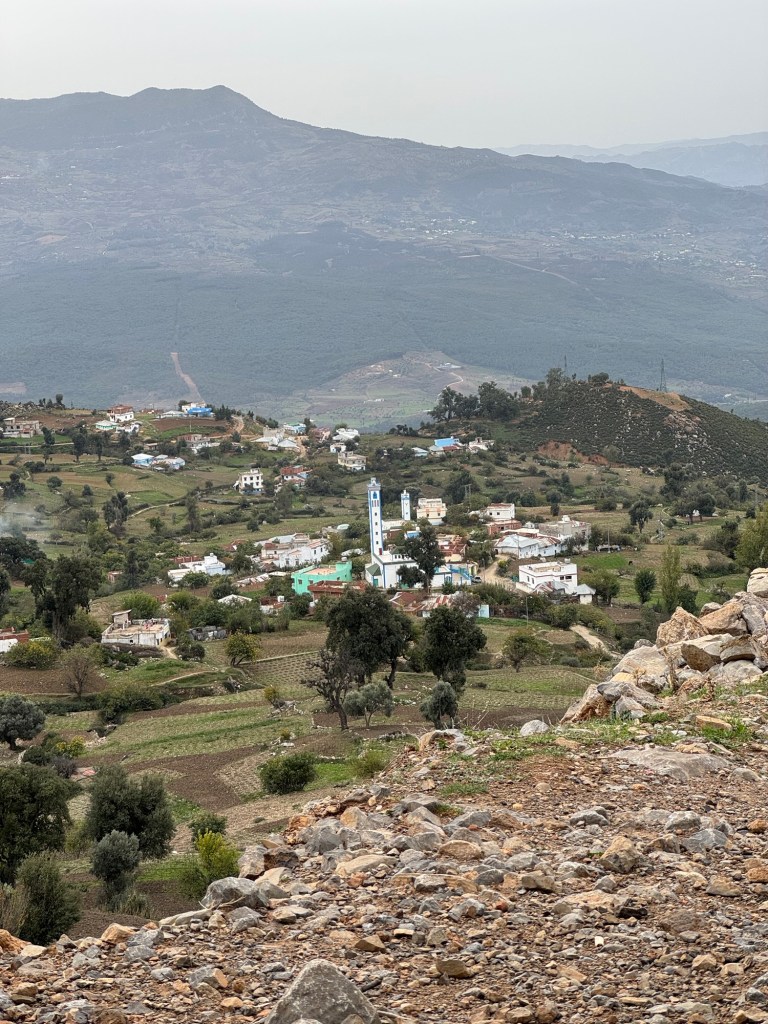
Those villages that exist today in this part of the Rif, have one thing in common at this time of year; a pounding drumbeat coming from top floor rooms and closed-up barns. The cannabis plants were harvested a month ago and now they were being processed, the stalks beaten over large drum-like containers to extract the intoxicant.
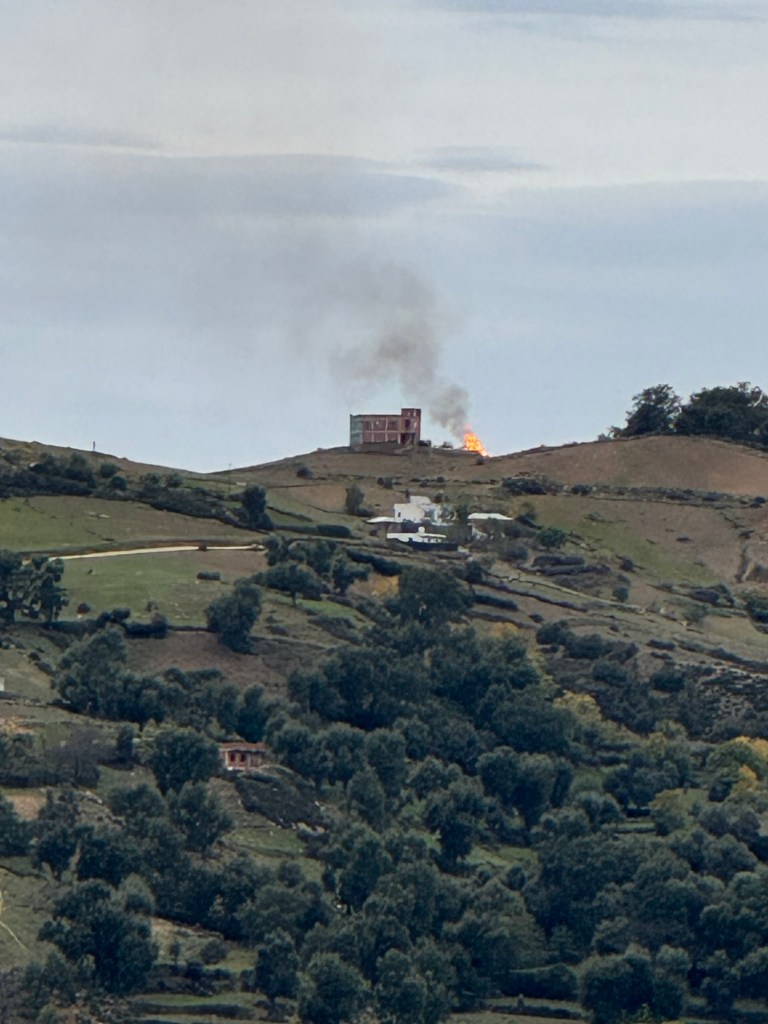
As we walked, Amine greeted several men with hash pipes and glazed expressions – friendly enough, but stoned at 10 in the morning. Amine was used to the way of life in the Rif, but tackling the elephant in the room – the illegal drugs trade being carried out in plain sight all around us – was a sensitive issue and one Amine was clearly uncomfortable about. Since 2022 the government has licensed a few producers in the Rif to grow cannabis legally, for industrial and medicinal purposes in an effort to find a way to inject more money into what is still an economically depressed region. It seems too, to be an acceptance of a decades-long reality here, that cannabis is the only thing that really grows well in these mountains and there has always been a demand for it. But the legal crop represents a tiny fraction of the cannabis output. Amine said, somewhat ruefully that he used to see great fields of goats, and farmers growing potatoes and beans. “Not any more. It’s only cannabis”. We passed field after field of cannabis stumps, and houses with the pulped stems piled high outside, waiting to be burned.
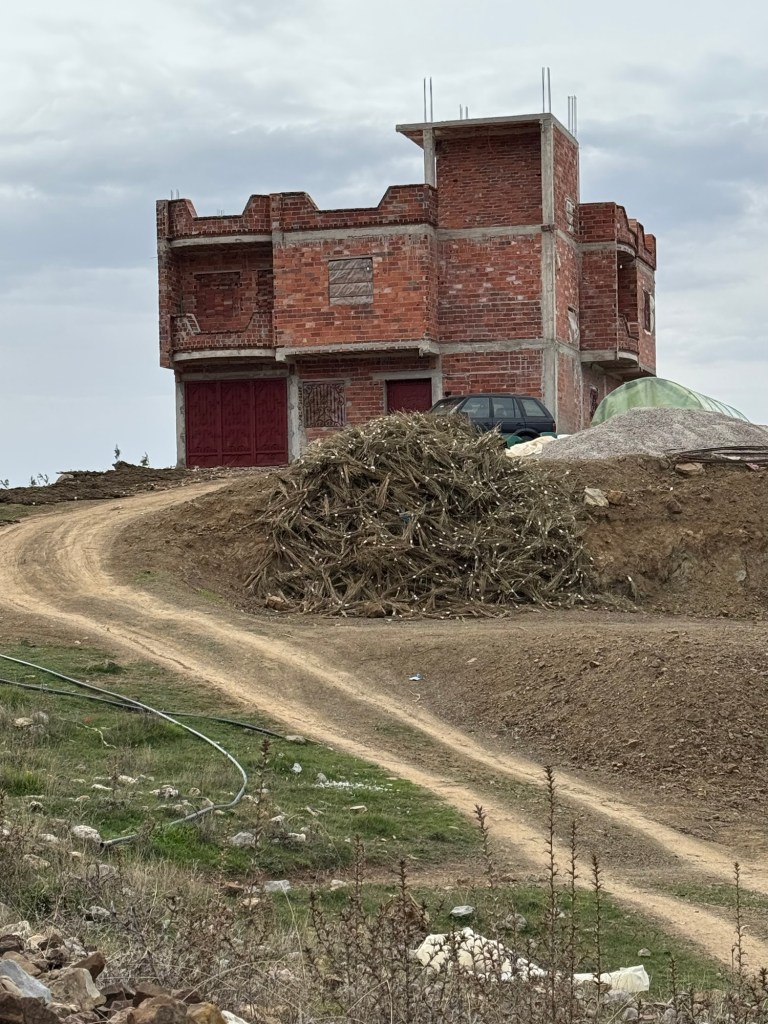
The people – actually the men – seemed guarded as we passed. Amine was honest enough to remark that there were areas where tourists like us would be unwise to go without a guide and he had a few exchanges in a Berber language with people he knew that – while outwardly friendly – seemed to have an underlying note of tension. On our second day of walking, up into the the cedar forests, we stopped in one village, beset by furiously barking dogs, while Amine tried to persuade a cannabis producer he knew to let us into the production room to see it for ourselves. There followed an exchange that saw both men talking louder and louder, faces fixed in grins that didn’t quite reach the eyes. As we separated, they kept this call and response going for some time. Amine didn’t mention such a visit again.
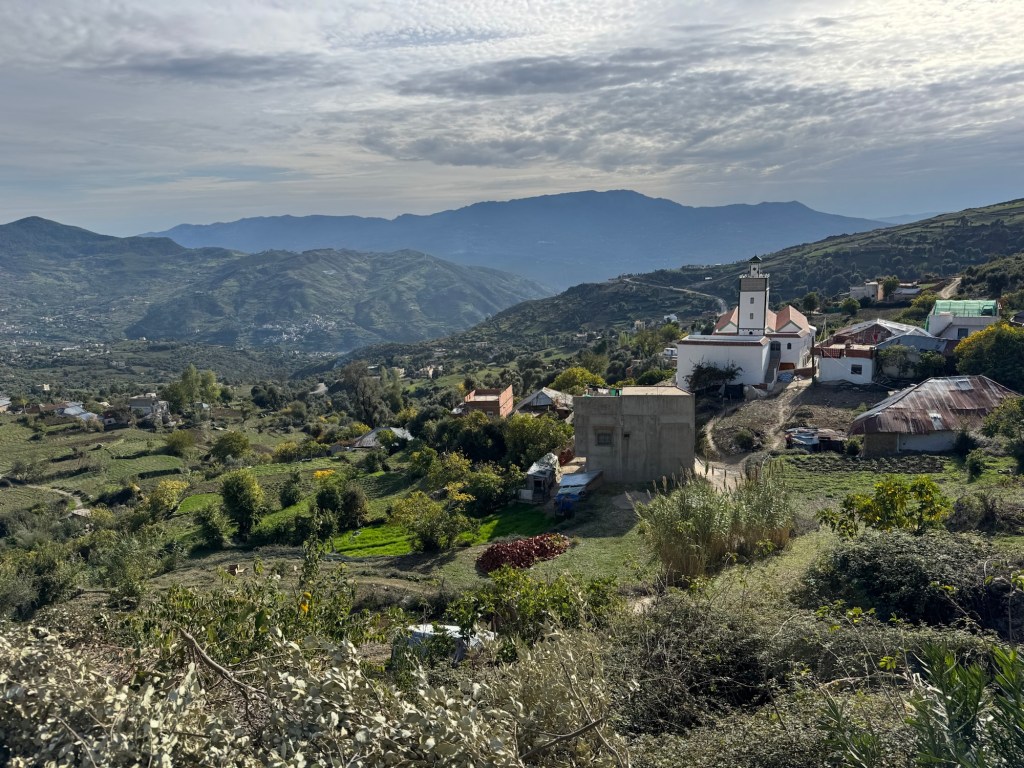
Someone is making a lot of money from this trade, but the villages don’t seem to see much of it. There are Mercedes parked behind some of the gates, but they aren’t the latest models.
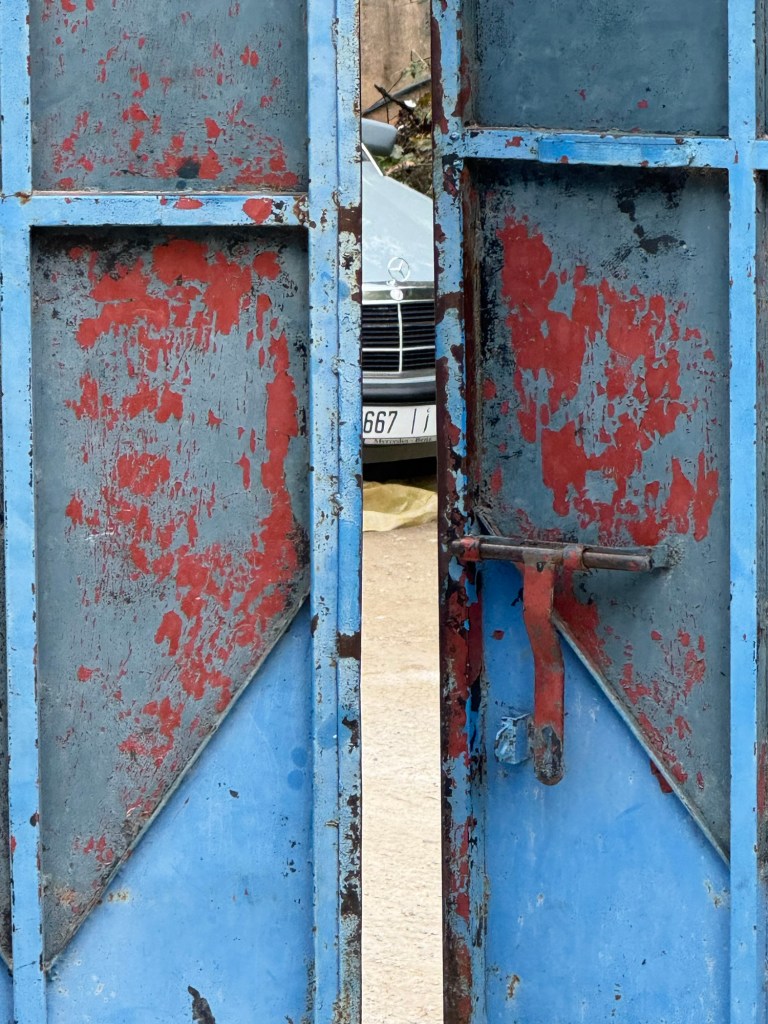
Many of the old thick-walled mud brick houses still stand with pitched roofs to keep the snow off. But the families have built new houses out of brick and tile next to them. “Too hot in the summer, too cold in the winter” sniffed Amine. “The old houses were better.”

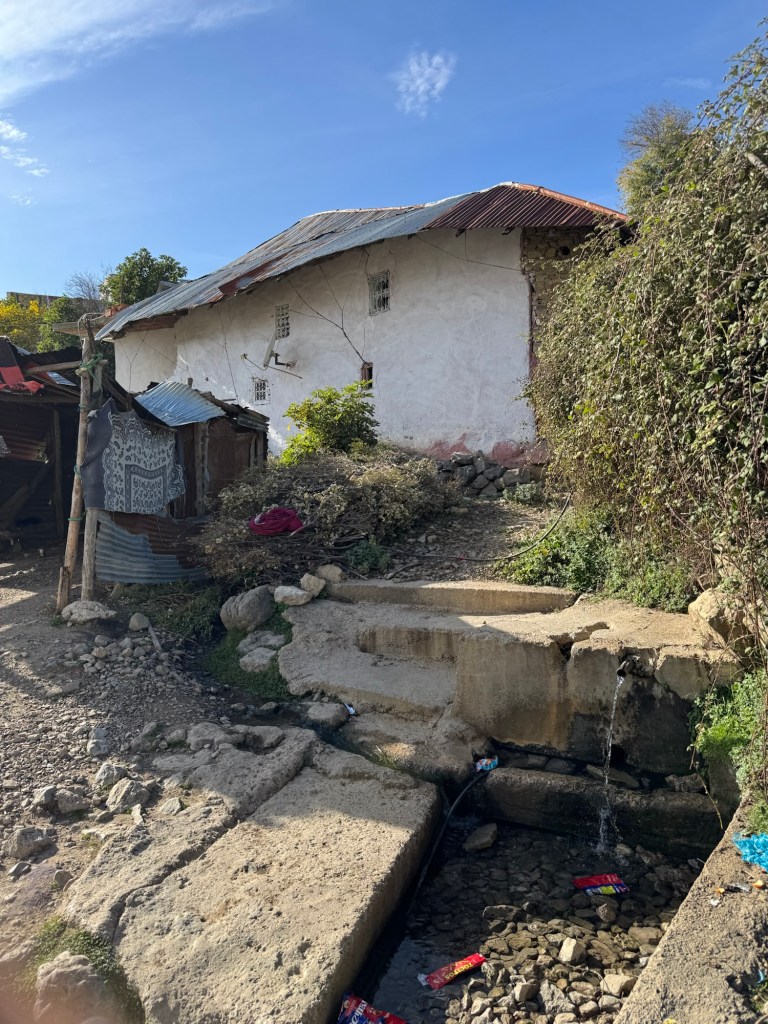
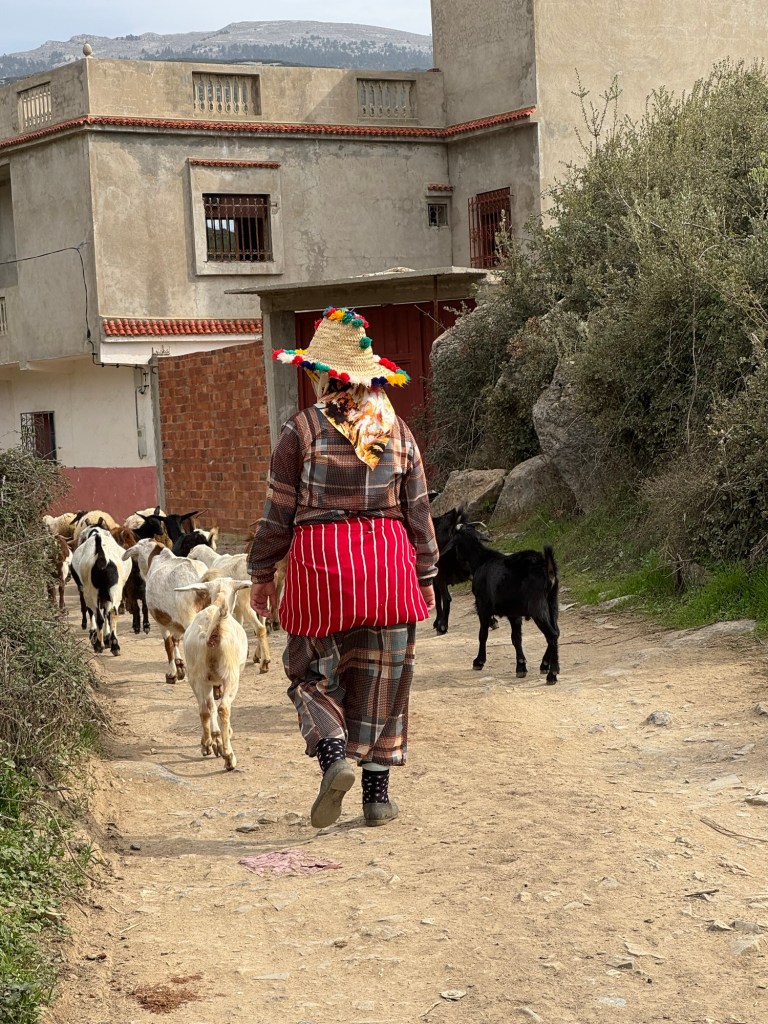
The infrastructure is still limited. Women still collect drinking water in jugs, and we passed several higher in the mountains – at least an hour uphill – who were carrying huge loads of cork branches on their backs as feed for the few goats and cows they kept for milk.
Close to the villages, streams and verges are choked with plastic rubbish. Amine was embarrassed about it, pointing and tutting. “How does all this rubbish get here?” I asked him. “It is the teachers!” He said. “They don’t tell the children about this problem, so they throw everything in the street”.

This didn’t seem entirely convincing given the many plastic jugs, building supply wrappers, cleaning-fluid containers and other adult detritus that was left to rot in the villages and clearly had been allowed to build up for years. The lack of any proper rubbish collection or penalty for dumping seem to contribute to the problem. The bottom line is the cannabis money doesn’t seem to have solved very much in the Rif, a region which still seems to be a blend of hardship, independence and beauty.
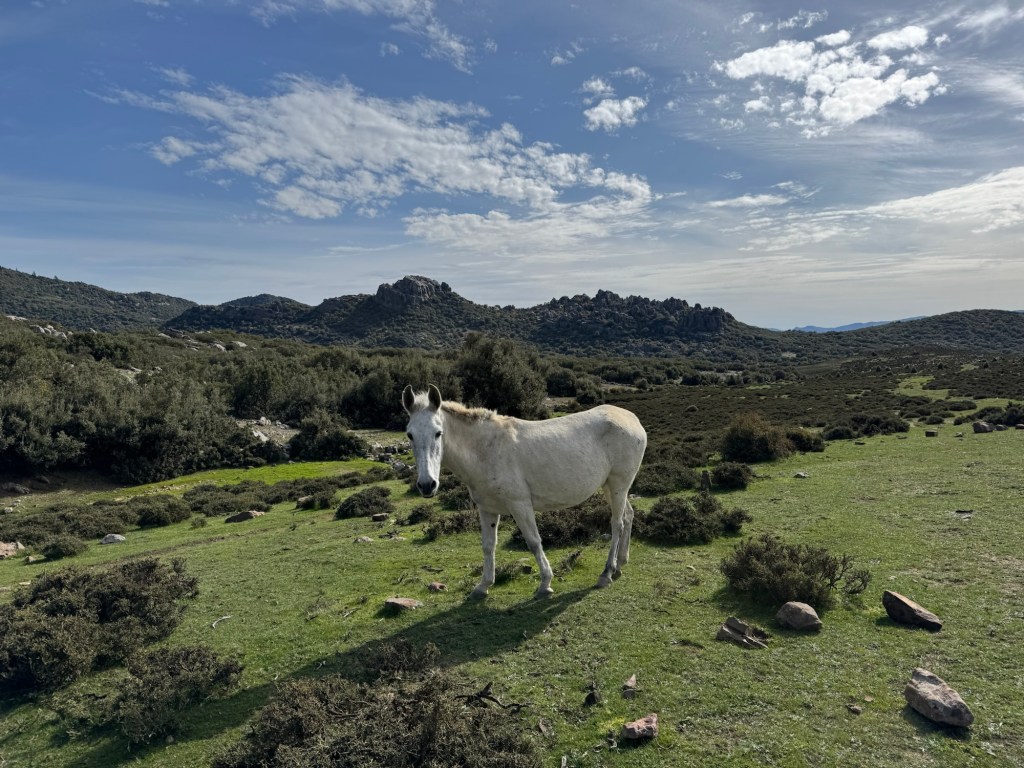
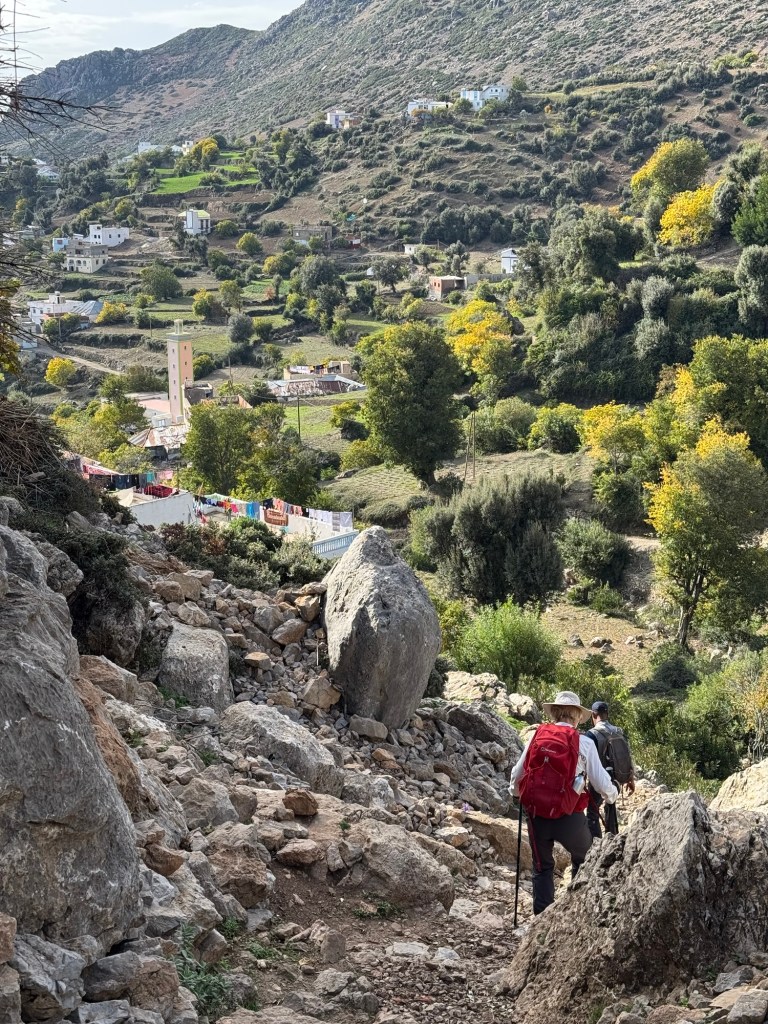
After a long and sometimes difficult day we arrived at our gîte.
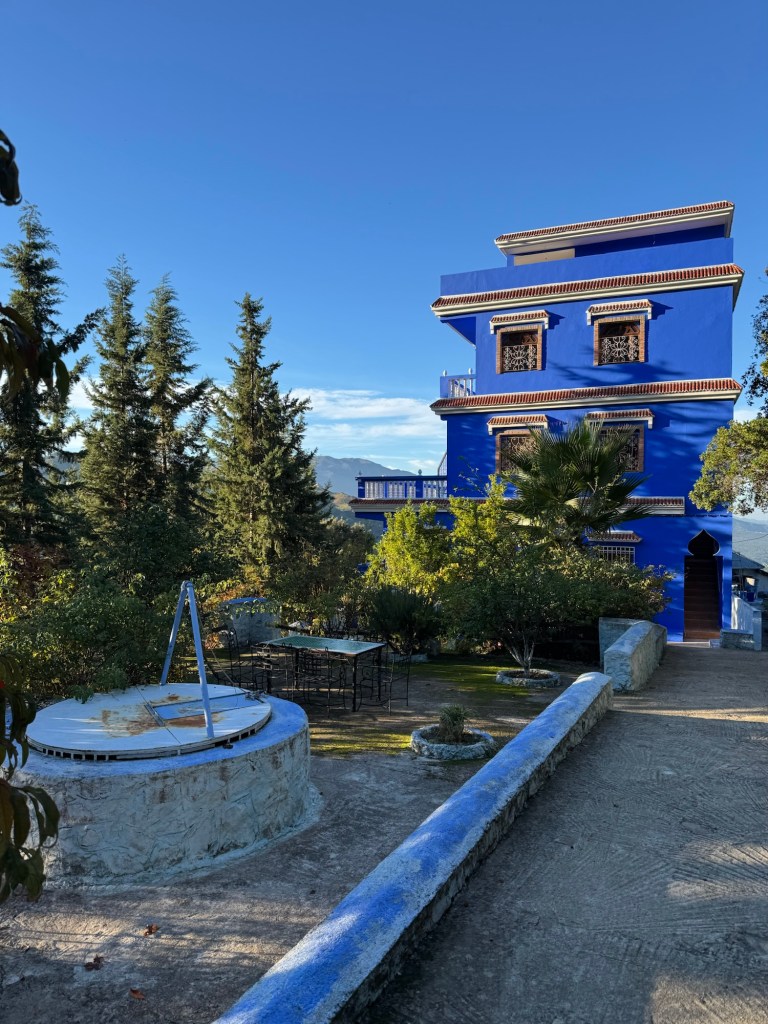
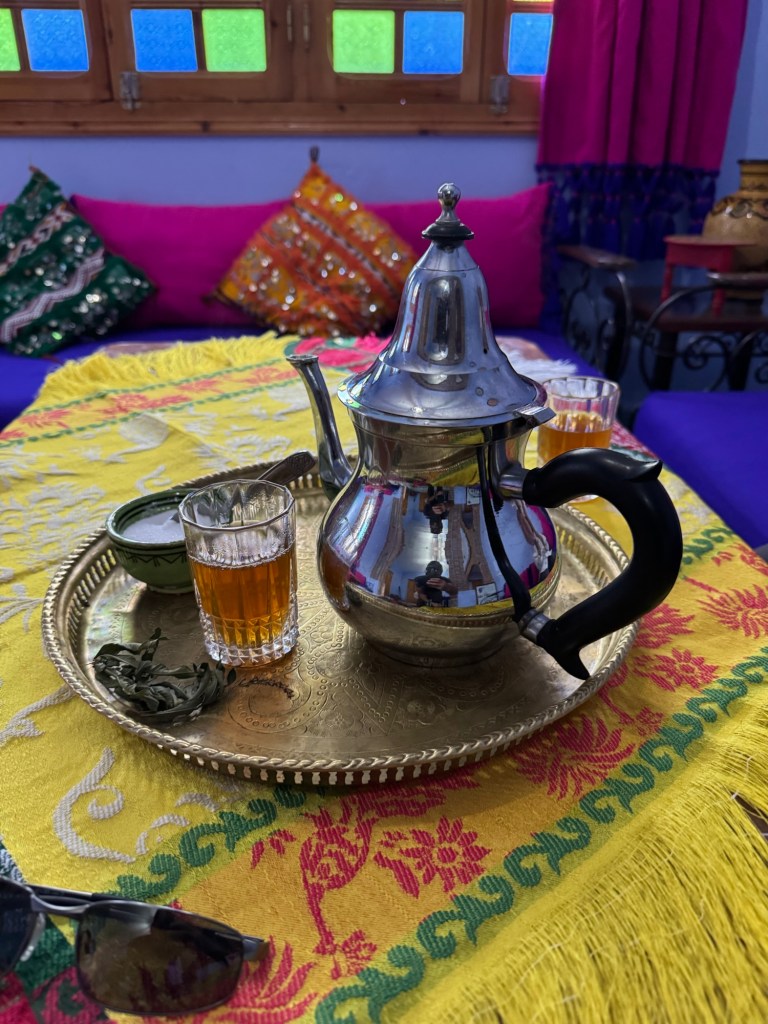
There we were fed magnificently and with genuine, friendly hospitality in an immaculate set of rooms decorated in bright colours.

Watching the sun set from a balcony, we realised we were looking across a field of harvested cannabis. As dusk fell, the stalk bonfires twinkled orange across the mountainside around us.

 The Magic Bus
Leave a comment