We’d done quite a lot of pootling through valleys and zigzagging up small roads to farm-stays but we hadn’t crossed any significant high mountain-passes in Arnie. “I’m sure it will be fine” I kept telling myself; banishing thoughts of juddering to a halt on a just-too-steep hairpin with a queue of furious drivers behind us – or accelerating toward the puny guardrail with smoking brakes failing to slow five and a half tons of runaway momentum, closer and closer until…anyway.
Today was the day to find out whether Arnie was up to the job. The 48km Großglockner road climbs to the Hochtor pass at 2504m and becomes the highest paved road in Austria.
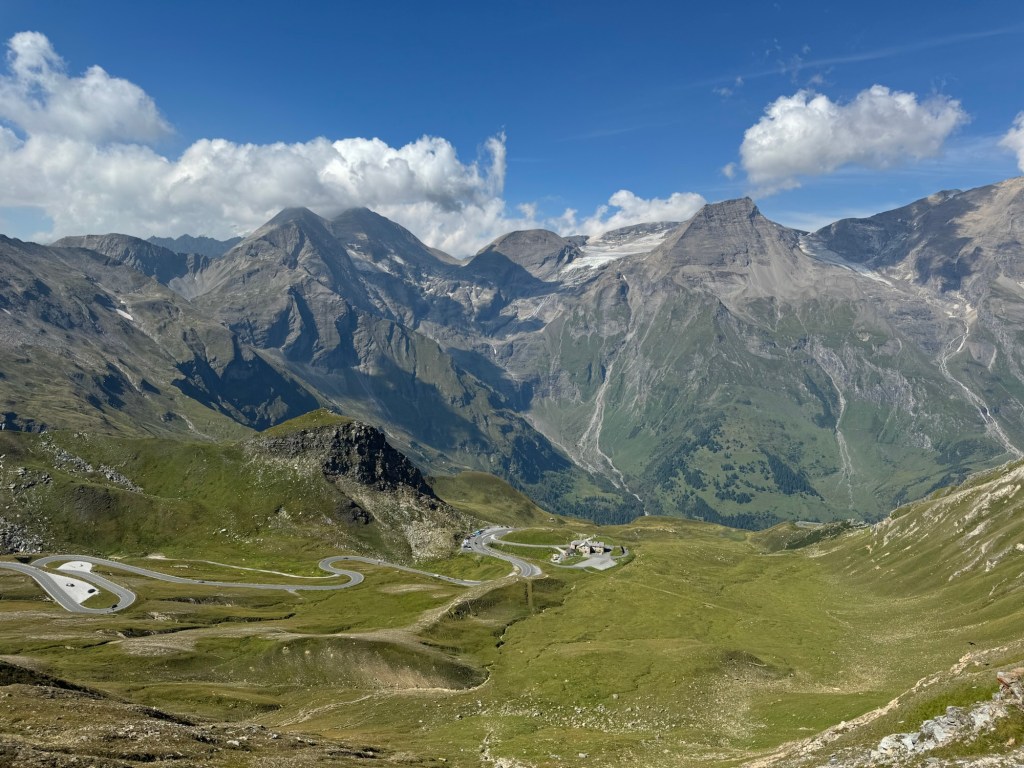
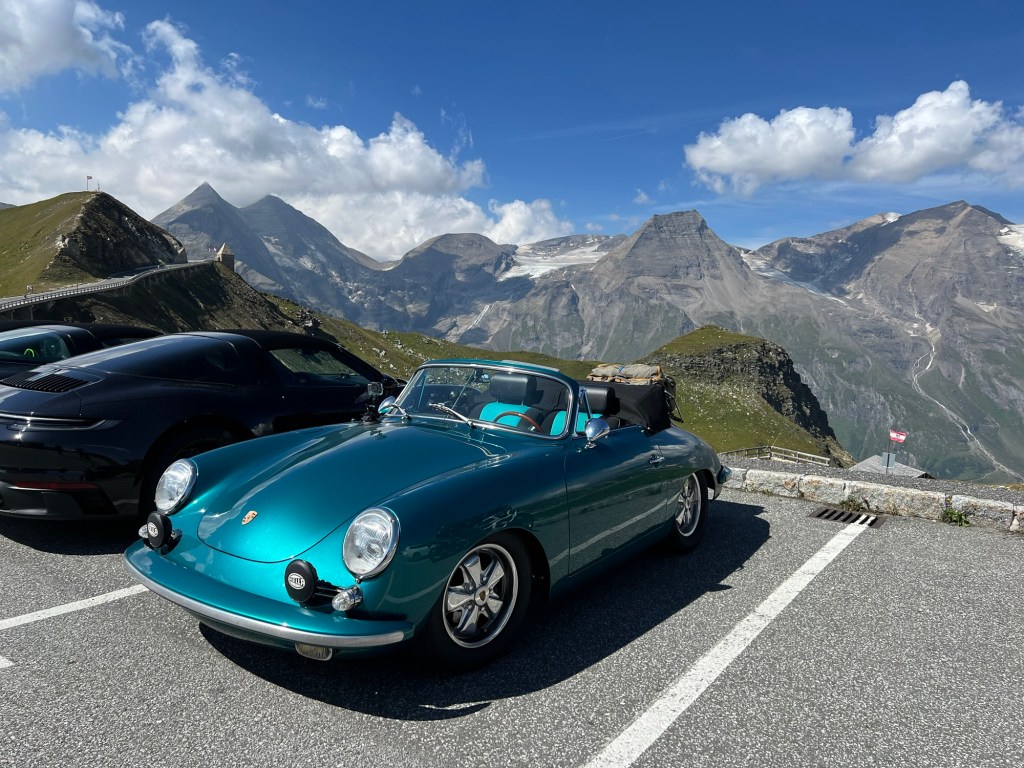
Driving up it is an attraction in itself – in fact the road was built as a tourist attraction in the 1930s and as a way of finding work for thousands of people just after the Wall Street Crash. The initial projections of 120,000 visitors were scoffed at by critics in a country which didn’t even have that many cars. Today it sees more than a million visitors over the summer (when it’s open) and there are toll booths at the bottom with the inevitable queues of boy racers in 911s, hot BMWs and Italian exotica. Arnie felt huge alongside all that low, sleek machinery, and as we paid our €43 and the toll bar lifted onto a steep incline I did briefly wonder what sort of day this was going to turn out to be.
Pretty good actually! Arnie’s automatic gearbox just selected whichever of the eight gears seemed appropriate and we chuntered steadily upwards. The hairpins were wide enough, the engine fan kicked in when necessary and the whole thing – while something of a workout for the driver – was pretty straightforward. No smoking brakes, no juddering to a halt. And at the top, places to park with views in every direction.
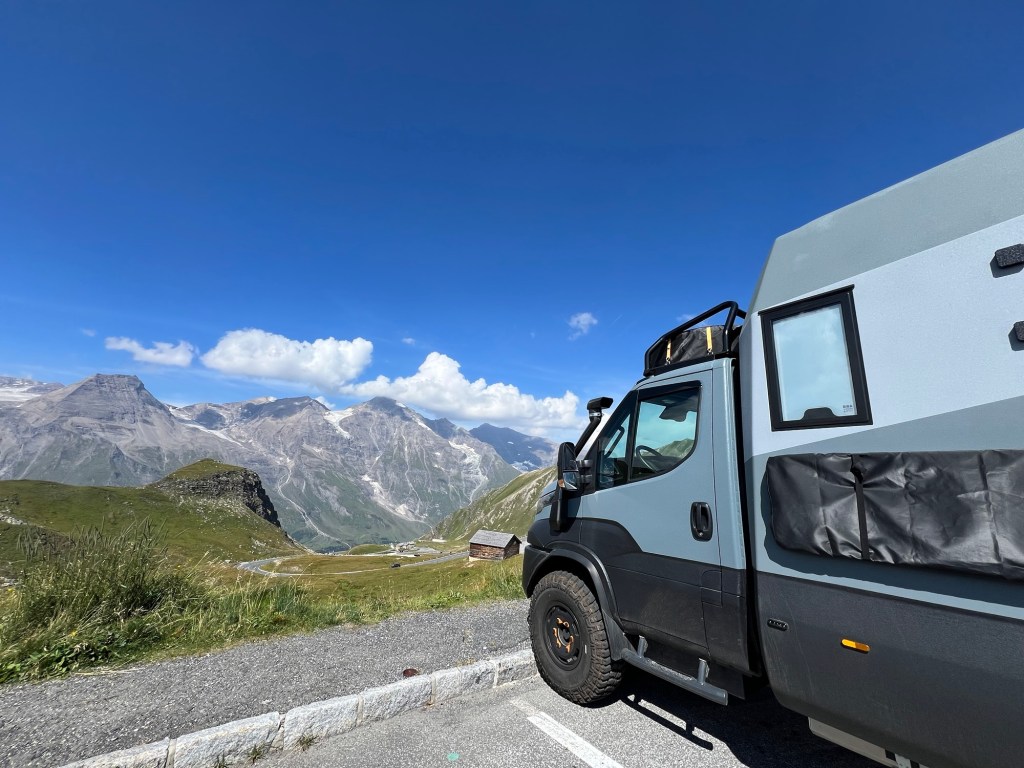
We walked up a steep track to a cafe on a small peak and did the traditional hot chocolate and Strüdle order like the tourists we are.

You couldn’t beat the view, even if it was punctuated by the occasional scream of an exotic engine being pushed hard (which I can listen to all day).
We stopped at a pull-off for a while and watched falcons and buzzards wheeling and whistling above us. For all the visitors Großglockner still has the sense of being a wild place, dwarfing the ant-like humans swarming over it.

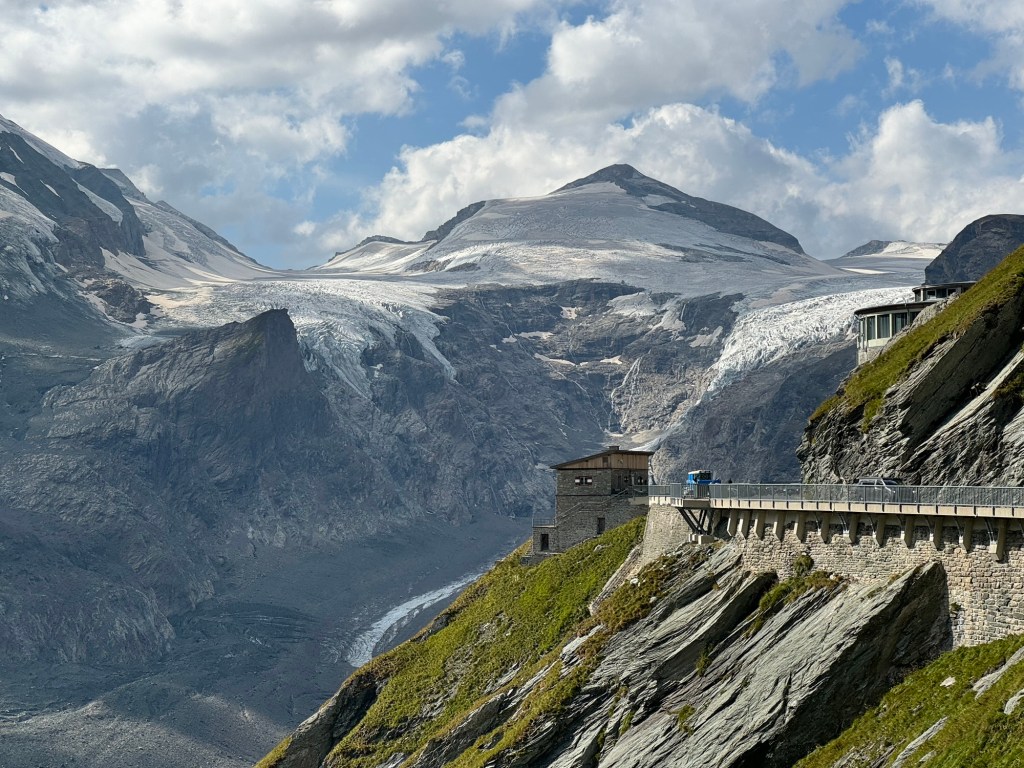
Winding back down on the other side was definitely a test for Arnie’s brakes but one we all survived unscathed. A side road took us along a valley towards the Pasterze glacier – the largest in the Eastern Alps.
The road was first used by gold miners going back to Roman times. By the mid 1400s 10% of all the world’s gold production came from these valleys. Today you can poke about in some of the long, drippy, mining tunnels.
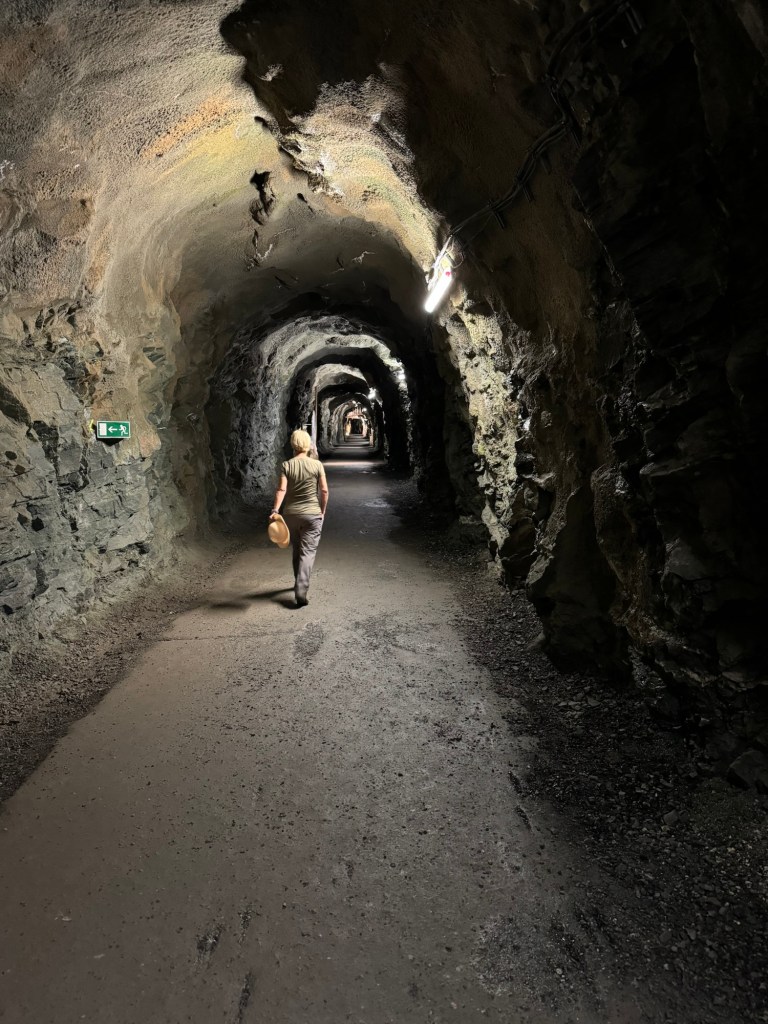
And to make it more than just a walk through a long drippy tunnel, there were a number of, er, installations.
We emerged from the tunnel onto the original miner’s path towards the glacier only to find it taped off due to the danger from falling rock. It had clearly been closed for some time and it was also clear that no-one could care less about the falling rock and simply lifted the tape to walk their dogs or head to the glacier. We did the same and walked on – for a while anyway. The light was beginning to fade into dusk and frankly there were a lot of fallen rocks strewn about the place.
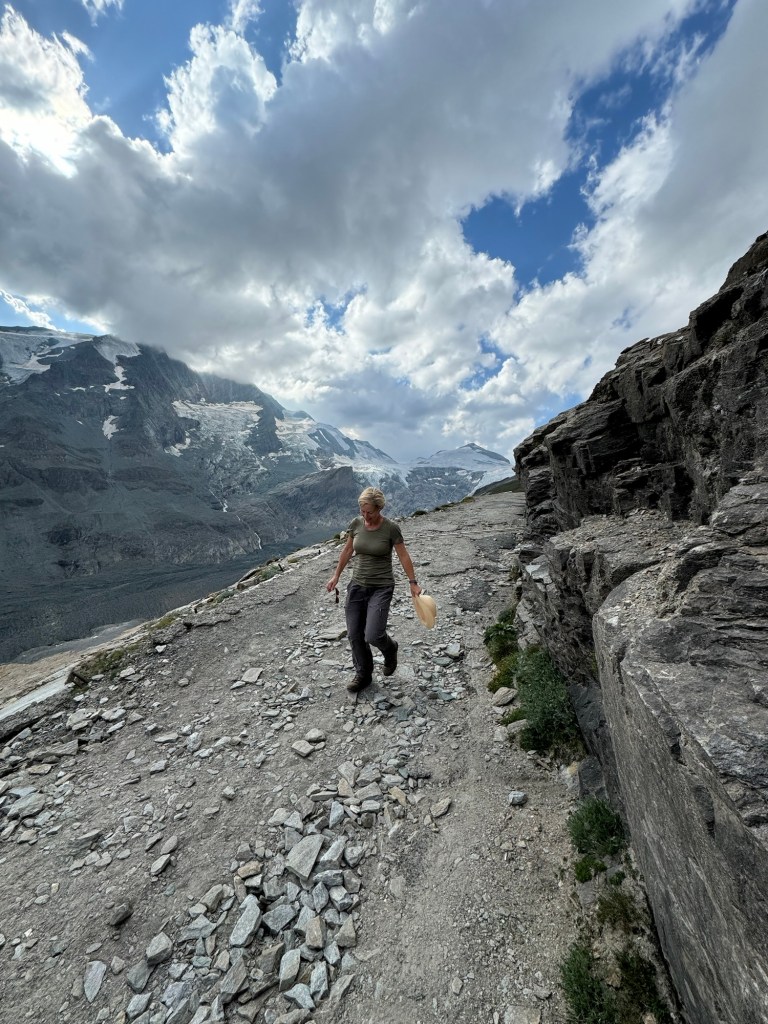
It was hard to imagine this valley as a medieval gold mine, full of miners, noise and dust.

Nothing in this valley stays the same, and mostly that’s due to the impact of people. Perhaps the pre-industrial miners did less damage than those of us in the industrial age. The Pasterze glacier has been shrinking since 1856. It receded more than 200m in the past year alone. I’m aware that all of these visiting vehicles (including ours) haven’t helped. Maybe people seeing it for themselves and understanding some of the changes under way has its own impact though. We’ll find out in another hundred years or so.

 The Magic Bus
Leave a comment