On a sultry LA afternoon in May 2007 we hit the road in a rented RV for the first time; battling rush-hour traffic in what felt like the biggest vehicle ever made. We spent the next two months zigzagging our way through California and the Pacific Northwest to Vancouver Island.
It was a trip that changed our lives.
Initially, P and I had mixed feelings about spending two months in a box on wheels. All that business with the toilet and the tiny shower and the funny beds and not quite enough space. Probably, we thought, we’d need a motel at least a couple of times a week. We booked a night in a funky teepee-themed place somewhere off Route 66 and – fun as it was – we woke up the next morning, looked at each other and knew that the real adventure was being on the road in the RV. We didn’t spend another night away from it on that trip. We were hooked.
A whole series of RV trips around the US and Canada followed. Eventually, in 2010 we bought a classic GMC motorhome – Harvey (The RV) our first Magic Bus, which is where this blog started.
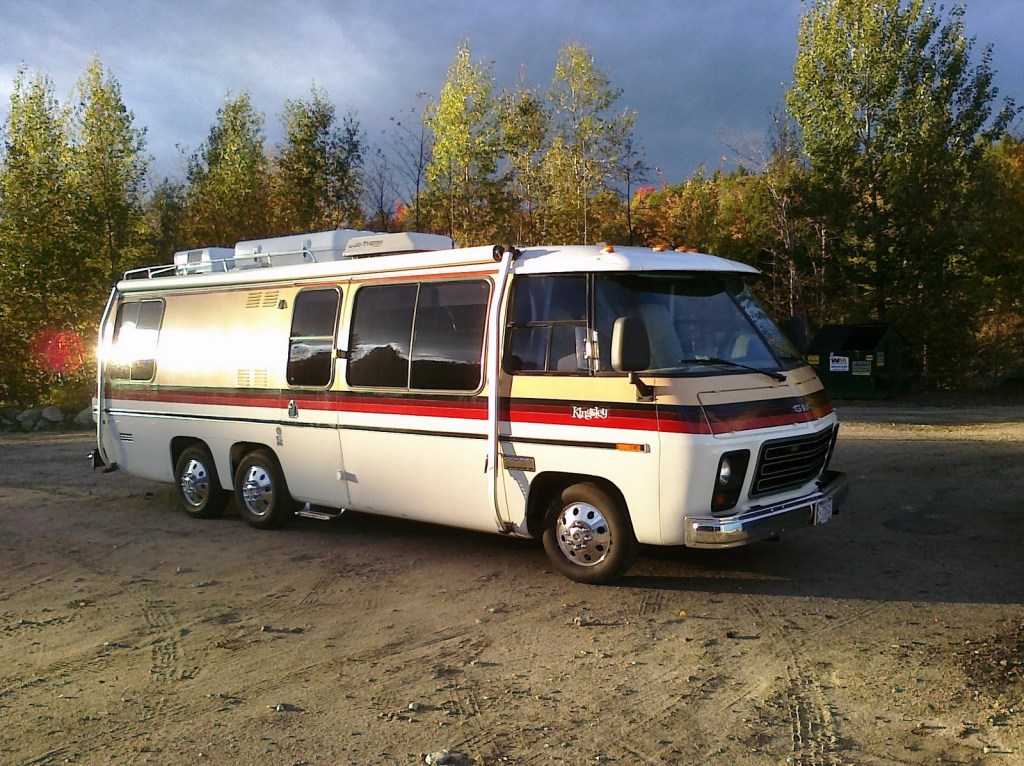
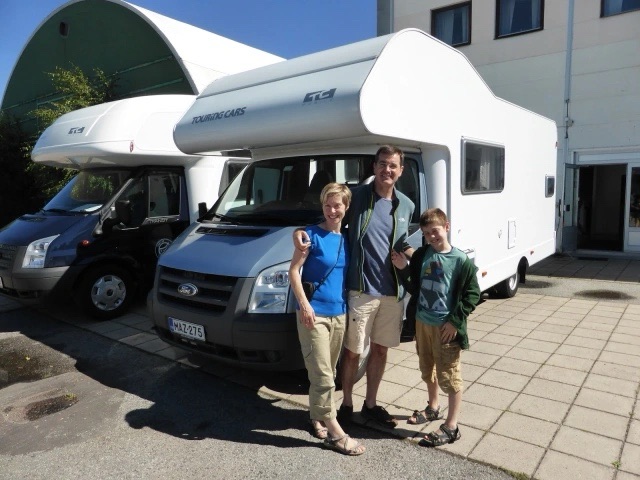
Europe was too small for Harvey. So when we finally returned to the UK we sold our beloved GMC. But we still had the bug. We rented a somewhat smaller camper (“Thor”) to go up to the Arctic Circle in Scandinavia.
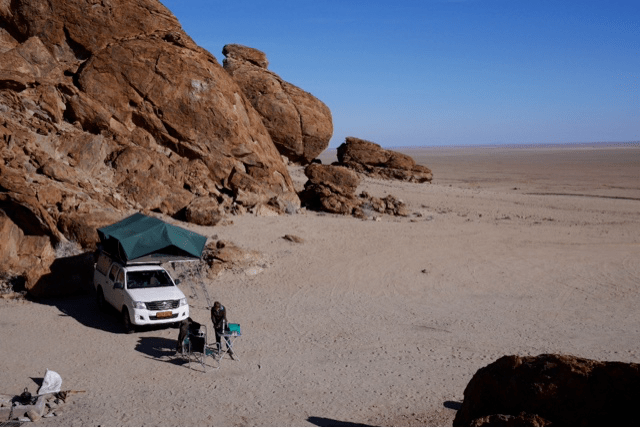
And while tarmac was all well and good, we started hankering for something wilder. So then came Hiluxes with tents. We drove one around Namibia over the course of five weeks and realised there is no bigger thrill than exploring vast wild places under your own steam. The overlanding life was getting its hooks into us.
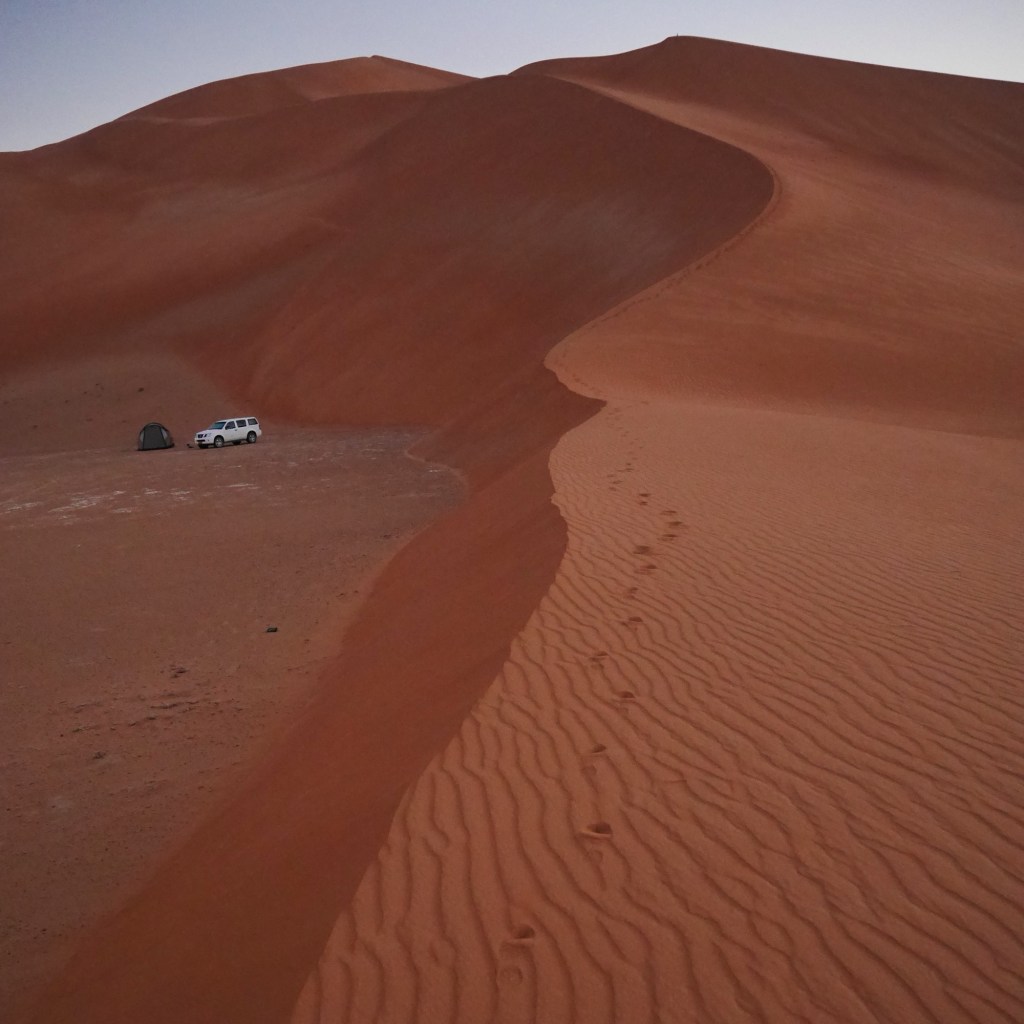
Next we went to Oman, a beautiful, friendly country which challenged so many of our preconceptions about exploring the Middle East and broadened our horizons still further.
Our last tented adventure was in Zambia where once again we revelled in the wild landscapes, the bush roads and the different cultures.
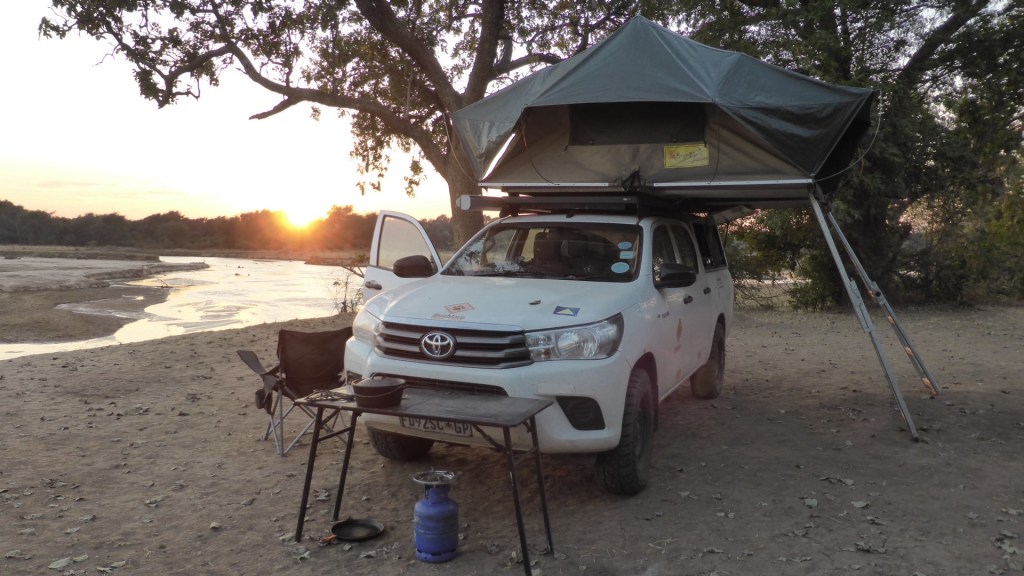
But as fun as those camping trips were, we couldn’t see ourselves setting up tents like that every day, rain or shine for months on end. We’d done big American RVs, smaller European campers and rooftop-tented 4x4s and had a fair idea of what worked for us. What we wanted was something which was self-contained, not too big, not too small and could go absolutely anywhere with a degree of comfort. We began thinking about getting an expedition truck for ourselves for a day when our son began making his own way in life, and we had left our long-term employers.
In February 2021 that moment was on the horizon and I began calling the long-established expedition truck manufacturers I’d spoken to a couple of years previously who’d assured me their lead times were in the order of fifteen months to two years. Things had changed.
“How long from order to delivery now?” I asked,
“Four years” came the almost universal response.
After the Covid lockdowns, we weren’t the only people hankering for a life on the road it seemed. But four years to wait for our dream vehicle seemed like a very long time. We scoured the internet for manufacturers who might be able to come up with something more quickly and eventually landed on an Instagram post.
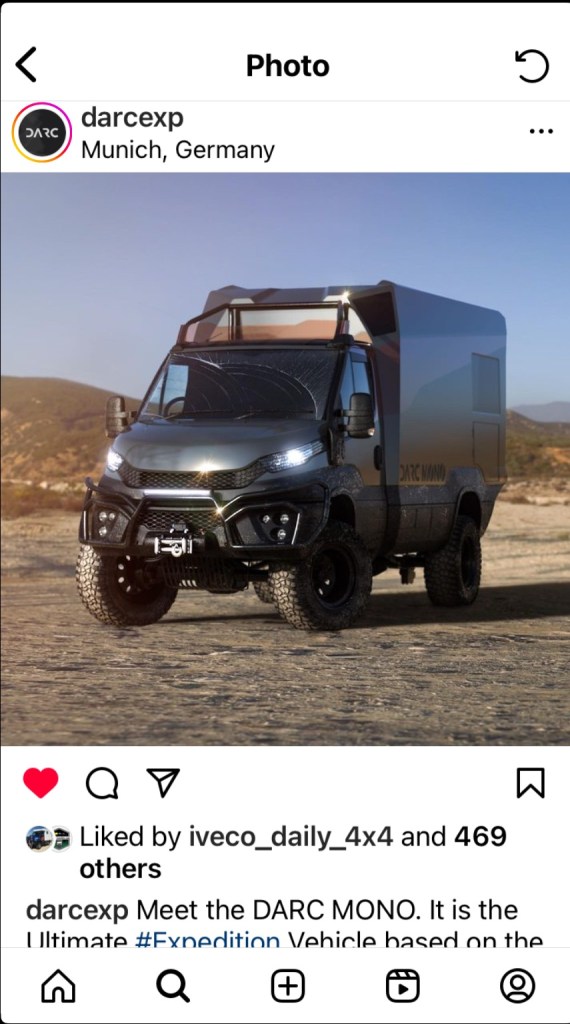
It was posted by a German company, Karl Walter Formen who after decades in engineering and manufacture had decided to build an expedition truck. They were calling it, rather disconcertingly, the Darc Mono. But the rendering was enticing, the spec was right and they hoped to be able to deliver in less than two years. After much frantic calculation, many phone calls and days spent researching the company and the vehicle, we paid our deposit to a firm we had not been able to actually visit and which had never built an expedition truck… On the upside, its three directors had all built their own overland vehicles and their thoughts on what was required, aligned very closely with ours.
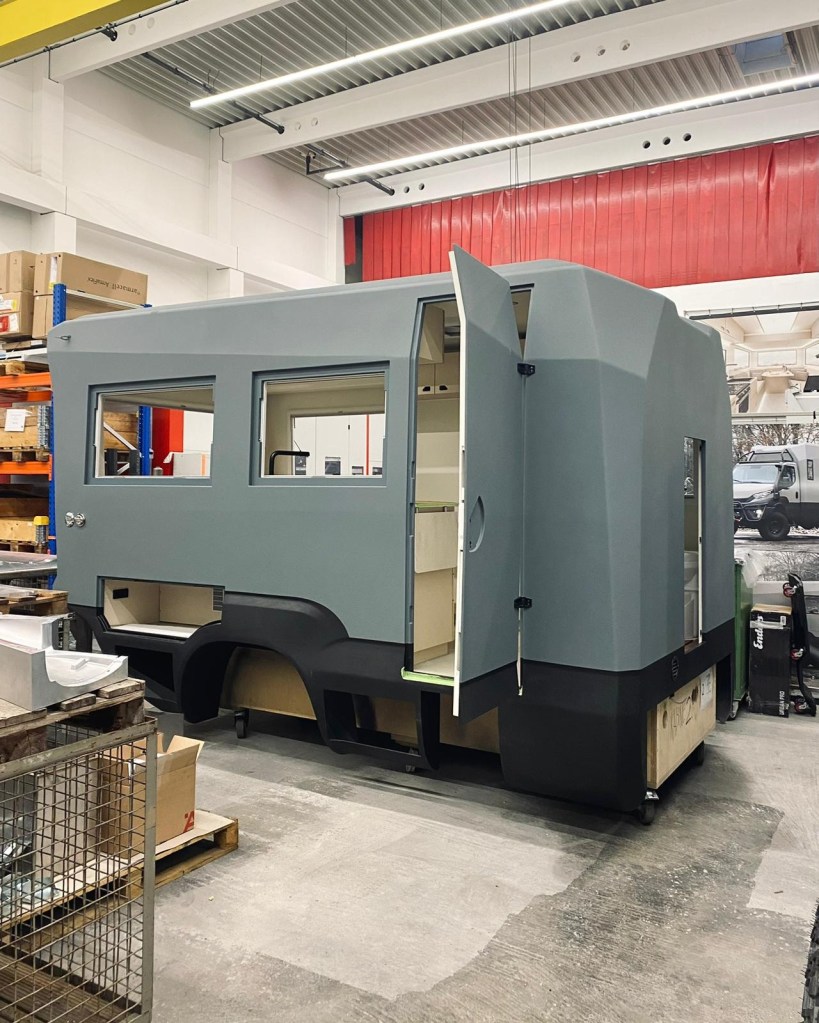
It’s based on an Iveco 4×4 chassis truck and built to be self-sufficient for a minimum of two weeks with 495ah of lithium battery, 400w of solar panels, a 285l fresh water tank and a range of about 1000k on its extended diesel tanks. Yes, diesel. It would have been lovely to use something greener, but unfortunately the technology for a large, self-contained vehicle like this isn’t there yet. The Iveco does at least have a modern “clean” diesel engine and elsewhere we have tried to minimise the environmental impact. The cabin on the back is made of insulated carbon fibre, which makes it at least a third lighter (and much stronger) than conventional GRP units. The cooking hob is induction, powered by batteries (and the sun), the windows are double-glazed for better insulation and it has a composting toilet (no need for chemicals). Calculations done by full-time overlanders Marcus and Julie Tuck suggest that they have a smaller environmental impact than if they lived in a house in the UK. The Tucks were an invaluable source of advice as we weighed up our options. They are still on the road in their Iveco after more than a decade.
We saw this vehicle go from CAD render, to prototype, to…ours. Tweaks have been made but it is substantially unchanged from the original design. We made a series of factory visits to talk spec and choose interior and exterior finishes.
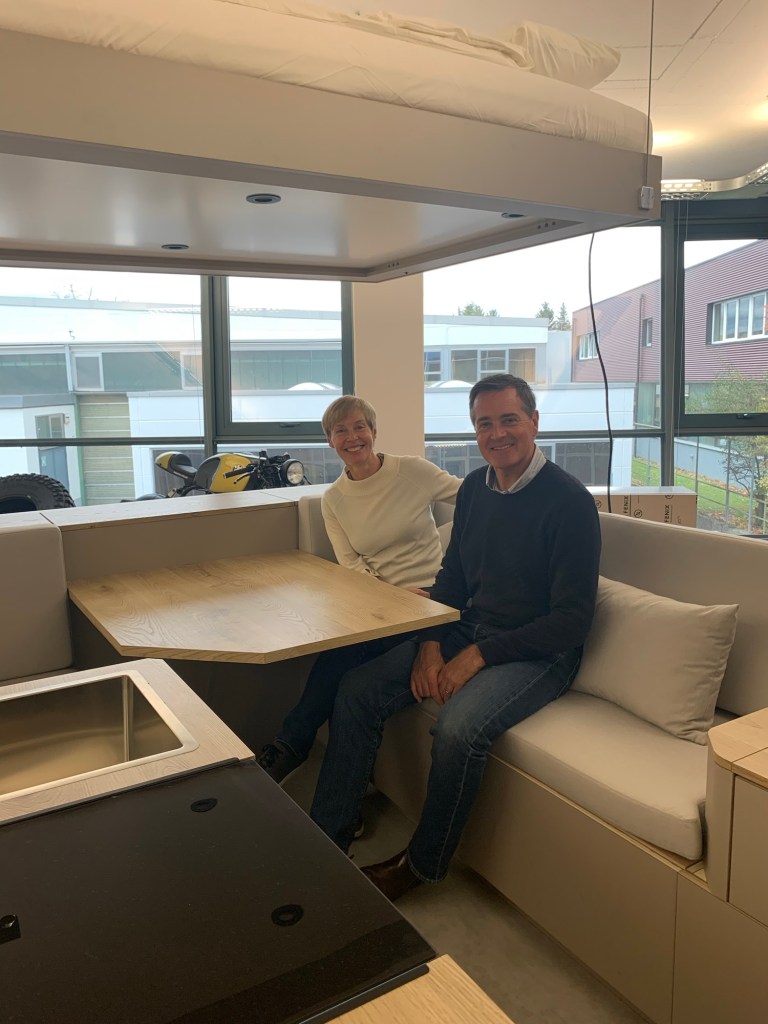
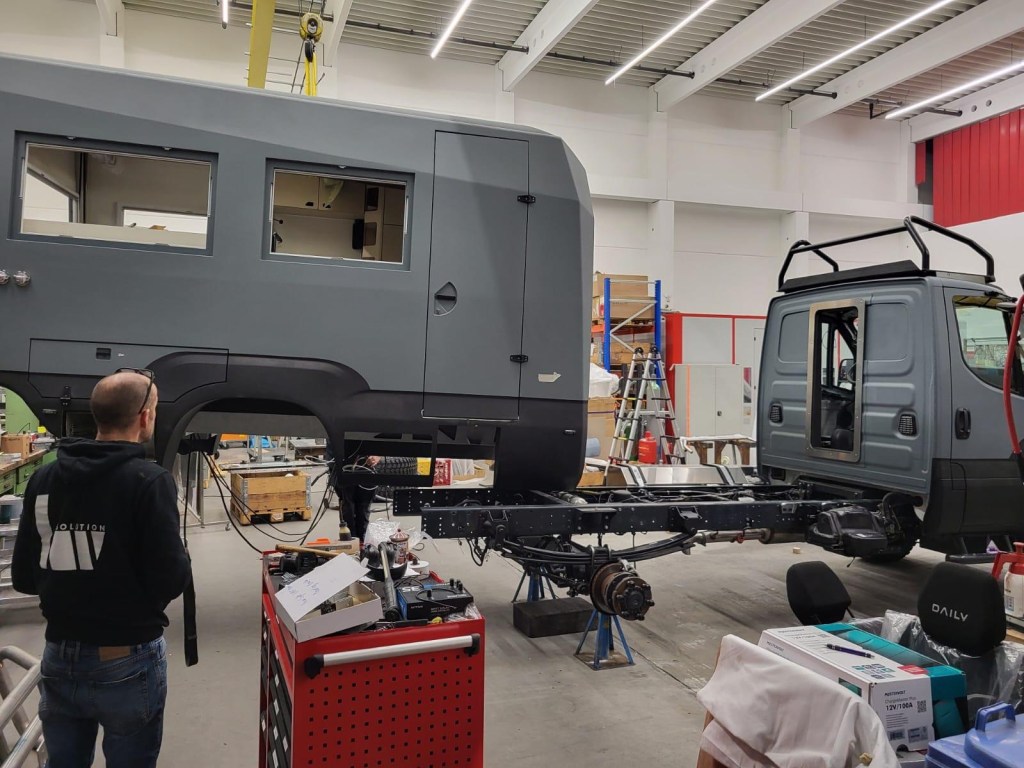
In March 2024 we picked Arnie up from the factory and drove back to Kent to go through the battery of tests required to get a UK license plate on a personal import.
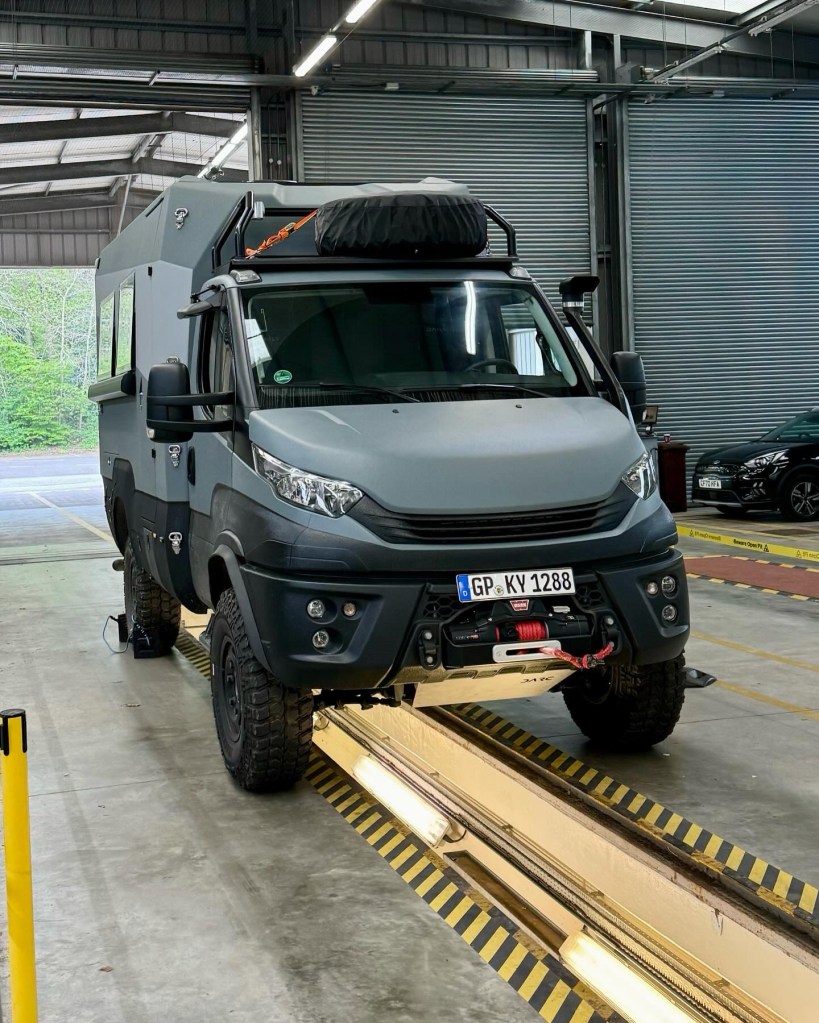
It took a few weeks to get through the tests and a few more to get Arnie expedition-ready but now we have a vehicle built for the Silk Road, the Panamerican Highway and the Skeleton Coast. First there will be some getting-to-know you trips around Europe. Iceland? Morocco? Tunisia? Who knows. As the saying goes “We plan, God laughs”. So we’ll see how it goes but it’s great to have a Magic Bus again to explore this big gorgeous planet of ours.
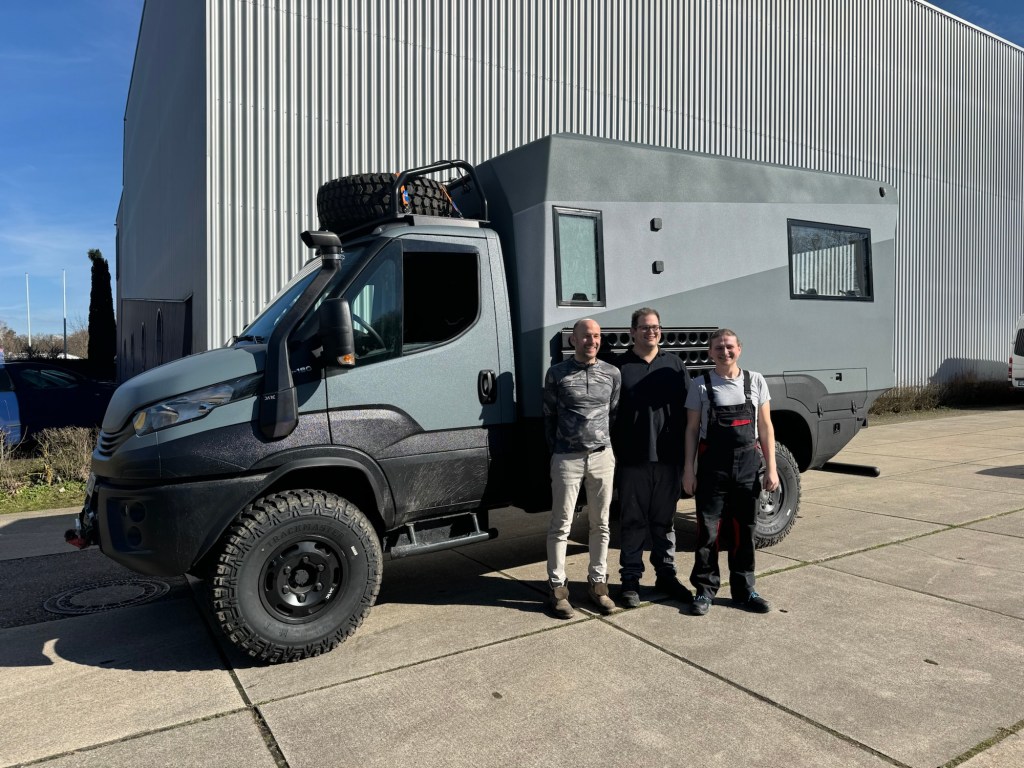

 The Magic Bus
Leave a comment